
Valley near Yellowstone is part of Idaho’s heritage, not a playground for the rich | Opinion
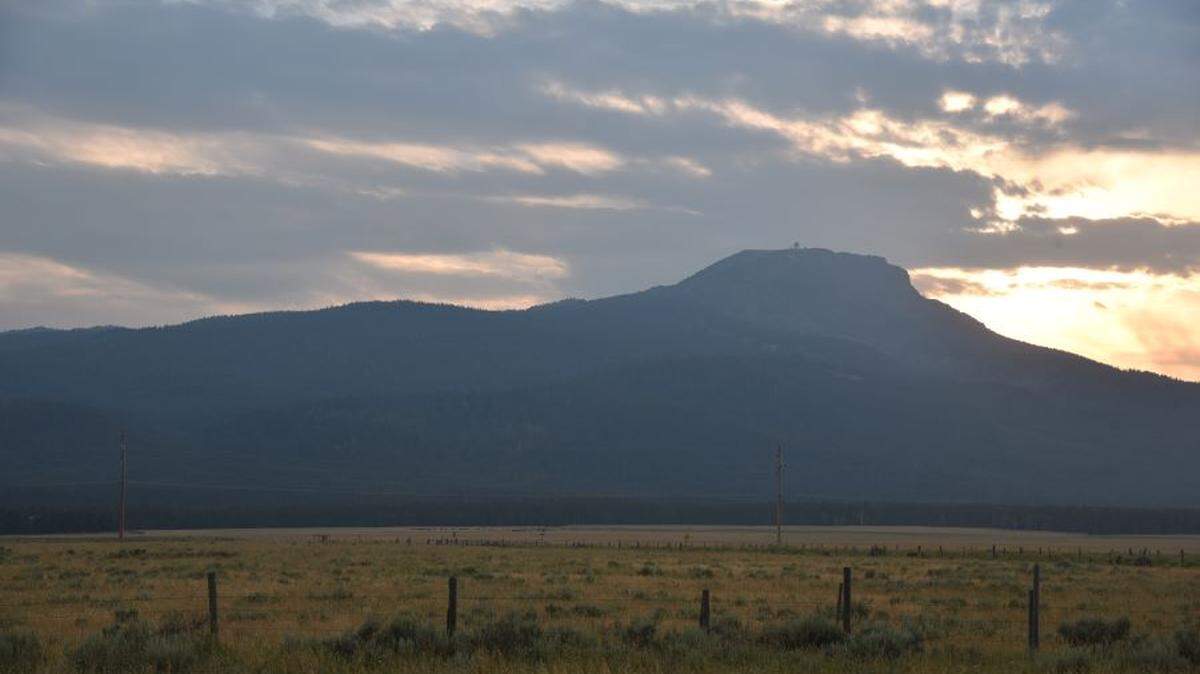
One of Idaho’s natural gems is on the verge of being marred forever by development aimed at the ultra-wealthy.
In the northeastern corner of eastern Idaho, just outside the borders of Yellowstone National Park, lies the vast Island Park Caldera. The expansive valley full of massive springs, stunning waterfalls, two state parks, thick lodgepole pine forests — and, without a doubt, some of the best fly fishing in the country — is an outdoor paradise.
The caldera — a 50-mile-wide volcanic crater — is the remnant of a pair of massive volcanic eruptions thrown up by the Yellowstone hotspot as it wandered east to its current location. At its center, bordering Henry’s Lake, is a mostly undeveloped area called the flats. The flats are special even in this unique place, a large, open meadow that every spring brims with mule’s ear, lupine and other wildflowers.
And, if nothing changes, soon too will sprout an over-400-acre development with built-in aircraft hangar space bordering a private airstrip built just for the owners of these ultra-luxury mansions — a so-called air park — as East Idaho News reported. At the same time, there are separate plans in the works for a three-story, 132-room Marriott.
The Nature Conservancy has protected a large portion of the flats by creating the Flat Ranch Nature Preserve. But most of the rest has been ranch land, until now.
The proposed new developments have unified much of the often-divided Island Park community in strong opposition.
Recently, as East Idaho News reported, about 150 people showed up to protest against them — hugely significant in a town with a population of less than 200 and a broader area with a population of only around 1,500. A change.org petition opposing the development has garnered over 6,000 signatures at time of writing.
And there are serious environmental concerns with the development, too.
“The flats hold great ecological value within the Greater Yellowstone ecosystem,” said Shaun Ward, communications director and project manager for the Henry’s Fork Wildlife Alliance. “We’re worried about the loss of habitat.”
In particular, the flats provide food, shelter and migration corridors for pronghorn, elk, mule deer, long-billed curlews and sandhill cranes, Ward said.
“With the air park being built, it’s going to destroy habitat that these wildlife use,” he said. “There’s also a big concern about water pollution.”
While the flats is one of the most beautiful parts of Island Park, it’s also the harshest. In winter storms, temperatures can easily fall below -30 degrees, visibility can drop to zero and the road across it is frequently closed. Island Park is where Idaho’s coldest-ever temperature was recorded: -60 in 1943. Trying to operate planes in such conditions means using deicing chemicals, Ward said. And in the bottom of a caldera, those chemicals have nothing to do but accumulate.
The concerns about water overuse and pollution are shared by the Henry’s Fork Foundation, a nonprofit that works to preserve the area’s world-class fishery — which, he pointed out, contributes about $30 million in economic activity per year.
“Our research has shown that the water supply is 15% lower in the last 20 years than in the prior 20 years,” said Rob Van Kirk, the foundation’s science and technology director.
“The water quality concern is that our data show increased phosphorous levels, a doubling in the last 10 years or so. That’s very concerning,” he added.
A bunch of new development, needless to say, is unlikely to make these emerging problems easier to solve.
“The entire Yellowstone area is already developing so quickly. We’re not against all development. We think this is an irresponsible place to develop,” Ward said. “The Greater Yellowstone ecosystem is one of the largest intact ecosystems in the entire world.”
If Idaho has a natural heritage, something we’re obligated to pass on to our children as good as we found it, the flats are a part of it. They shouldn’t become just another playground only for the rich. Let’s hope ours isn’t the generation that ruined something so fine.