
To meet economic demands, Idaho’s community colleges should offer four-year degrees
When I arrived at Boise State University to assume the presidency in 2003, I learned that Boise did not have a community college. There was one in eastern Oregon called Treasure Valley Community College, which was hardly an educational option for all Treasure Valley students.
It was no accident that a community college was never planned for Boise and the region. Boise State was never keen on the idea of a community college because a College of Applied Technology was embedded in the university that offered a number of professional-technical degrees. The fear that a community college would hurt Boise State’s enrollment caused it to quell any discussion of a community college like those that existed in southern and north Idaho.
My experience in other states just didn’t square with the logic that a community college could not exist alongside a major university without doing enrollment damage to the university. Besides, as a university with the potential of maturing into a doctoral research university, it just didn’t make sense for Boise State to serve two masters — graduate education with a strong research component and professional-technical education.
Thus began a two-year campaign by Boise State for the taxpayers of the region to create a community college district that is today the College of Western Idaho.
Then-Gov. Butch Otter and Skip Oppenheimer masterfully co-chaired the successful effort to get a new community college on the ballot and then to get it approved by an extraordinary majority of voters.
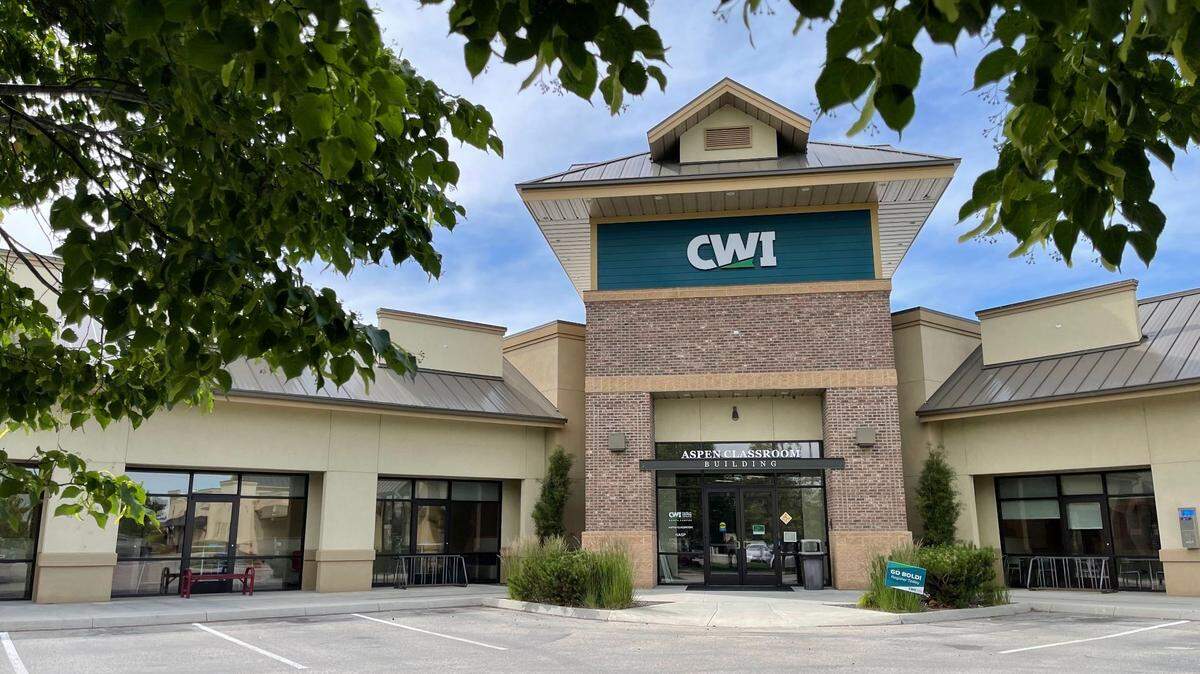
It worked, and CWI became a reality. Its first campus and building was the former Boise State campus in Nampa, which the State Board of Education deemed a perfect location for CWI at the time. Today it is the largest of Idaho’s community colleges serving more than 28,000 students. And last I checked, Boise State didn’t suffer an enrollment decline.
CWI offers students two-year programs in professional-technical education and it also offers academic programming — at a lower tuition cost at a state university — that allows students to transfer to a four-year university to complete their baccalaureate degree.
Now that CWI has achieved such astounding success, it’s time once again for Idaho to follow in the footsteps of other states, as it did with CWI’s creation and assure that educational opportunities are available and accessible to students from all walks of life, not just those recent high school graduates searching for that college campus experience.
The benefits of a community college education do not accrue just to students but to entire regional economies and their workforce partners who require the latest and best educational opportunities for their workforce to remain competitive in a global economy.
Remaining competitive in today’s marketplace is more challenging today than ever before, as knowledge now doubles every year but is not necessarily packaged and provided to students in ways that make it most useful to local industry.
The College of Southern Idaho and the Idaho State Board of Education have already figured this out since the State Board authorized CSI to offer a new four-year degree in advanced food technology even though Twin Falls and the Magic Valley region are also served by Idaho State University and Boise State University with programming leading to degrees from those two universities.
This seems a perfect example of how the expansion of our knowledge base, especially in advanced technology, requires colleges to rethink traditional professional-technical degrees and develop four-year degrees that address new and evolving needs for a highly educated workforce.
It doesn’t take rocket science to imagine how else community colleges in Idaho could serve their respective regions given the national direction community college programming is taking.
Just last year, Arizona became the 24th state in a nationwide trend authorizing community colleges to offer four-year degrees. In addition to the obvious advantages to the regional economy, advocates claim that low-income and non-traditional college students, such as older students, those who have children or those who are the first in their families to attend college, are more likely to get bachelor’s degrees if they are not required to switch to a more expensive four-year university.
Given the teacher shortage in Idaho, requiring more than 800 new teachers to fill classroom positions in the fall, why not turn Idaho’s community colleges loose with a bachelor’s degree in teaching that can be offered for less cost that a student would pay at a four-year university and one that could be streamlined to move teachers into the classroom as quickly as possible?
This will ruffle some feathers at the four-year universities that offer this degree, but this is no time to quarrel over jurisdiction when the state is facing such a severe shortage of teachers.
It may even reduce the cost of university degrees as the State Board and its universities see how community colleges can save students tuition dollars compared to university tuition and fees.
It makes sense for the Idaho Board of Education to wipe the slate clean of old rivalries among our state universities and community colleges and approve four-year degrees for Idaho’s community colleges where they can demonstrate a unique area of emphasis, where they can do so more cost-effectively than the state university or where they are meeting a workforce need in crisis mode as is the case with the teacher shortage.
There is one more reason it makes sense for our community colleges to step into the four-year degree business.
In 2010, the State Board of Education announced a goal of having 60% of Idahoans between the ages of 24 and 34 achieve a two- or four-year degree, or a one-year professional certificate. In 2021, the board was so frustrated with Idaho’s inability to reach the goal that they came close to abandoning it. Since it still stands, the 60% goal needs a strong push to get it over the finish line in the coming years.
Given the strong role that the cost of attendance and ease of access to the classroom plays in this decision, the State Board should encourage community colleges of Idaho to come forth with four-year degree proposals that meet the criteria of cost, student need and emergency workforce needs.