
Remembering a close call on 9/11: Waiting to visit World Trade Center on Sept. 11, 2001
For those old enough to remember, 9/11 is one of those days where you know exactly where you were and what you were doing when you first learned of that horrific event in the life of our nation.
For my wife, Kathy, and me, those memories are etched in our minds. We were in New York City visiting our son and staying at his apartment at 14th Street and 6th Avenue, the Avenue of the Americas. He had been called out of town on business at the last minute, so we found ourselves navigating New York on our own.
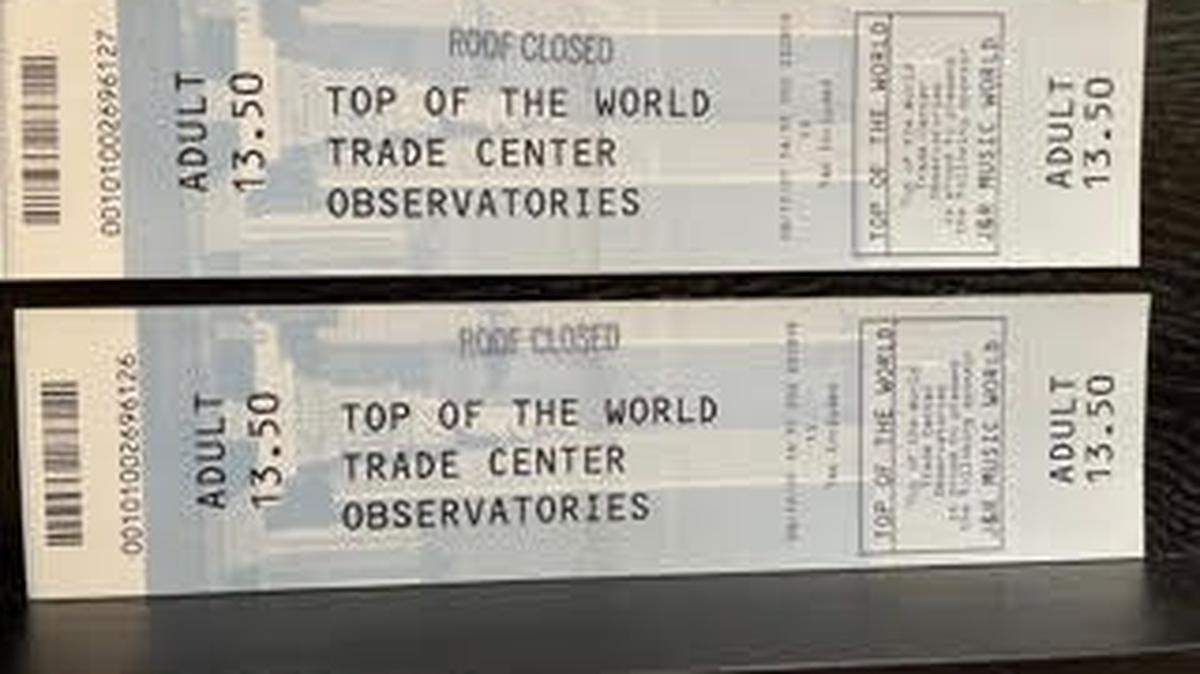
Our 9/11 story began a day earlier on Monday 9/10, the date of our wedding anniversary, as we spent the day as tourists, shopping and sightseeing in lower Manhattan, capping the day with a visit to the observation deck of the World Trade Center.
Once inside the towers and just as we bought our tickets to the top, sheets of rain hit the building. Living in Chicago for years, we knew that trips to the top of the Sears Tower were futile on rainy days as visibility was significantly reduced. We found a guard who told us we could use our tickets the following morning and that the observation deck would open at 9:30 a.m.
We pocketed our tickets and talked about whether we should try to arrive early the next day to avoid long lines but decided — fatefully — that we were on vacation and there was no need to get there so early.
That next morning, before we were to leave for the subway that would take us right under the twin towers, I went for a walk in Greenwich Village. As I was walking on 10th Street searching for a bookstore a friend had recommended, a large plane flew overhead at low altitude and in airspace that I knew could not be an approach to an airport.
Minutes later, at the corner of 10th Street and 6th Avenue., a pedestrian asked me to look down the street at the Towers that loomed over the financial district.
“It looks like a small plane has crashed into one of the Towers,” he said.
It may have appeared as a small plane, but given my recent experience seeing the large plane flying low overhead, I was horrified and rushed back to the apartment to turn on the TV and tell Kathy what I had just seen.
By then we were watching TV coverage of the second plane slamming into the other tower, alarming a nation of viewers transfixed by the death and destruction of the attack. For us, the alarm was more immediate and personal.
We realized an immediate need to stock up on food and water since there was little in our son’s apartment, and rumors were circulating about the safety of drinking water and availability of food.
As we left the apartment, we heard the roar of U.S. fighter jets arriving to protect the skies over Manhattan, but to those of us on the ground who were aware that two hijacked aircraft were still in the air, it was not entirely clear what was going on. Add rumors that terrorists might flood Manhattan and the closure of Manhattan to all incoming traffic, and we distinctly remember that moment of fear when the unknown overwhelmed any sense of calm and security.
As we returned to the apartment, we saw hundreds of workers from the offices in and around the twin towers fleeing on foot up 6th Avenue, phones to their ears as they talked and cried to loved ones, women carrying their high-heeled shoes as they fled to safety. We later realized they were the lucky ones who were evacuated from the north tower.
As helpless as we felt, we decided to donate blood at St. Vincent’s Hospital a few blocks from the apartment where the hospital had set up a triage. Instead of lines of emergency vehicles delivering the injured, there was an eerie quiet, no traffic and a handmade sign that read, “no blood needed.”
That’s when it hit us that there were only a few survivors to be treated. We returned to the apartment to find that officials had drawn a line of demarcation at 14th Street with no unauthorized entry allowed south of 14th. Right outside our apartment for the following days, exhausted firefighters, police and EMTs on relief from duty at the collapsed Towers were laid out on the sidewalk trying to catch a few hours of sleep before returning to the scene.
Our first foray onto the streets of Manhattan the next morning was to Penn Station where we had arrived on Amtrak out of Washington the week before. The station was jammed with potential passengers trying to find a way out of the city. No trains were available for us until later in the week, and the only memory I have is walking past author John Updike and TV journalist Mike Wallace among the crowds.
We spent the next eight hours walking the streets of New York, passing fire stations where mounds of floral displays were set out in memory of firefighters who had been sent to the Towers for rescue operations and had died heroically ascending the stairs of the Towers on ill-fated rescue missions.
It was also heartbreaking to pass street corners where lampposts were covered with handmade flyers of photos of loved ones who were in the Towers with simple questions asking if anyone had seen them.
We found our way to a train out of Penn Station later in the week for Baltimore-Washington airport, which had just reopened, rented a car and drove back to our home in Kentucky.
We don’t often think of what could have been if we had made a different decision about our arrival time at the Towers on 9/11 nor do we pay much attention to those two tickets now among our memorabilia.
It’s those flyers we saw on lampposts as we walked the barren streets of New York and firefighters at their stations in mourning over their fallen comrades, that we remember. So many innocent people lost their lives that day and so many heroes stepped up for a doomed rescue mission.
It is so important to remember and honor them 20 years later and I can think of no better way to do that than to act on what the families of 9/11 victims have called for repeatedly over the years and which President Biden just ordered. He has directed Attorney General Merrick Garland to declassify government evidence over the next six months that could uncover the role that Saudi Arabia played in the attacks, something past presidents have been unwilling to do in deference to this “ally.” The time has come to pay our respects to the victims by a full accounting of the backdrop to the attack.