
Lead like Ike: President Eisenhower offers lesson in leadership for today’s Republicans
On the eve of President Joe Biden’s inauguration, he addressed the nation from the National Mall where he called for national unity as he remembered the 400,000 Americans who lost their lives to COVID-19. In obvious reference to loved ones lost to the pandemic, he said, “To heal, we must remember. It’s hard to remember, but that’s how we heal. It’s important to do that as a nation.”
We must also remember what life was like before the national nightmare of the last four years. There was a day when our nation, its leaders and those who elected them treated each other with respect and kindness, even in the midst of difficult political division. There was a day when bipartisanship governed regardless of which political party occupied the White House or occupied the majority of seats in Congress.
A wave of nostalgia for those days overcame me recently when I read “How Ike Led: The Principles Behind Eisenhower’s Biggest Decisions” by his granddaughter, Susan Eisenhower, whom I had the privilege of interviewing about her book and her grandfather for a Reader’s Corner program. For skeptics who just cannot grasp how Joe Biden can achieve his objectives of national unity and bipartisanship he so often shares with the American people, Susan Eisenhower’s account of her grandfather is a must read, especially for public officials on both sides of the aisle who may have forgotten how to extend a hand to members of the opposite party.
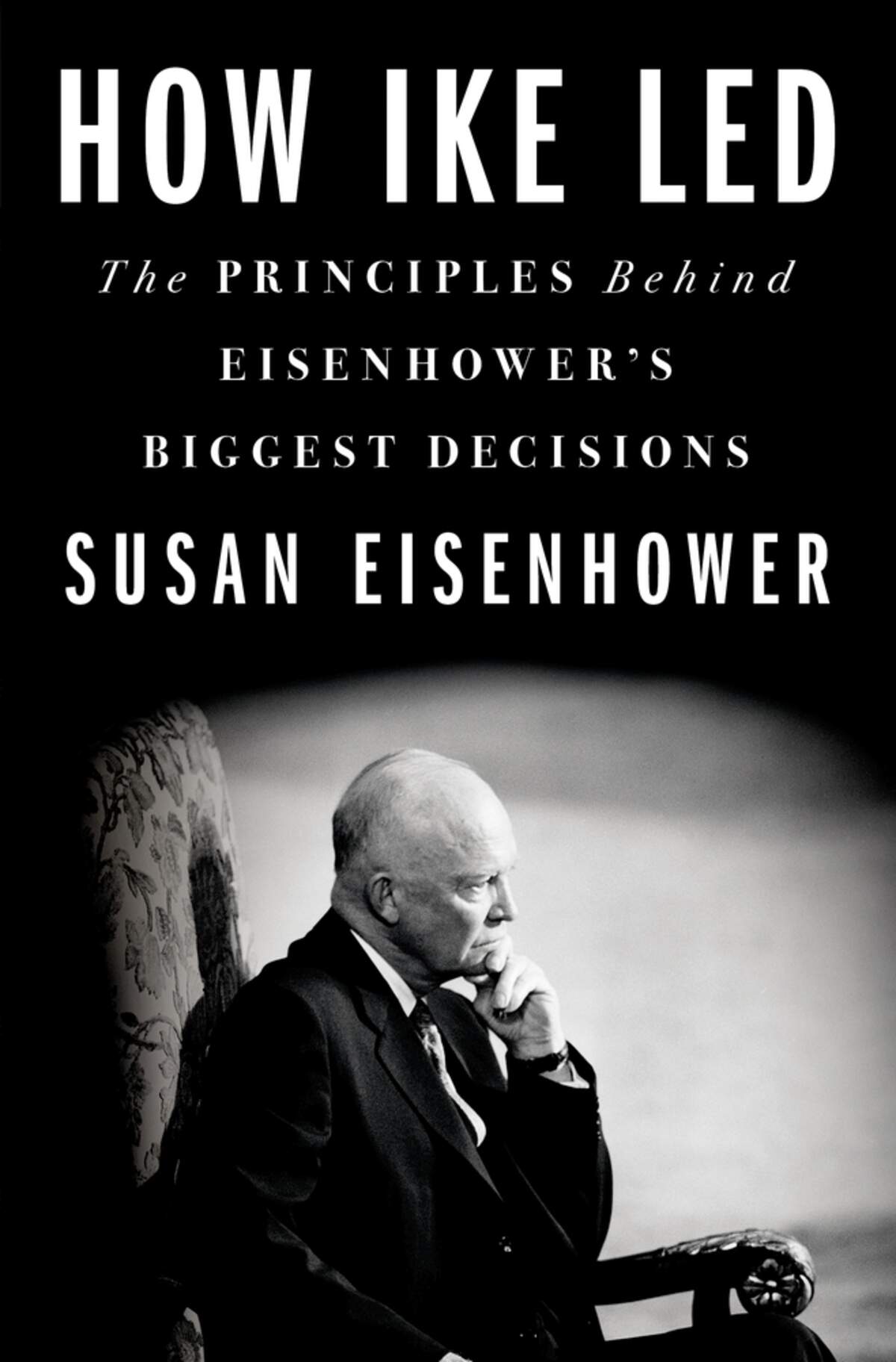
It’s also instructive and inspiring for anyone charged with leadership responsibilities or anyone preparing for the challenge of leading. Susan Eisenhower credits her grandfather’s success on the battlefield and in the Oval Office to his strategic rather than operational leadership style. He developed a staff system of gathering all possible facts and unbiased analysis of the issue at hand which he applied to Operation Overlord, the Normandy invasion. He would then employ it in the White House, but the system was dismantled by the Kennedy administration to the former president’s dismay.
Some historians have pointed to the Bay of Pigs fiasco as evidence of what can happen when last-minute decisions veer from the strategic plan, as Kennedy did when he made the last-minute decision to cancel air support for the invasion and relocate the landing beaches for the assault.
Susan Eisenhower describes her grandfather as the most bipartisan president in American history.
In President Eisenhower’s day, high-ranking military officials often didn’t vote in elections for fear of creating the impression that the military was interfering with the electoral process. No one really knew Ike’s politics. After his return to the states, Democrats and Republicans asked him to run on their ticket for president.
In 1948, President Harry Truman who was considering his own run for president after assuming the office upon the death of President Franklin Roosevelt told Ike he would step aside if Eisenhower wanted to run for president on the Democratic ticket. Eisenhower declined. When the media went back to the general’s hometown to check on his partisan identity with a county official, he said, “I don’t think he has any politics.”
Even by 1952, when he emerged as a favorite to run for president that year, Eisenhower did not see himself as a future president.
It was only when he met with the leader of the conservative wing of the Republican Party, Sen. Robert Taft, who refused to support the Marshall Plan and the United Nations, that Eisenhower knew he had to run.
The former supreme allied commander of the U.S. and its Western allies believed strongly that the threat of Soviet domination of Eastern Europe could be countered only by rejecting isolationism and committing U.S. leadership to international alliances.
It’s difficult to read this history of Eisenhower’s challenges as the supreme allied commander and the president without thinking of Mark Twain’s line, “history doesn’t repeat itself, but it often rhymes.”
In a rejection of Donald Trump’s arrogance in dealing with our allies, President Biden spent the first days of his presidency reengaging the U.S. in global affairs by recommitting to the World Health Organization and the Paris Climate Agreement. He reached out to our friends and allies abroad to reassure them the United States is back from its days of isolationism and intends to treat our allies with respect and our enemies for what they are, enemies of our democratic way of life.
Another of Biden’s executive orders which overrides a particularly sinister move by Trump on the last day of his presidency limits the ability of a federal employee who retires or leaves a government agency to return and lobby the same agency for two years. Trump’s executive order set the lobbying ban at one year, but then he rescinded it on his last day in office to allow his own staff to lobby federal agencies for which they worked. Biden’s stricter ethics rules are reminiscent of Eisenhower’s tough stance on ethics and lobbying in government.
Congress sent Eisenhower a bill to amend the National Gas Act that he acknowledged was in accord with his basic objectives, but which he vetoed because he was informed of a contribution to a senator’s campaign in exchange for voting for the bill. Ike vetoed the bill, labeling such tactics arrogant and in defiance of acceptable standards of propriety.
Tomes could be written about how far Congress has strayed from Eisenhower’s ethical standards, but President Biden has already begun the work of cleaning up after a president so deceptive that he would tear up his own executive order to take care of his pals who worked for him.
Kennedy’s Camelot and New Frontier appealed to popular culture at the time and cast a shadow of mediocrity over the preceding Eisenhower administration, but biographers and historians have more recently rescued it and given the American people a standard by which to judge its future leaders. As late as 2017, C-Span conducted the Presidential Historians Survey and ranked President Eisenhower fifth among all U.S. presidents.
To read Susan Eisenhower’s account of President Dwight D. Eisenhower is to understand why he ranked so high among the presidents. It also offers hope that the current Republican Party which has strayed so far from Eisenhower’s example of leadership and integrity can regroup, find new leadership to show them the way back to the principled moderation that characterized Eisenhower’s life and career.