
The first all-Black high school rowing team: a lesson in paying it forward
A few years ago, I interviewed Daniel Brown on Reader’s Corner about his book, “The Boys in the Boat: Nine Americans and Their Epic Quest for Gold at the 1936 Berlin Olympics.” It is an inspiring tale of working-class kids who find themselves at the University of Washington, where they join the crew team so they could access part-time jobs through the university to pay for their tuition. It follows the boys on their journey to the 1936 Olympics where they would win the gold medal.
Thanks to Arshay Cooper, the author of “A Most Beautiful Thing,” we now have another inspiring tale of young men proving their mettle on a rowing team, but this time a tale of America’s first all-black high school rowing team. But it’s not just the fact that this team happened to be black. They came from one of the most dangerous neighborhoods on Chicago’s West Side — North Lawndale — known for its gangs, drugs and violence inflicted on its residents. Cooper’s own mother was an addict who fed her addiction on the streets until she was rescued and rehabilitated by the Victory Outreach Christian Recovery Home. His brother was a Gangster Disciple. His father was long gone.
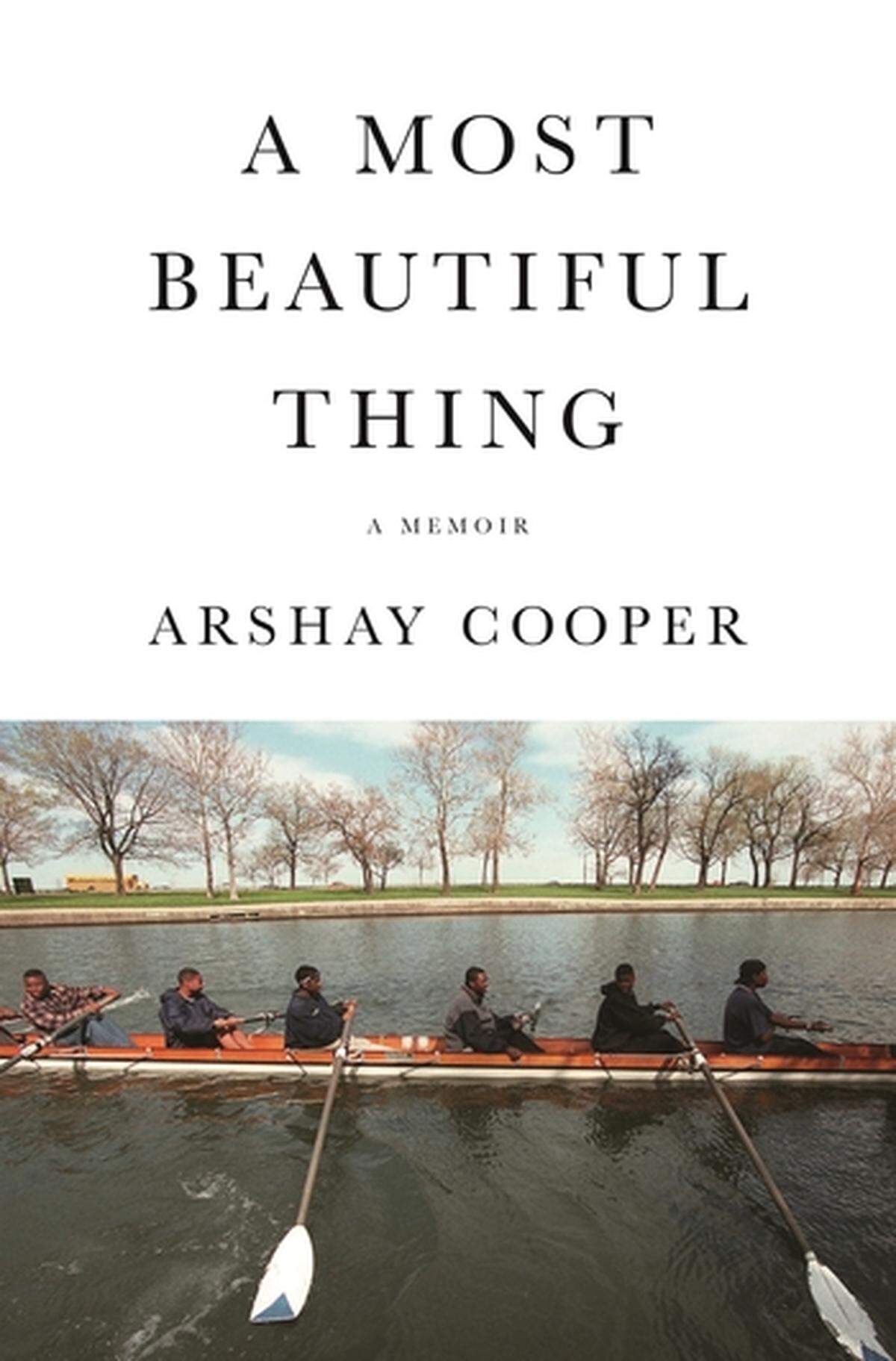
As Cooper points out, a rowing team is not exactly where you would expect to find African-American high school students, more likely to be found trying out for football and basketball teams. In fact, it’s highly unlikely that a rowing or crew, as it’s called in athletic competition, can be found among the sports offered at most high schools in America, especially those in inner-city neighborhoods. That’s where Ken Alpart comes into the picture. Ken rowed at the University of Pennsylvania and found his way to Chicago where he was an options and futures trader and created Urban Options dedicated to helping kids on Chicago’s West Side.
Alpart offered his idea of creating rowing teams in inner-city high schools in Chicago to 11 different high schools. Manley Career Academy, where Arshay Cooper attended, was the only one that agreed to take on crew as a high school sport. Initially, Cooper thought crew was a white man’s sport, and he expressed no interest until his buddy, Preston, offered to introduce him to this dreamy high school girl Arshay wanted to meet. The deal was struck, and Cooper showed up for a team meeting to see what this crew sport was all about.
The obstacles were many, not the least of which was the water on which these boats competed. According to Cooper, water was not the Black kid’s friend, and even though they didn’t live far from Lake Michigan, he and his teammates couldn’t swim, and he, in particular, was afraid of water. Swimming lessons would be the first step, to be followed by grueling practices learning how to synchronize their strokes for a flawless glide through the water.
It’s hard to imagine how insular the lives of these students living in dangerous neighborhoods could be. Downtown Chicago is just a few miles from North Lawndale, but Arshay never saw it until he was a teenager. Crossing over into other neighborhoods with competing gangs kept Arshay and his buddies close to home. One of the allures Ken Alpart and his coaches were able to offer the Manley crew team was the prospect of getting out of town and visiting college campuses, such as the University of Wisconsin and Michigan State. One of Alpart’s goals was to introduce these students to college life so they could apply for admission after high school graduation.
Anyone expecting the Manley crew team to make it to the Olympics as the Boys in the Boat did at the University of Washington are in for a surprise but not disappointment. This tale of young Black men overcoming their upbringing and succeeded as a team is not necessarily about winning in the water but winning in life. Early in their rowing experience, they actually kick off a race by running into a brick wall just as they were taking off. They improved over time to compete and even win some individual competitions on the rowing machines that are part of crew team competition.
But the real wins for Arshay Cooper and his crew teammates are the lessons it taught them about life and career. Cooper is proud of the fact that all his teammates are successful entrepreneurs today, which was a course they took as part of the crew experience. Quite an accomplishment when considering that Manley Career Academy was one of the most violent high schools in Chicago with only 60% of its students graduating and only 10% going on to college.
Arshay chose foods and hospitality, one of five career-preparation schools at Manley, because he wanted to be a chef, which led to his attending Le Cordon Bleu College of Culinary Arts in Chicago and London, then working at a critically acclaimed restaurant in Chicago, Blackbird. That would lead to his dream job as chef for World Wrestling Entertainment (WWE) and personal chef for movie sets, professional athletes and private events.
These days, Arshay is paying it forward by speaking to high school students who come from experiences like his about getting involved in crew and he founded the only New York public school rowing team at East Side Community School for black and Latino students. He also works with head coaches of university rowing teams in efforts to diversify the sport.
Whether it’s Arshay Cooper reaching out to youth with similar inner-city backgrounds or whether it’s Ken Alpart, a white guy who didn’t have to leave his options and futures trading office in downtown Chicago to venture into the inner city to offer its youth a way out of gangs and drugs, A Most Beautiful Thing inspires readers to find a way to pay it forward at a time when our culture has been damaged by attention to self instead of attention to others.