
A Cassius Clay from another era
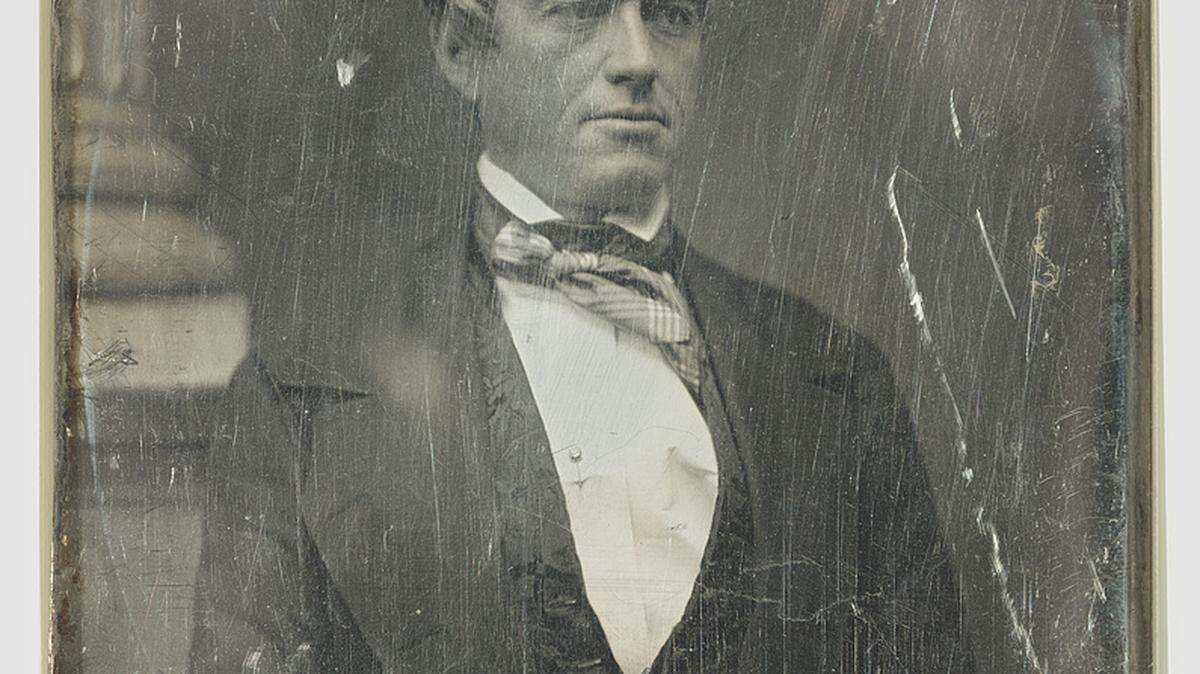
Recent peaceful protests by Black Lives Matter and the overwhelming turnout by people from all walks of life and racial and ethnic backgrounds reminds me of another time and a white man, once a slaveholder, who freed his slaves and would become one of the nation’s most influential abolitionists. I learned about his storied life and career when visiting his ancestral home just a few miles from Eastern Kentucky University where I served as President.
His name may come as a surprise to those who remember the heavyweight boxing champion, Muhammad Ali, who gave up his birth name, one given him by his father of the same name — Cassius Clay.
The original Cassius Clay for whom Muhammad Ali was named was born in Kentucky and, not unlike Muhammad Ali, feared no one in stepping out of the dominant political culture and taking stands that challenged the conventional wisdom. In the case of the original Cassius Clay, he founded The True American, an anti-slavery newspaper at the time, a dangerous undertaking for a white man in Lexington, Kentucky, in the first half of the nineteenth century.
Cassius Clay’s reputation as a fighter bears resemblance to the fighter who gave up his name. Like Ali, he was a fiery competitor who often engaged in fights with those who disagreed with his speeches promoting the abolition of slavery. In one case, he was attacked by six men who beat him, stabbed him and tried to shoot him. Clay killed one of them as he successfully fought off the rest.
Cassius Clay also served in the Kentucky Legislature, but he was eventually defeated for his anti-slavery views and survived two assassination attempts in the process. He found a way in his opposition to slavery to take up the case for slaves and poor whites alike. While attacking slavery for its dehumanization of black people, he also cast slavery as an economic force relegating white people to poverty as slave labor deprived millions of poor whites the jobs to feed their families.
I still remember visiting Whitehall, the Clay estate, and being struck by an oil-on-canvas painting in the foyer of the home depicting a large sleigh making its way through the snow with a Russian nobleman holding the reins of the horses pulling the sled. As I remember it, Czar Alexander II gave the painting to Cassius Clay upon completing his service in Russia as U.S. Ambassador, just a small part of a varied and extraordinary life and career.
President Lincoln’s appointment of Cassius Clay as ambassador to the Imperial Court of Russia is a story in itself. While Clay was serving as ambassador to Russia, Lincoln recalled Clay from Russia in 1862 and commissioned him a Major General in the Union Army. Clay refused the commission unless Lincoln freed the slaves under Confederate control. Not long thereafter, Lincoln issued the Emancipation Proclamation. Clay would return to Russia where he served until 1869. Although the purchase of Alaska was ridiculed in Congress and the media at the time as “Seward’s Folly” or “Seward’s Icebox,” named after Secretary of State William H. Seward, who made the purchase for the United States, Clay as ambassador to Russia played a role in helping secure its purchase.
What’s amazing about the life of Cassius Clay in light of the current strife over Black Lives Matter is how a man born into a nation that still embraced slavery could break out of a slavery mentality and become one of the nation’s most prominent abolitionists, while in a supposedly more enlightened era, racism to this day still rears its ugly head on the streets of our cities and in the hearts and minds of too many Americans.
No doubt, Cassius Clay was an imperfect hero despite his efforts to free slaves. When Muhammad Ali was asked why he would give up the name of an abolitionist, he replied that Cassius Clay may have freed his slaves, but he still harbored white supremacist views. I found the work of at least one historian who verifies Ali’s contention.
Martin Luther King, Jr. reminded us that “the arc of the moral universe is long, but it bends toward justice.” The peaceful marchers for justice in America’s streets today are simply telling us that we need to get that bend to justice moving much more quickly. While Cassius Clay may not have gotten it all right, he served a useful purpose in calling a young republic’s attention to its original sin at a time in our nation’s history when we had not yet decided the abolition of slavery was worth a civil war.
Unfortunately, a civil war of a different sort wages on today. It’s not necessarily between North and South, but between opposing views of justice and equality in America. We now have the opportunity this November to use the ballot box to win this one.