She was in Idaho institutions for 20 years. Now she’s thriving | Opinion
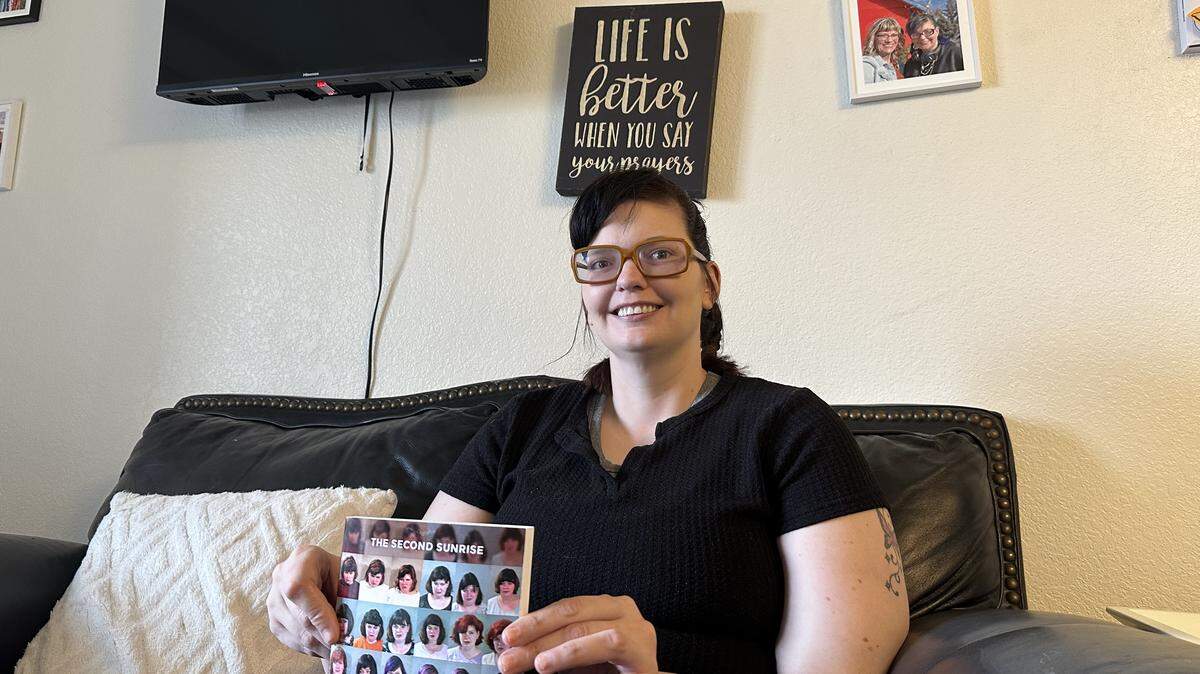
Katie Hodges is a success story.
She lives in her own apartment near downtown Nampa. She has a driver’s license and her own car. Though she’s not working now, she worked at a local restaurant for two years. She goes to church, Bible study and art classes. She’s even written a book about her journey.
“I’m very happy now,” Katie told me in an interview at her apartment. “I’m a Christian now, and I’m having God versus being angry and being hateful. I’m not that way anymore. I’m very grateful for the life I have right now.”
All of this seemed impossible just four years ago.
Katie, who’s now 35, had spent 20 years of her life in and out of Idaho institutions, whether it was juvenile detention, county jail or the state-run Southwest Idaho Treatment Center in Nampa, which treats patients with intellectual disabilities.
Katie has been diagnosed with autism, schizoaffective disorder, post-traumatic stress disorder and delayed cognitive development. She also has intermittent explosive disorder, which results in violent outbursts, according to previous Idaho Statesman reporting.
The Statesman first wrote about Katie in 2017, when the Legislature approved funding for a secure facility for residents like her with mental illnesses that put themselves and the community in danger.
By 2019, when the Statesman wrote again about Katie’s situation, things weren’t any better. The state still hadn’t built the secure facility, and Katie had been in and out of jail so many times, Canyon County Sheriff Kieran Donahue was personally affronted by her situation.
“I’m so mad I can hardly speak, because I have been a huge advocate for Katie,” Donahue said at the time. “This state and this system have failed (Katie) miserably. We are here to protect the most vulnerable in our society, and she is the most vulnerable.”
Katie had repeatedly assaulted deputies while in custody, and the Canyon County jail would use a wrap to restrain her and require her to wear a helmet. Police affidavits documented Katie assaulting police officers and caregivers and throwing rocks. She would seem to get better while at SWITC, then be released into the community only to have another episode.
Katie’s mother, Renee Hatchett, was at the end of her rope.
“You won’t believe how frustrating it is, as a mom, to know that there’s nowhere for her to go,” she told the Statesman at the time.
‘A complete transformation’
Today, though, Renee couldn’t be happier.
“It’s a complete transformation, for sure,” Renee told me in a phone interview. “It’s almost like she’s not even the same person. It’s just been a huge, huge transformation. She’s just thriving in the community right now.”
Katie has been living on her own under the assistance of Legacy ResHab Services, a Nampa-based residential rehabilitation provider funded by Medicaid under the Adults with Developmental Disabilities Waiver program.
Someone from Legacy is with Katie 24 hours a day, seven days a week.
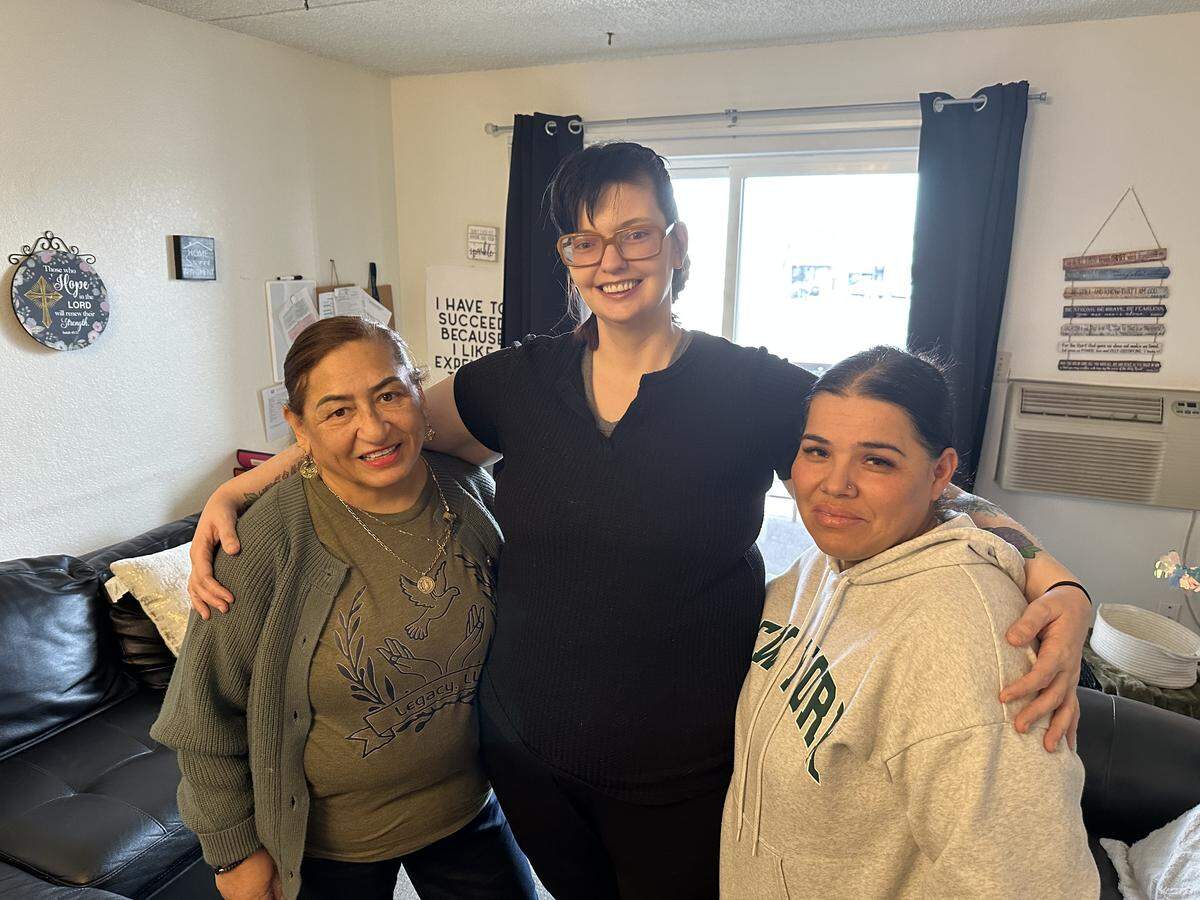
Angelita Martinez, who owns Legacy ResHab, sat in on my interview with Katie.
“We’ve never needed to ever do anything other than just love her,” Martinez said. “That’s it. That’s all we’ve ever needed to do.”
She said if Katie needs a hug, they give her a hug; if she needs to hold someone’s hand, they hold her hand.
“You know, when you go years in group homes and prison, you kind of need a hug, because that’s what you need,” Katie said. “You need that physical touch, not a restraint … like someone holding your hand versus somebody having you in the restraint. It’s different, yeah, because you can feel safer.”
It’s working, according to Renee, Katie’s mom.
“I can count on one hand the number of episodes or negative events that have happened in the last four years,” Renee said. “And you know, that’s something I never thought I was going to be able to say.”
The longest Katie had ever spent on her own was six months. She’s now going on four years.
“We’d tried everything,” Renee said. “We’ve been through 10 agencies, you know … it was such a frustrating time of my life with her. And you know, it’s just so nice now to see her blossom.”
Learning how to manage stress
On the morning I visited with her, Katie was happy and upbeat. She offered me coffee and introduced me to her cat. She told me about her activities, such as going to Bible study on Wednesdays and art classes. She gets together with other clients of Legacy who live in her building.
She also talked about how Legacy taught her to manage her stress.
“I learned how to relax,” she said. “I learned how to take mind breaks. Close your eyes … when you’re anxious, your eyes don’t like close, they flicker. Close them for 15 minutes. And if you’re in a car, then just pull over and turn on relaxing music and take a break.”
She showed how she snaps a little cloth elastic band on her wrist.
“It resets your brain,” she said.
This is a success story, but it’s also a cautionary tale, as the state grapples with budget shortfalls and seeks to cut back Medicaid.
Martinez said she’s had to make cuts from the 3% holdbacks already ordered by Gov. Brad Little. Martinez said she’s had to reduce some employees’ pay and use fewer office supplies. If 5% cuts come through as threatened, it will be much more difficult, Martinez said, but she said she’d find a way to make it work.
“Let’s pray they don’t cut the Medicaid program,” Renee said. “I mean, I just don’t know where we’d be. And I can name a dozen other friends that are in the same boat as me.”
When you find something that works, stick with it. Martinez and Katie said her treatment hasn’t changed, and Katie has actually been able to reduce her medication. What’s changed is being out of an institutional setting and being with caregivers who care.
Yes, Medicaid is paying for Katie’s care, which costs about $800 a day, but deputies are no longer chronically responding to calls and no longer is Katie constantly in and out of jail or staying at SWITC, where the cost is over $2,000 per day per resident, according to the Department of Health and Welfare.
“Can you believe that of the 35 years that she’s been alive, she spent 20 of those in and out of an institution,” Martinez said. “And she finally is free.”
Scott McIntosh is the opinion editor of the Idaho Statesman. You can email him at smcintosh@idahostatesman.com or call him at 208-377-6202. Sign up for the free weekly email newsletter The Idaho Way.