‘America is not a welfare state.’ HUD secretary visits Boise | Opinion
AI-generated summary reviewed by our newsroom.
- HUD Secretary Turner visited Boise to discuss housing cost increases and policy reform.
- Turner supports budget cuts and incentives aimed at reducing housing dependency.
- Crapo’s 2025 survey shows rental costs outpacing wages and housing supply stagnating.
Housing and Urban Development Secretary Scott Turner tells a story about a 52-year-old woman who’s been living in a government housing project since 1973.
It gives you a good indication of his philosophy and what he plans to do as HUD secretary.
“She’s able-bodied, able-minded. She was raised there. She lived there. Now she’s raising her children there,” Turner said Tuesday during a visit to Boise. “That’s three generations living in government subsidies that are able-bodied, able-minded. That’s not the way that our government and our country is supposed to be.”
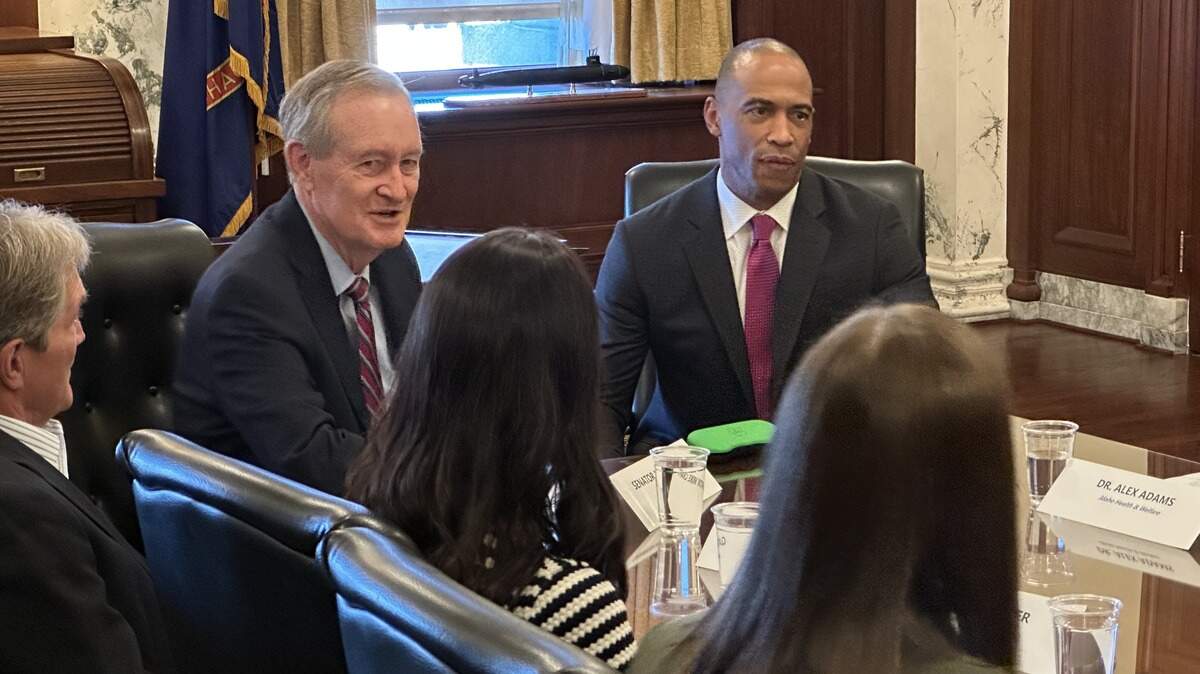
President Trump’s HUD secretary was in Idaho this week and participated in an affordable housing roundtable Tuesday at the state Capitol hosted by U.S. Sen. Mike Crapo, R-Idaho.
They had the right people at the table, including developers, such as Clay Carley and Caleb Roope; the city of Boise’s director of housing and homelessness policy, Nicki Hellenkamp;, and Gerald Hunter, president of the Idaho Housing and Finance Association, among others.
Reporters were scooted out of the room for the roundtable discussion, but we were allowed to stay in the room for some introductory statements and then got about 10 minutes to ask Turner and Crapo questions.
“First of all, I was very pleased that Secretary Turner came to Boise,” Hunter told me in a phone interview after the roundtable. “It’s not that often that we see the HUD Secretary visiting our community, and so it was a delight to have him be here.”
Hunter said he discussed Idaho’s overall housing situation during the roundtable. Specifically, he shared that Idaho is experiencing considerable increases in housing costs, and a growing affordability challenge as housing prices and rental costs have skyrocketed, while household incomes have not grown as fast as housing costs.
Hunter said he emphasized the need to ease regulatory constraints, particularly for smaller communities and developments, and highlighted the importance of making housing development easier and less costly.
“I’m optimistic in that I think HUD is moving in a good direction,” Hunter said. “I think trying to focus on having impact the way that the Secretary spoke of it is a good sign. I think there’s a lot of good things going on in a number of places to try to address housing affordability, but I do think that we’ve got a long ways to go there.”
Turner’s mission
Turner talks a very good game. He’s charismatic and hard not to like. And he’s quick with the one-liners.
“Government subsidies were never meant to be a lifestyle.”
“Poverty has no party.”
“America is not a welfare state.”
“We don’t want to grow the government. We want to shrink government. We want to grow people.”
His mission at HUD is to reduce the budget and “end the cycle of government dependency.”
“We have an over $70 billion budget, but we were only serving one out of four eligible families,” Turner said. “Well, that’s unacceptable. When you have 770,000 homeless people … and you have almost an $80 billion budget, that has to stop.”
In addition to being a good steward of taxpayer dollars, Turner said his main objectives are:
- Reduce regulatory burdens that make housing development expensive, giving more control back to local communities to address their specific housing needs.
- Increase housing supply by removing federal regulations that currently add 20-25% to single-family housing costs and 40% to multifamily housing project costs.
- Expand the Opportunity Zones program to create new housing units, jobs and lift people out of poverty.
- Make housing more affordable through regulatory reform and encouraging private sector development.
And the One Big Beautiful Bill Act included several specific tax cuts and incentives for affordable housing, including a major expansion of the Low-Income Housing Tax Credit and permanently increased the state allocation by 12%, allowing states to support more affordable rental housing projects each year. It also made permanent the New Markets Tax Credit.
“It’s really meaningful — and helpful — to have federal partners working together with us to create more affordable homes in Boise,” Boise Mayor Lauren McLean, who was at the roundtable, wrote in an emailed statement to me. “For years, we have been advocating for the permanent expansion of the Low-Income Housing Tax Credit, the permanent extension of the new markets tax program, and enhancements and new designations to the Opportunity Zones initiative. Senator Crapo delivered all of the above.”
Turner was evasive in response to a question about whether HUD housing grants would continue, saying only that HUD officials are “taking inventory” of all the programs to ensure that they are maximizing the budget.
But Trump’s 2026 budget request proposes a 44% cut to HUD’s affordable housing, homelessness and community development programs, and would impose changes to rental and homelessness assistance programs, according to the National Low Income Housing Coalition.
The budget proposes essentially ending Section 8 and other housing voucher programs and calls for cutting rental aid by about 40% and sending that money to states “to design their own rental assistance programs based on their unique needs and preferences,” according to NPR.
It would also impose a two-year cap on rental assistance for able-bodied adults as an incentive to get them out of public housing.
“Government subsidies were never meant to be a hammock,” Turner said. “They’re meant to be a trampoline.”
Welfare to work
Both Turner and Crapo cited President Bill Clinton’s “welfare to work” initiative in the 1990s, cutting welfare and getting people back to work.
And by all accounts, it worked. Welfare caseloads declined about 60%, the percentage of U.S. children on welfare dropped to a 30-year low and childhood poverty dropped, according to an article by Ron Haskins, of the Brookings Institution.
But times are different.
The economy was roaring in the 1990s, a decade that saw 18.6 million jobs created under Clinton.
Plus, Congress actually did some work back then and expanded social programs — including child care, the child tax credit, Medicaid, the standard deduction and the personal exemption in the tax code, and the Earned Income Tax Credit — that were designed to help low-income families who work, according to Haskins.
Today, though, Congress is focused on shrinking some of these programs, most notably Medicaid and food stamps. The child tax credit is growing a measly $200.
Meanwhile, wealth inequality has also grown dramatically since the 1990s.
While the average household income for the middle and lower quintiles have remained relatively flat since 1981, the average household income for the top quintile has grown from $227,900 in 1996 to $418,100 in 2021, according to the Peter G. Peterson Foundation.
We’re increasingly becoming a nation of haves and have-nots.
Idaho Housing Survey
One of the key highlights of Crapo’s 2025 Idaho Housing Survey is the growing disparity between wages and the cost of a mortgage, rents and property taxes, with many saying they “make too much to qualify for housing assistance but not enough to afford market rates,” according to the survey that is scheduled to be released today.
Another key takeaway from Crapo’s survey is that renters, particularly those in lower-income brackets, are severely affected, with a majority reporting that housing costs exceed the 30% affordability threshold of their gross monthly income.
The survey also noted an imbalance in supply and demand, with builders not able to build houses and apartments to keep up with demand. Meanwhile, though, U.S. Immigration and Customs Enforcement agents are rounding up undocumented immigrants and deporting them or jailing them, threatening the very workforce that builds those houses and apartments. And President Trump’s tariffs are threatening to stall the economy.
Cutting regulations to help induce more housing production is well and good, as long as those cuts don’t threaten safety or reduce energy efficiency standards so that low-income residents end up paying more in utility bills.
Simply telling that 52-year-old woman that she needs to leave her public housing apartment and go find another place to live isn’t as simple as it sounds.
And then on top of that, Congress, with the passage of the One Big Beautiful Bill, wants to make it harder for her to qualify for Medicaid and get food stamps.
Republicans like Crapo and Turner are making a big bet that we’re going to enter some golden age of unprecedented growth and prosperity, and I sure hope they’re right.
But if they’re wrong, a lot of Americans — particularly the little guys — are going to be the most affected.
And they’re going to be in a world of hurt if there’s a big gaping hole in that trampoline that Turner’s talking about.
Scott McIntosh is the opinion editor of the Idaho Statesman. You can email him at smcintosh@idahostatesman.com or call him at 208-377-6202. Sign up for the free weekly email newsletter The Idaho Way.