This unique exhibit in Boise turns words of hate into works of art | Opinion
AI-generated summary reviewed by our newsroom.
- Artists repurposed 4,000 hate-filled books into sculptures, prints and origami.
- The Boise exhibit draws attention to hate history and fosters public reflection.
- Speaking Volumes offers free public access at three cultural Boise venues in 2025.
I finally got a chance to check out a poignant exhibit about hate, transformation and hope that’s now showing in three locations in Boise.
The exhibit, Speaking Volumes: Transforming Hate, has a unique origin story.
In 2003, a former leader of the white supremacist group Creativity Movement agreed to sell more than 4,000 copies of the group’s hate-filled books, including “The White Man’s Bible,” to the Montana Human Rights Network.
“So here they have these 4,000 hateful books, and they said, ‘What do we do with them?’” Gwyn Hervochon, archivist/librarian and associate professor at Boise State University’s Special Collections and Archives, told me in an interview. “They considered destroying them, but they wanted to do something more constructive and more creative with them. They realized there’s a better way than to just destroy them and forget it, but to learn from them.”
So the Holter Museum of Art in Helena, Montana, put out a call out to artists nationwide, asking for ideas on how to best transform the books of hate into works of art.
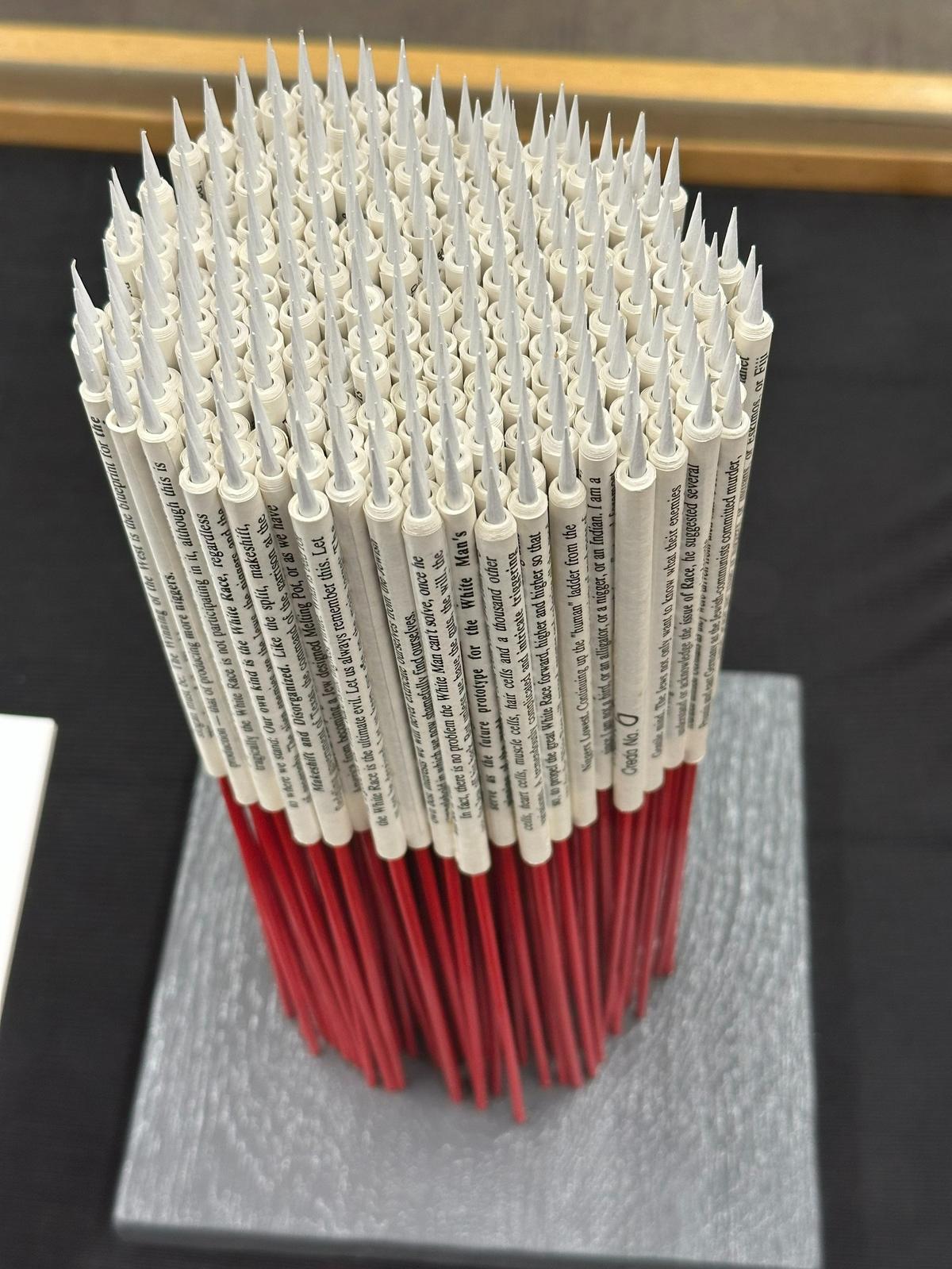
The results include sculpture, photography, ceramics and printmaking. Artists from Montana, New York, Pennsylvania, California and more responded.
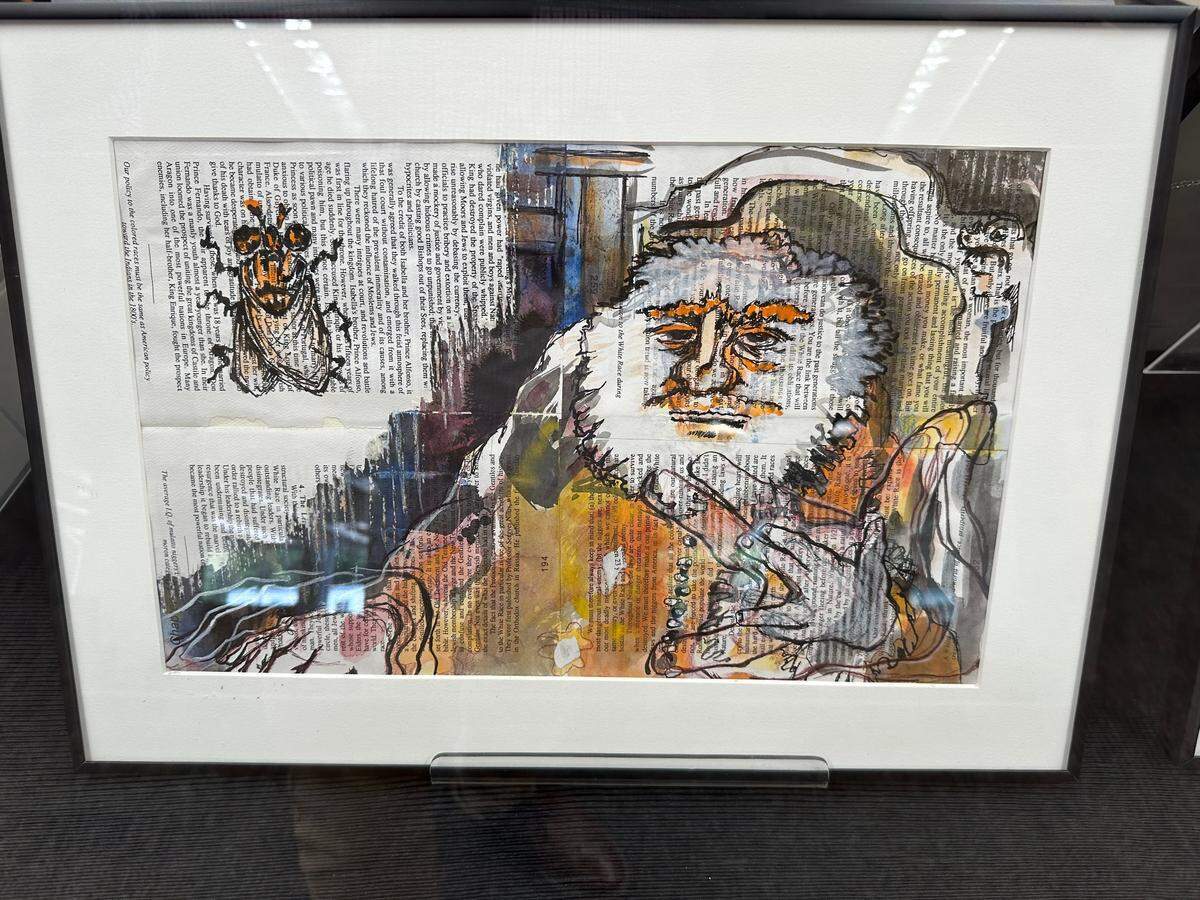
One artist from Michigan created 11 images using India ink, paint and mixed media on the pages from the books to honor the 11 hate crime victims in Montana in 1992, the year the Creativity Movement reissued “The White Man’s Bible.” Another artist transformed the pages of the books into origami art and a mask. Another turned the pages into 1,000 origami “peace doves.”
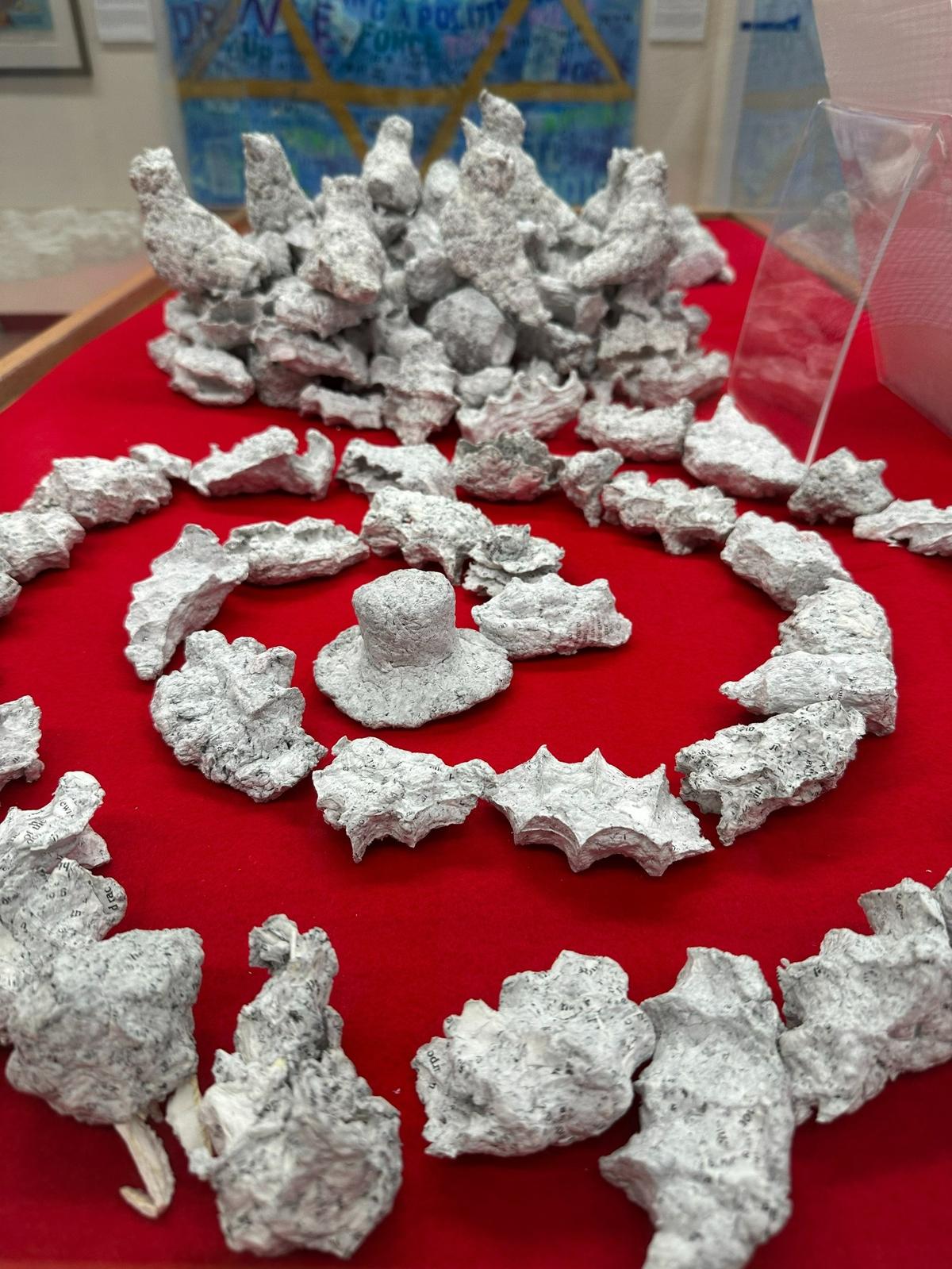
One artist, Billie Lynn, of Florida, explained how she came up with the idea of washing the pages in soap and water and forming them into small sculptures.
“After reading some of the ‘literature,’ I was shocked by the ‘rational/logical’ mind spewing such hatred and historical distortion,” Lynn writes in her artist statement. “After a short time, I had the undeniable impulse to jump up and wash my hands – I felt so defiled.”
The exhibit started in 2008 and has been to Idaho before, but this is the first time it’s been in Boise.
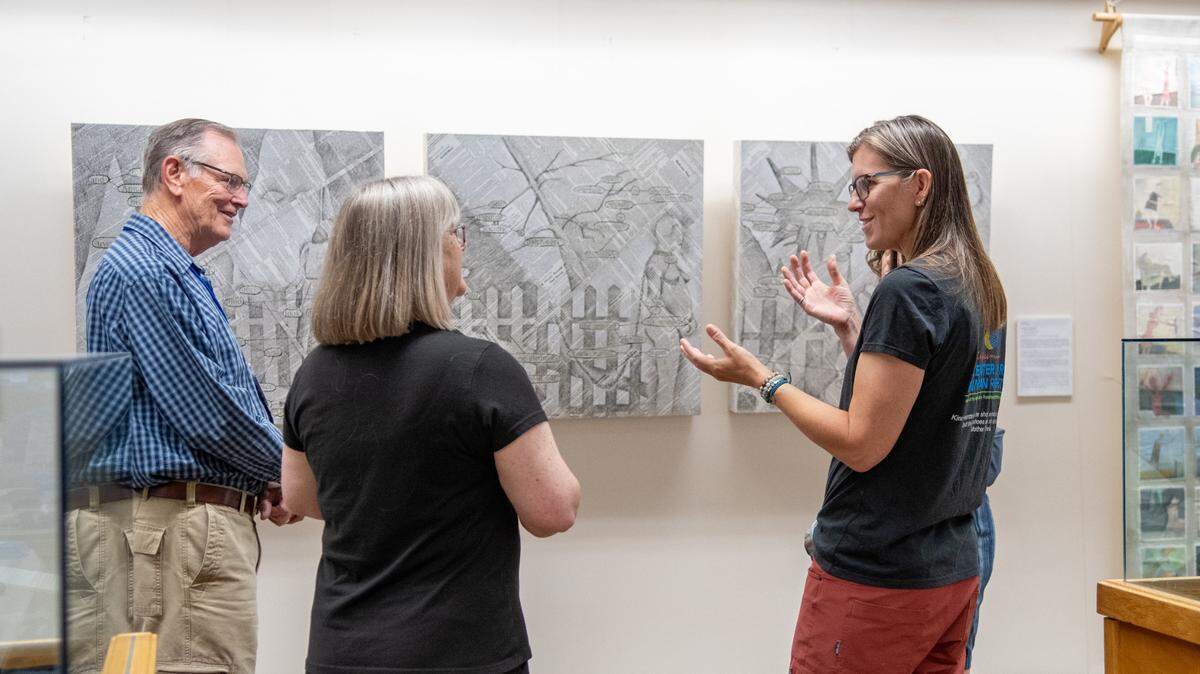
The Boise exhibit is a collaboration among Boise State University, the Wassmuth Center for Human Rights, the Erma Hayman House and the Speaking Volumes Art Action group.
The exhibit is free and open to the public at all three locations during regular open hours.
I checked out the part of the collection that’s on the first floor of the Albertsons Library at Boise State.
Idaho, of course, has had its own struggles with white supremacy and white separatist movements, notably Richard Butler’s Aryan Nations compound in the 1980s and ’90s in North Idaho that gave Idaho a negative reputation that lives on today.
Those struggles continue with Christian nationalist movements that see Idaho as a white separatist haven and particularly North Idaho as part of the American Redoubt movement.
This isn’t ancient history.
We were reminded of that fact just a few weeks ago when, right here in Boise, at the Hetero Awesome Fest, North Idaho podcaster Dave Reilly said Boise is a great city, saying “there aren’t any Black people here.”
If you think we’ve rid ourselves of the scourge of white supremacy and hate, think again.
Now, more than ever, we need the message of the Speaking Volumes exhibit.
“It’s important to continually find ways to remember and learn from communities of hate,” Hervochon said. “This exhibit shows how to take these materials and transform them, reinterpret them, reimagine them into something positive and meaningful. It’s more hopeful, in some cases more beautiful. It’s something to learn from. It’s so much more powerful to turn them into something different, more hopeful.”
Scott McIntosh is the opinion editor of the Idaho Statesman. You can email him at smcintosh@idahostatesman.com or call him at 208-377-6202. Sign up for the free weekly email newsletter The Idaho Way.