Meet Shyloh, the Boise homeless teen who’s going to college | Opinion
AI-generated summary reviewed by our newsroom.
- Shyloh Crawfurd, 19, overcame homelessness and incarceration to enroll in college.
- He contributes to a shelter-run newspaper and co-founded a boutique for shelter guests.
- Through support programs, Shyloh has built skills in journalism, fashion and retail work.
Shyloh Crawfurd has a mantra.
“Success is my revenge.”
At just 19, Shyloh has been through a lot. Adopted at a very young age, he was raised in a religious household that didn’t accept his sexuality, leading to some bad behavior, run-ins with the law and time spent in juvenile detention and county jail.
When he got out of jail, his parents dropped him off at the River of Life homeless shelter when he was 18.
Despite all this, Shyloh remains optimistic about his future. Now a guest at the Interfaith Sanctuary homeless shelter, he’s enrolled at Lewis-Clark State College, where he plans to start online classes in the fall, taking a full load of classes in English and anthropology.
“I’ve always wanted to go to college,” Shyloh told me in an interview. “When I became homeless, after I got out of jail, I didn’t have any opportunity to go to college, so there was a year gap, and I hated that so much. So as soon as I found out that I could go back to college, I immediately was like, ‘Yes, sign me up.’”
In his time at Interfaith Sanctuary, he’s made a huge impact. He’s a gifted poet, and he hopes to publish a collection of his poems, and he contributes to Interfaith Sanctuary’s newspaper, Word on the Street.
He says he wants to be a journalist, which makes my heart soar, with the ultimate goal of working for the New York Times.
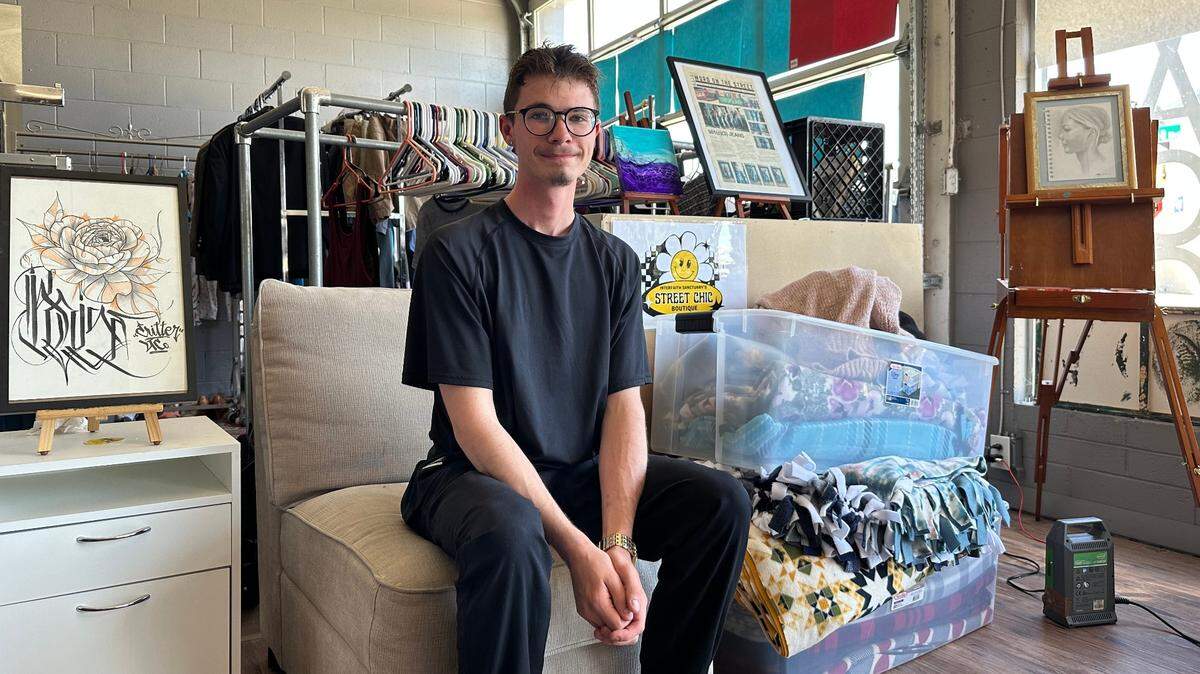
He loves clothes and fashion, and he helped start the Street Chic Boutique, where guests can get nice clothes for job interviews, court hearings or just to look good.
“If you’re not dressed well, you don’t feel well, and you don’t have as many doors open,” Shyloh said. “I believe presenting yourself is key in how people should be living because if you dress well, more things are likely to happen because people take you more seriously.”
From depressed to success
Jodi Peterson-Stigers, executive director of Interfaith Sanctuary, said Shyloh was very nervous and shy when he first came to the shelter, understandable for a kid who was just 18 at the time.
Shyloh admits he was depressed and angry at first. But he came out of his shell and began to take advantage of the opportunities available to him through Interfaith, such as Project Well-Being, a daytime program that provides mental health support and connections to services.
In addition to writing for Word on the Street and being a personal stylist for Street Chic Boutique, he participated and graduated from the Idaho Youth Ranch’s Youthworks program, an eight-week paid on-the-job training program designed to give young people hands-on experience in retail sales, customer service, merchandising, inventory maintenance, cash handling and teamwork.
He connected with the TRIO, a federal program designed to help students go to college.
“He is a shining example of what it takes really to bring someone out of the trauma of homelessness and give them a sense of place and the ability to feel seen and cared about and then also having great relationships within our community that we can bring these partnerships in and lift our guests even further,” Peterson-Stigers said.
Homelessness is hard work
Talking to Shyloh reminded me how much hard work goes into just overcoming the challenges of experiencing homelessness.
He has a phone but doesn’t have a data plan, so he connects to his phone only when he can get to a free wifi hotspot, limiting his ability to communicate with people.
He doesn’t have a driver’s license, which doesn’t matter, because he doesn’t have a car. He takes the bus to his job at the mall, but the bus is not very convenient.
He’d like to work full time, but his employer limits him to part-time work, so Shyloh’s looking for another part-time job, but it’s difficult to figure out a workable schedule.
So much of what most of us take for granted is a constant struggle when you’re experiencing homelessness.
Not a ‘victim story’
And yet, Shyloh remains optimistic, creative and focused on his future. He’s passionate about writing, fashion and creating opportunities for himself and others like him.
“I want to encourage other people that you can do whatever you want to, if you can put your mind to it,” he said. “If you can dream it, you can achieve it. I believe that.”
Toward the end of our interview, Shyloh asked me what I’m going to put in my story, concerned with how I’m going to frame it.
“I don’t want this to be a victim story, because I’m not,” he said. “I don’t want to let what happened in the past define me. That was the past. I’m looking forward.”