With former Idaho governor’s diagnosis, let’s talk about colon cancer | Opinion
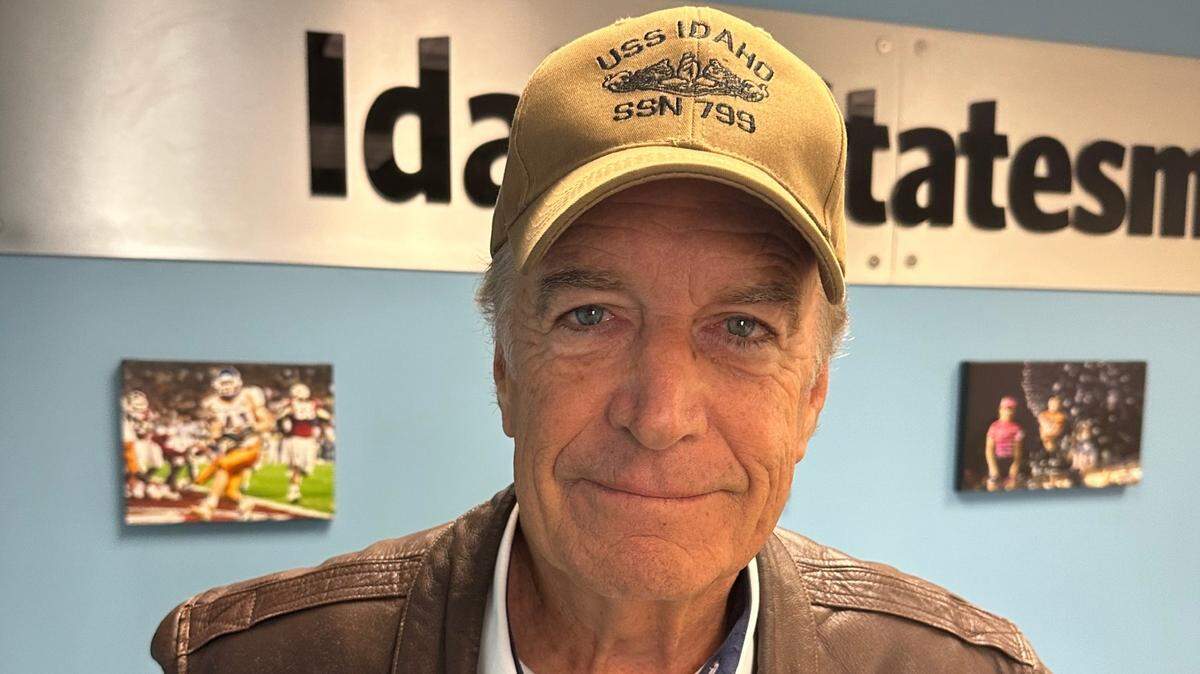
Former Idaho Gov. Dirk Kempthorne announced Monday that he has recently been diagnosed with colon cancer and that he will begin chemotherapy immediately.
It’s a good opportunity to talk about colon cancer, a subject that most people feel uncomfortable discussing.
I’ve become a bit of an evangelist on the topic, since I was diagnosed with colon cancer 21 years ago, when I was just 33 years old.
I’m a living testament to early testing and detection.
At the time, 2004, my wife and I were living in Rochester, New York, and planning for our second child. I was switching doctors for a routine checkup.
Dr. Ernest Anderson, whom I credit with saving my life, ordered a battery of tests, which at the time I considered excessive. Among them was a stool sample, which I thought was unnecessary and almost didn’t do. But, I figured, what the heck, it would be best to get a full, clean bill of health.
The test showed microscopic traces of blood, which surprised me because I didn’t have any symptoms. I rationalized that perhaps I had taken some ibuprofen that caused the test result.
Anderson ordered a sigmoidoscopy, a less invasive form of colonoscopy, and my doctor found two polyps, so he ordered a full colonoscopy.
During the colonoscopy, my doctor removed the polyps and then discovered a “mass” that was most likely malignant.
A biopsy confirmed it: I had colon cancer.
With a 2-year-old son and another on the way, the diagnosis hit hard, especially for my wife, who was forced to think about the possibility of becoming a young widow with two small children.
Fortunately, my cancer was Stage 1.
The prescribed treatment was a subtotal colectomy, or removal of two-thirds of my colon; I like to tell people that I now have a semi-colon.
The surgery meant that I didn’t have to go through chemotherapy or radiation, for which I’m thankful. But it was mostly because my cancer was caught early. I now get a colonoscopy every five years.
The New York Times reported last year that colorectal cancer cases are rising rapidly among people in their 20s, 30s and 40s, according to a report published by the American Cancer Society.
Several medical organizations, including the American Cancer Society, now recommend that regular screening for colon cancer start at 45, instead of the previous recommendation of 50.
Even 45 would have been too late for me, so I say the earlier the better. Find yourself a doctor like Ernest Anderson — and a health insurance company that will pay for it — and get yourself tested.
Just about every media outlet, including the Idaho Statesman, has published a story about Kempthorne’s diagnosis. Let me put a finer point on it as a call to get yourself tested — even if you think you’re too young to worry about it.
“While no one wants cancer in their life, let me use this situation to urge everyone to be current in their testing and remain vigilant on updates,” Kempthorne said in a prepared statement. “Throughout my life, I have tackled many challenges head-on. I will do the same with this — which may be the challenge of my lifetime. I hope that sharing this message will help others.”
Having met and interviewed Kempthorne, I’m not surprised by his upbeat attitude and his desire to help others.
I had the pleasure of meeting and interviewing him last year for a column about the USS Idaho, the newest nuclear submarine to join the Navy fleet and the first Navy ship to be named after Idaho in more than 100 years.
The former Boise mayor, U.S. senator and secretary of the Interior is also the chairman of the USS Idaho Commissioning Committee Advisory Board, a position that he is well suited for.
He’s proven to be an enthusiastic and passionate supporter and advocate for the USS Idaho, which is undergoing sea trials now in preparation for an official launch and commissioning likely sometime next year.
Knowing what I know about Kempthorne, I’m looking forward to seeing him at that commissioning ceremony next year.