He survived the Holocaust as a child. He’s coming to Boise to tell his story | Opinion
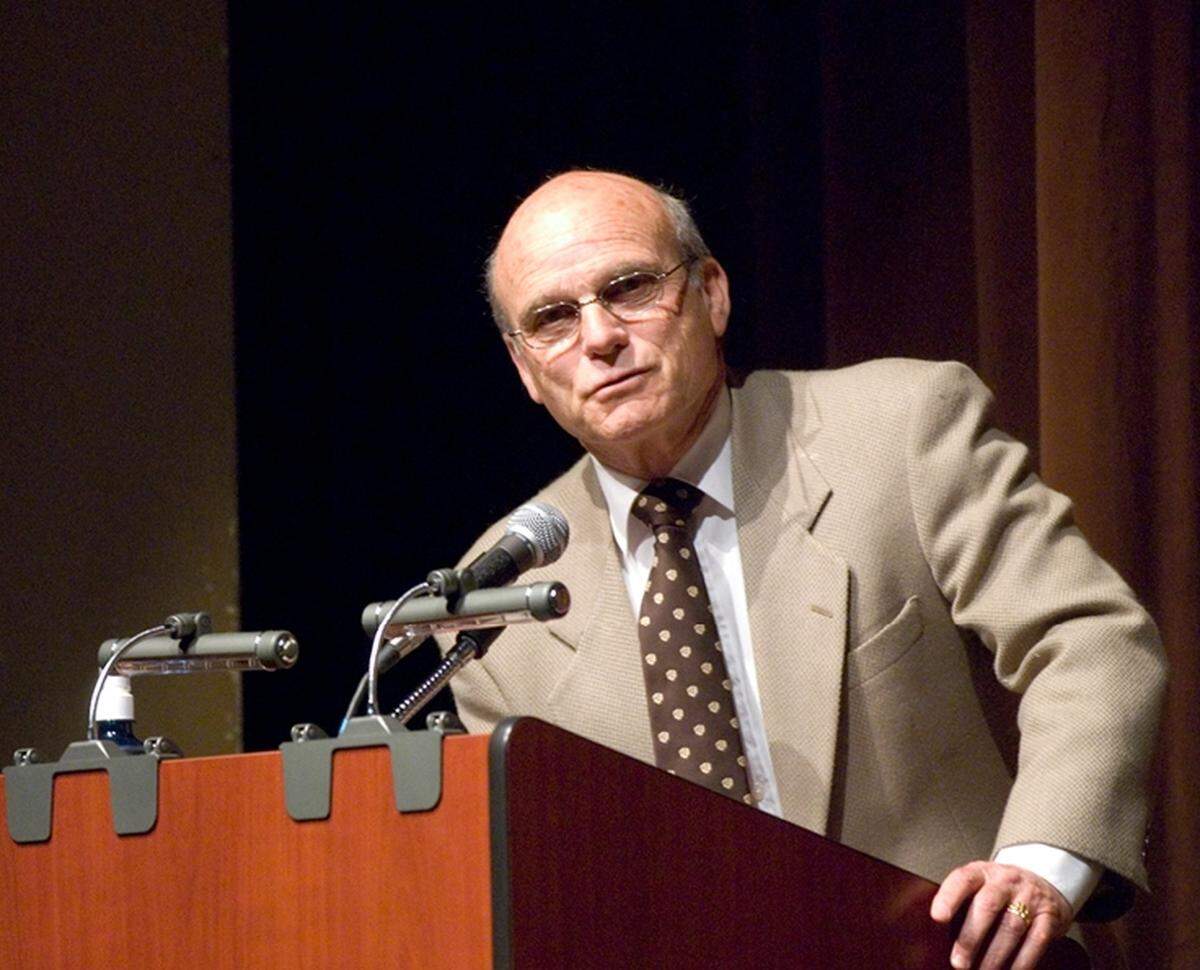
.jpg "Pete Metzelaar (1).jpg")
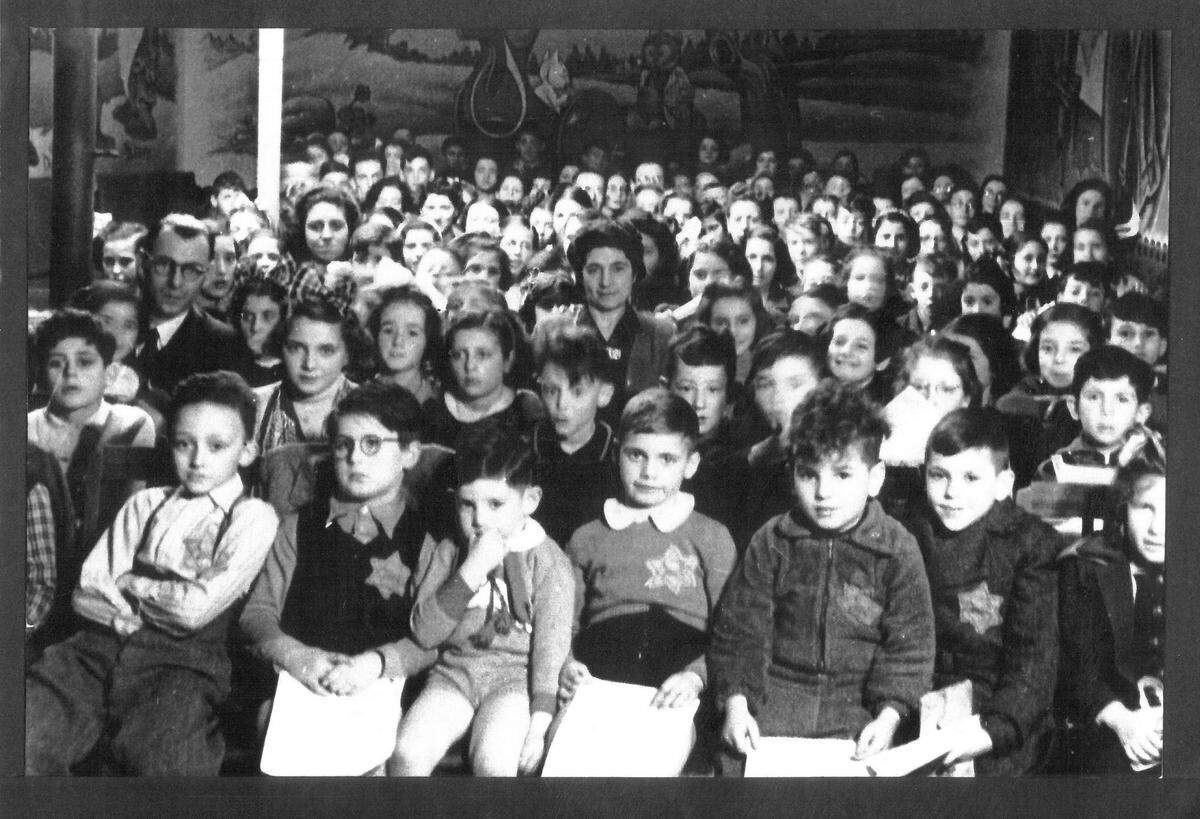
Pete Metzelaar was 7 years old living in the Netherlands when most of his family members were arrested by the Nazis in 1942.
Metzelaar and his mother went into hiding in a small farmhouse in the countryside and built an improvised cave in the forest as a hiding spot for when Nazi trucks would show up at the farmhouse looking for Jews.
I’ve listened to some of Metzelaar’s testimony and life story on the website of the Holocaust Center for Humanity in Seattle, and it is chilling. He and his mother were the only members of his family to survive the Holocaust.
“The cave being only 100 feet from the farm, we could hear the soldiers ransacking the farm, and knowing that I was being hunted,” he said, putting the emphasis on “hunted.” “I didn’t know, ‘Is it this time that they’re going to come get me?’ ”
Metzelaar will be sharing his story with the Treasure Valley in two scheduled events at 6 p.m. on Tuesday, Dec. 3, in Boise and Wednesday, Dec. 4, in Meridian.
His talk on Dec. 3 will be at Boise State University Special Events Center, and the Meridian event will be at the West Ada School District’s White Cloud Auditorium, 1303 E. Central Drive in Meridian.
Both events are free and open to the public.
Council for Holocaust Awareness of Idaho
His appearance here is being hosted by the recently formed Council for Holocaust Awareness of Idaho.
“My hope is really it sparks an interest within the community to want to learn more,” Kali Cusimano, executive director and co-founder of the council, told me in a video interview. “And I think Pete is the perfect person. His story is amazing, and I think it’s so important to remember that Jews, especially in the Holocaust, that even though he did not go into a camp, his story is so strong and powerful.”
CHAI brings survivors and scholars to the Treasure Valley to educate the public about the Holocaust.
Most recently, CHAI did a film screening of “999,” about 999 unmarried, young Jewish women registered for government service in a supposed shoe factory and ended up in Auschwitz concentration camp, a complex of over 40 concentration and extermination camps operated by Nazi Germany in occupied Poland during World War II and the Holocaust. CHAI brought the director for a Q and A after the screening.
Cusimano wrote a guest opinion piece recently, retelling the story of how her son was surrounded by fellow students giving the Nazi salute and saying, “Heil Hitler.”
“I’ve really seen just how ineffective Holocaust education has been here locally and, really, the lack of it throughout the state,” Cusimano said. “And my own family, we’ve unfortunately experienced the negative impact of either when there is Holocaust education and it’s not done responsibly, so there’s not a whole lot of context, and then also when there is no Holocaust education, that antisemitism really can come out of both of those scenarios.”
Cusimano cited some discouraging statistics, from The Conference on Jewish Material Claims Against Germany, an organization that represents the interests of Holocaust survivors and their descendants:
- 40% of Idahoans could not name a camp or a ghetto of the Holocaust
- 66% of Idahoans knew that the Holocaust was associated with World War II
- 31% couldn’t accurately describe what Auschwitz was
- 58% have seen Nazi symbols over the last five years, whether it’s in the community or on social media.
Cusimano noted that her organization’s acronym, CHAI, pronounced “hi,” is Hebrew for “life.”
“Even though even after the Holocaust and 6 million Jews were killed, life continues on,” she said. “We still have Jewish life here in Idaho, we have since the 1860s, and even though it’s small, it’s still a robust community.”
CHAI’s main mission is Holocaust education and also works with teachers.
“There’s kind of a level of uncomfortableness with teaching the Holocaust because it is such an intense topic,” Cusimano said. “And then there’s also a fear of potential repercussions. We often hear about educators being targeted by different organizations, where they are now afraid to really teach a topic in a responsible manner, because when they do, it upsets people, and it’s unfortunate that our educators, on top of everything else that they have to deal with, are dealing with that, as well.”
Losing Holocaust survivors
Jan. 27 is the 80th anniversary of the liberation of Auschwitz, and Cusimano said it’s important to not let the Holocaust become “ancient history.”
“We’re so fortunate that there are still survivors today that we could speak to,” she said. “That’s a big fear of mine, and I think, other scholars, is that when survivors are no longer there, we’re going to see an incredible rise in distortion and denial of the Holocaust.”
The formation of CHAI comes at a critical time, as Jews in America seem to be getting attacked from both the right and the left.
The rise of Christian nationalism on the right is deeply troubling and has chilling echoes of pre-war Germany presaging the Holocaust. Idaho Family Policy Center, which advocates for the government to “promote Christian values,” recently announced support for a bill to mandate daily Bible readings in Idaho public schools.
“It gives me goosebumps, actually, when you said that,” Cusimano said. “It is very concerning, because … religion has no place in schools. If you want to have a private school, go for it, have a religious school, but in the public school system, I do not believe religion has a place there, and that’s coming from someone who is religious.”
Further, she said the recent decision by Superintendent of Public Instruction Debbie Critchfield to allow PragerU content into Idaho curriculum is concerning because it oversimplifies and provides only a snippet of the Holocaust, which Cusimano said can lead to distortion and denial.
At the same time, many on the left have taken a pro-Palestinian position in the current war that started Oct. 7, 2023, with Hamas’ attack on Israel. Such anti-Israel sentiments have led to anti-Semitism.
But Cusimano wants to make clear that acknowledgement and understanding of the Holocaust is nonpartisan.
“A big thing that I really try to work on is making sure that when I am talking about Holocaust or things like that, I try to show that it’s nonpartisan,” she said. “I don’t have a political agenda. I really just want people to learn the truth of what happened, and really see those signs of what’s leading up to it, and then the fallout after something like that happens.”
Go check out Pete Metzelaar’s videos online and, more importantly, go see him at one of the two appearances in the Treasure Valley.
It’s vital that we not let the Holocaust be forgotten, misunderstood or dismissed.
Because those who fail to learn from history are doomed to repeat it.