‘Join or Die’: Can we save American democracy by simply joining a club? | Opinion
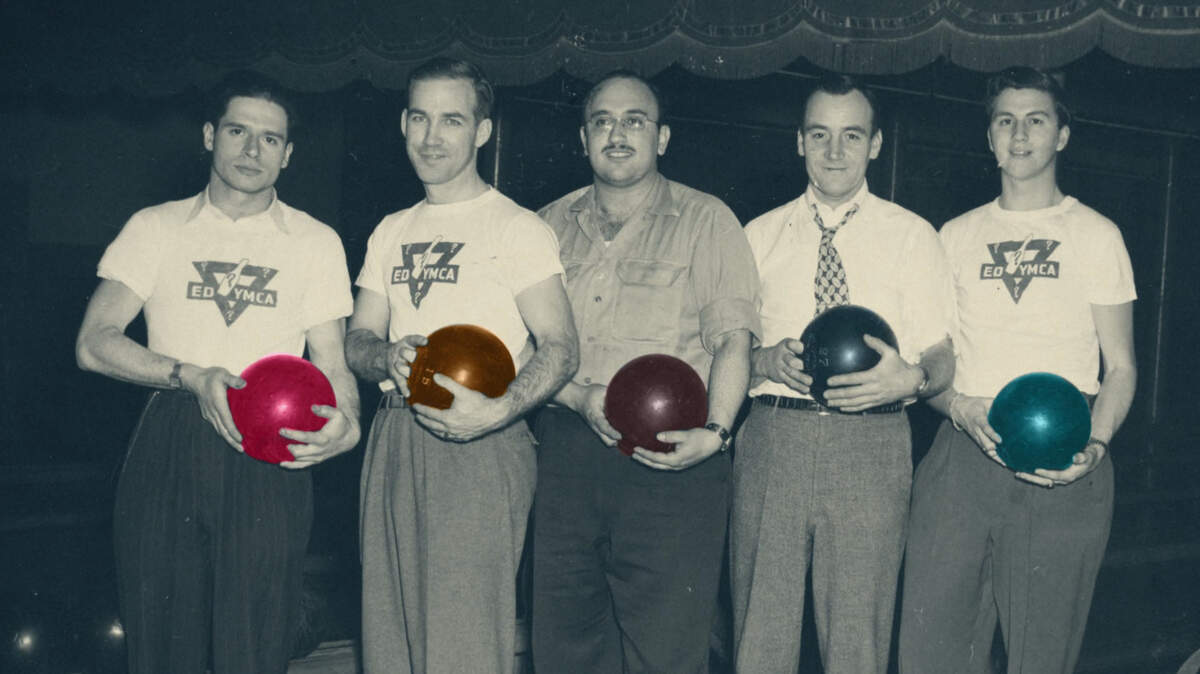
About 200 people packed the large theater at The Flicks in Boise last week to see a sold-out special screening of “Join or Die,” a new documentary about why you should join a club.
The film is a follow-up to the hit book “Bowling Alone,” by Harvard professor Robert Putnam, in which he documented the decline in Americans’ membership in civic clubs, such as Oddfellows, Rotary, Lions and Kiwanis, even PTAs and dinner parties, contributing to political divisiveness and ultimately bad government.
When Putnam’s research became popular in the late 1990s, America was on an upswing, with low inflation, low unemployment, high economic growth, and a rise in productivity and technology often referred to as the “American boom,” but Putnam saw storm clouds on the horizon because his research showed that America was headed for increasing political and civic discord.
His American research was based on research he had done in the 1970s in Italy, which had begun an experiment with regionalized government, giving Putnam a ground-floor view of what made good government and what conditions led to corruption and ineffectual governance.
His research led him to the conclusion that the Italian regions with good government had high numbers of civic clubs, while the ineffectual governments had a lower number of such clubs. Other factors, such as wealth and education, did not correlate with good government. Only the number of civic clubs provided a direct correlation to regions with better government, lower crime and better schools.
Putnam then applied that theory to the United States, leading to a paper and then a book called “Bowling Alone,” which took the country by storm at the time.
That book, 25 years ago, showed that low social engagement sowed divisiveness, mistrust in institutions and coarse political dialogue. In just 20 years after the publication, the United States has seen that play out, culminating in the U.S. Capitol riot of Jan. 6, 2021.
Putnam’s research ascribes some of the decline in club membership to the rise in television, as Americans increasingly retreat to their homes each night after work to veg out in front of the boob tube.
I would add to that our hyper-interest and hyper-scheduling of children’s events, especially youth sports. Gone are those days when Wally Cleaver came home to tell his parents that he hit the winning home run that afternoon. Now, the parents are there capturing every swing of the bat with their cellphone and posting it on Instagram.
And although “Join or Die” doesn’t address it in depth, I would be willing to bet that the decline of civic engagement correlates directly to a decline in newspaper readership.
But “Join or Die,” released in limited cities and brought to Boise thanks to local Rotary groups, offers an optimistic note. It picks up the story of Putnam, who recently released a new book titled “The Upswing.”
“I realized I’ve only been looking at the second act,” Putnam says in “Join or Die.”
In “The Upswing,” Putnam and co-author Shaylyn Romney Garrett posit that the decline in civic engagement doesn’t necessarily have to be an inevitable death spiral leading to the ultimate destruction of democracy in America, although it can sometimes feel that way.
The book’s subtitle says it all: “How America Came Together a Century Ago and How We Can Do It Again.”
“The Upswing” looks at the decades preceding the 1950s, showing that civic engagement and participation in civic clubs was in decline from the late 1800s into the early 1900s, before climbing to its peak in the ’50s.
The suggestion, or at least the hope, is that America can do it again, that the 2020s can be seen as akin to the early 1900s, and we could see a resurgence of the importance and prevalence of the social club.
“I thought the movie gave us hope,” Janice Fulkerson, a Rotary member who read “The Upswing” in advance and spoke after the Boise screening, told me in a phone interview. “At the end they said, ‘Wait, wait, wait, let’s back up and look at a time when people were joining, when the groups were expanding.’ Not that we want to go back in time, but we can create those opportunities now for people to come together and join, whether it’s a formal club or it’s a group of people that want to bike or hike, or just do something good in the community.”
“Join or Die” presents a compelling argument in favor of such a resurgence, pointing to the social capital created by more social interaction and just how bowling in leagues or being a part of the Oddfellows can serve as an antidote to political division and the scourge of social media divisiveness.
While “Join or Die” presents a grim picture of the decline of social clubs (indeed the title itself offers a dire ultimatum), the film adopts the optimistic view of its main subject, Robert Putnam.
America once climbed out of a highly fragmented, individualized and polarized society, beleaguered by bad government, and we can do it again.
Belonging to a club gives you a sense of being a part of something bigger than yourself. It exposes you to ideas and arguments you may not have considered before. It makes you realize that most of us really aren’t that different on a lot of subjects, and that we all mostly want the same things in life, despite how the algorithms and social media bots try to divide us.
Finally, in a club, you might come face to face with someone you disagree with on some issues, but you realize that person with whom you disagree is not an evil enemy — rather, they are simply a friend or acquaintance with whom you disagree.
All of that leads to greater trust in our fellow Americans and greater trust in our institutions, and that leads to better participation in civic life and, ultimately, better government.
This story was originally published August 13, 2024 at 4:00 AM.