
‘Squaw’ is an ugly stain on Idaho maps. We now have an opportunity to get rid of it
Idaho is home to dozens of place names that contain the word “squaw,” a derogatory term historically used as an offensive ethnic, racial and sexist slur, particularly for Indigenous women.
Those place names, though, could become — finally — a thing of the past.

U.S. Secretary of the Interior Deb Haaland on Friday formally established a process to review and replace derogatory names of the nation’s geographic features. She also declared “squaw” to be a derogatory term and ordered the Board on Geographic Names — the federal body tasked with naming geographic places — to implement procedures to remove the term from federal usage.
“Racist terms have no place in our vernacular or on our federal lands,” Haaland said in a press release. “Our nation’s lands and waters should be places to celebrate the outdoors and our shared cultural heritage — not to perpetuate the legacies of oppression.”
Haaland, the first Native American cabinet secretary, issued two orders Friday. One formally identifies the term “squaw” as derogatory and creates a Derogatory Geographic Names Task Force to find replacement names for geographic features on federal lands bearing the term.
The other order creates a federal Advisory Committee on Reconciliation in Place Names to solicit, review and recommend changes to other derogatory geographic and federal land unit names.
Together, the orders are intended to accelerate the process by which derogatory names are identified and replaced. That process now is on a case-by-case basis, puts the onus on proponents of a name change and can sometimes take years.
The new process is meant to be more proactive and will include engagement with tribes, state and local governments, civil rights, anthropology and history experts and members of the general public, according to the press release from the Department of the Interior.
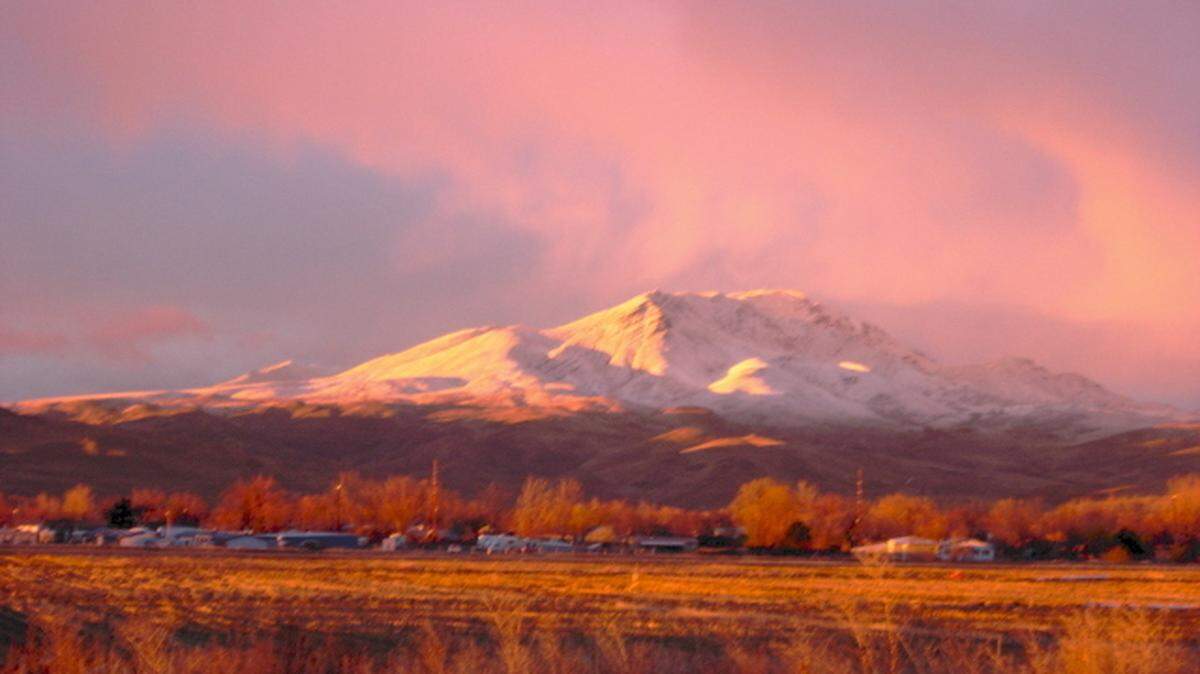
Squaw Butte in Emmett
More than 650 federal land units contain the word “squaw,” according to a database maintained by the Board on Geographic Names.
In Idaho, 70 places officially contain the word “squaw.” There are several Squaw creeks and variations (“Little Squaw Creek,” “Third Fork Squaw Creek,” “Squaw Camp Creek”) as well as valleys, flats, buttes and reservoirs containing the word, including in Elmore, Valley, Owyhee, Bonneville, Cassia, Custer, Lemhi, Butte, Adams and Idaho counties and more.
Perhaps best known to local residents is Squaw Butte, an iconic local landmark just north of Emmett, on federal Bureau of Land Management land.
If you can find it, Bingo Barnes, previous owner of the Boise Weekly, wrote a scathing column demonstrating the offensiveness of the word by substituting the word “squaw” with another vulgar word sometimes used to degrade a woman. It does a good if indelicate job of illustrating the point.
Changing the word “squaw” in Idaho place names is not without precedent.
In all, 22 places in Idaho at one point contained the word “squaw” but have since been changed.
In 2007, the U.S. Board on Geographic Names approved removing the word “squaw” from eight place names in North Idaho — three on the Coeur d’Alene Reservation and five outside the reservation but in the tribe’s ancestral territory — after the tribe asked for the changes, according to an Associated Press article at the time.
Of the three changes on the reservation in Kootenai County, the two Squaw Creeks were renamed Squeatah Creek and Nehchen Creek, and Squaw Hump was changed to Nehchen Bluff, according to AP.
According to the Gem community joint comprehensive plan, Emmett’s Squaw Butte was originally two buttes called Big Butte and Little Butte. In the 1930s the name changed to Squaw Butte based on the poem: “The Legend of Squaw Butte,” by Mrs. B.R. Wright. The poem related the story of a massacre of Indian women and their children based on evidence discovered there. Throughout the valley, according to the comp plan, local people can still see the image “of a sorrowing mother,” a term picked up from the poem.
Of course, there will be those who argue that the name Squaw Butte honors those who were killed in the massacre and is a way to remember the story. But I don’t find using a derogatory term a good way to honor someone.
Change ‘needs to happen’
“We would concur with Secretary Haaland’s action,” Randy’L Teton, public affairs manager for the Shoshone-Bannock Tribe, wrote in an email to the Statesman. “Removing the words squaw from all of Idaho place names needs to happen.”
Emmett and Squaw Butte are on traditional Shoshone-Bannock Tribe lands, according to Native Land Digital, a Canadian nonprofit that documents and maps Indigenous lands. Last summer, the Shoshone-Bannock Tribe issued a paper addressing racial injustice.
“We ask for citizen support of needed actions to redress racial issues, including local resolutions or state/federal legislative bills and tangible educational efforts to better understand historical treatment of minorities and how those historical events and actions directly impact contemporary needs for change,” according to the paper. “We also ask that you be sincere in your efforts to understand our history, to recognize and understand our perspectives of American history. We urge the public to come talk to us, not talk about us.”
As we know, language has a way of evolving, and what may have been an acceptable term before may not be acceptable today.
Believe it or not, 190 places in the United States, at one time or another, contained the N-word.
It wasn’t until 1962 that then-Secretary of the Interior Stewart Udall identified the N-word as derogatory and directed that the Board on Geographic Names develop a policy to eliminate its use, according to the Department of the Interior.
Those have all been changed, but some of those names lingered on into the 1980s, and many of those place names were simply changed to “Negro.”
The use of the word “squaw” has long been a festering problem in Idaho, and it would be good to finally expunge that ugly word from our maps — and our lips.