Everyone wants a trail from Stanley to Redfish Lake, but is it in the right place?
Few people would disagree with the plan to create a trail connecting two of the most popular summer hot spots in Idaho: Stanley and Redfish Lake.
It’s a plan that’s been in the making as far back as the early 1990s, and it appears to be ready to come to fruition, with construction scheduled to start this month.
But property owner Dave Boren says the U.S. Forest Service is about to make a big mistake.
The Forest Service is planning to lay down a 6-inch-elevated gravel trail that’s 6 1/2 feet wide to as much as 12 feet wide, like a scar across an undisturbed, exposed plateau, threatening to spoil a pristine view of the Sawtooths.
The 4 1/2-mile trail would run through land that’s used for cattle grazing in the summer, creating a potential hazard for human interaction. The trail would wind its way through Boren’s property, including an area in a runway protection zone of the Stanley Airport, and federal land, passing through six gates in about a mile-and-a-half span, potentially disrupting elk calving ground, impacting sandhill crane nesting ground, and disturbing wetlands and a creek that would need to be mitigated somehow.
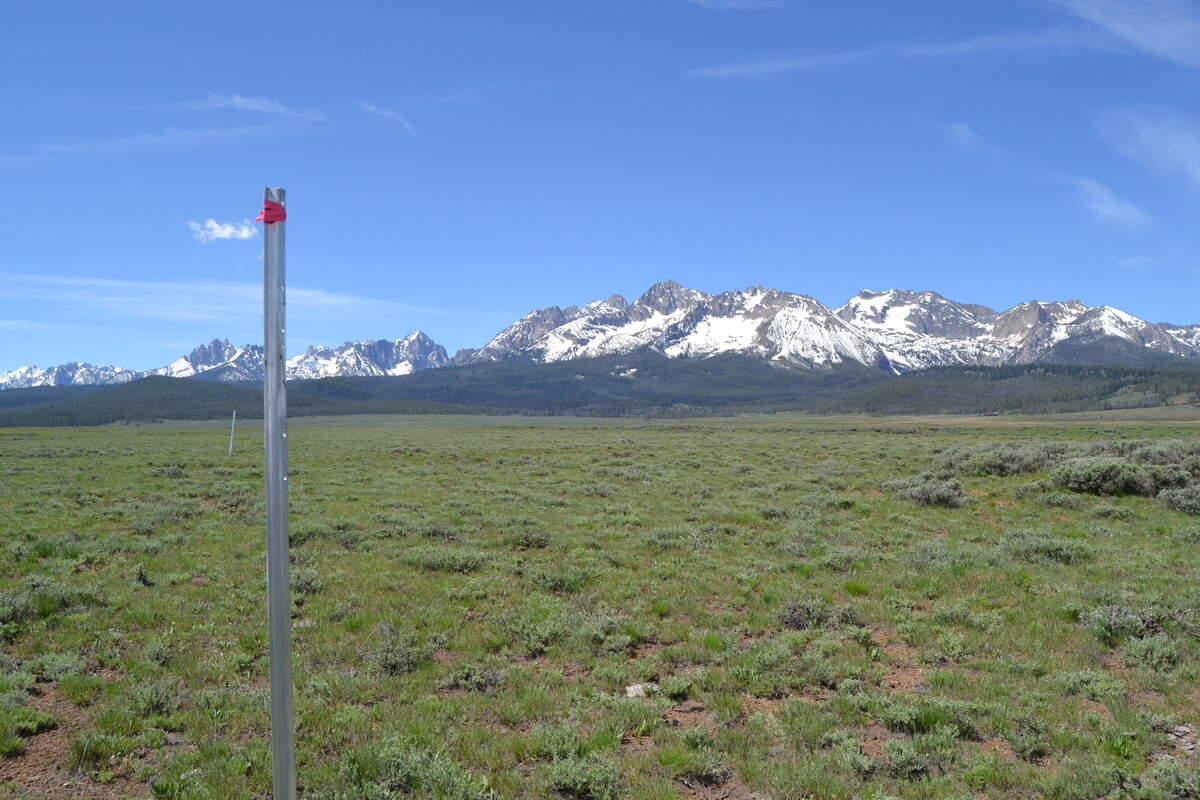
Boren said there’s a better alternative that solves all of the problems of the proposed trail. His alternative would delay the project and require a round of potentially lengthy environmental review, right when crews are ready to start work on the current plan.
But Boren said it would be worth it in the long run, as his proposal would move the trail away and separate it from grazing cattle, get it off a hot and exposed plateau, get it away from the airport runway and eliminate the need for any gates. It would also utilize a raised roadbed of an old highway, getting rid of the need to build up an entirely new structure for the trail.
And perhaps most importantly, it would leave the vista unscathed.
“Growing up as a kid, I just loved coming up here and seeing these pristine views,” Boren told me last month as he gave me a tour of the property. “And then sharing them with my kids, and now with my grandkids, I want them to feel the same excitement. I just wish the Forest Service felt that, too.”
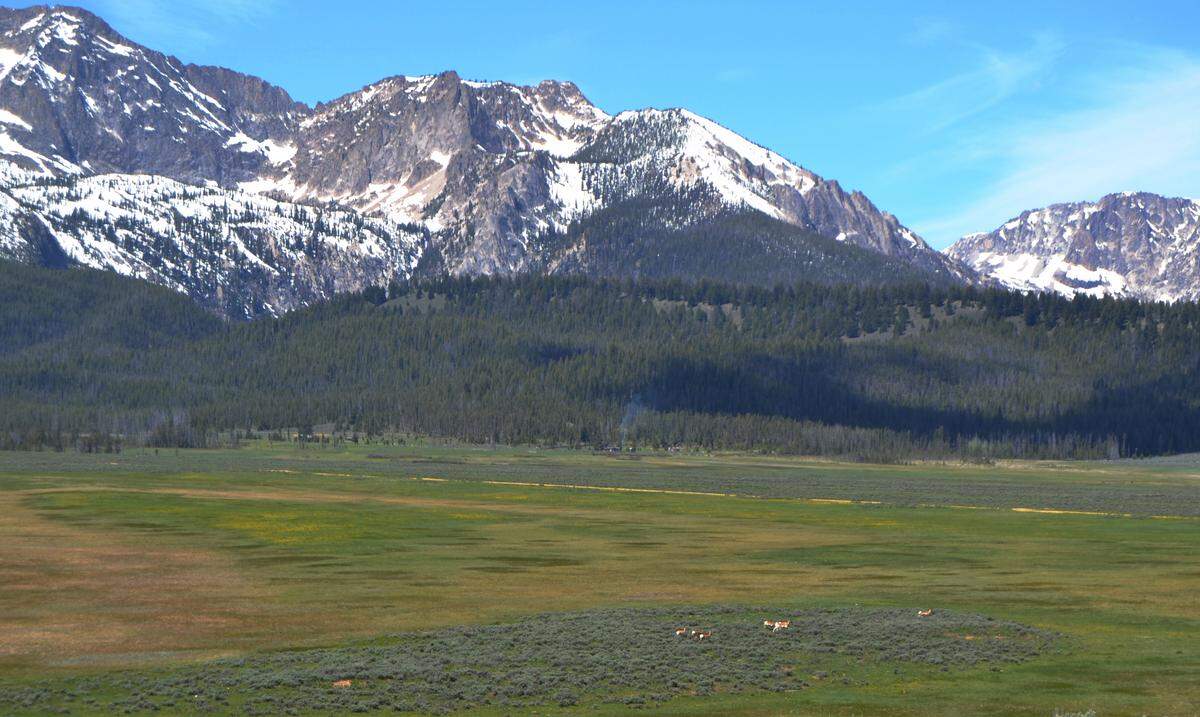
I spent a couple of hours walking the property with Boren, who’s proposing the alternative trail and is in the middle of a lawsuit with the Forest Service in an effort to get it to abandon its proposal and consider his alternative.
“I’m a supporter of the trail,” Boren said. “I think Redfish is one of the most beautiful places in the area. Obviously it’s one of the most crowded. Stanley is the main town in the area. It would be great to have off-road ways to get between them. I totally understand that, totally support it.”
Boren doesn’t even mind having the trail go through his private property. His alternative, to the east and alongside Idaho 75, still goes through his property. In fact, he’s even willing to help pay for it.
“The first problem is there’s a plan already in motion, and then when you criticize that plan, people think you’re anti-trail, and that’s not the case,” Boren said. “As I said, I’m for the trail and actually I’d be willing to invest time and money and actually personal effort, just labor of just helping build the trail, or making the trail better.”
Uphill battle
Right now, Boren is standing alone. The Forest Service wants to stick with the current proposal, which has been in the works for years. The mayor of Stanley supports the current plan, and the Idaho Conservation League has supported and continues to support the trail as proposed.
The trail between Stanley and Redfish Lake is also one of the final pieces of a long and complicated puzzle put together by U.S. Rep. Mike Simpson, R-Idaho, as part of the deal to get the Boulder-White Clouds region designated as wilderness areas.
“Since I began working on the Boulder-White Cloud wilderness bill, one of my priorities has been the building of a family-friendly bike trail connecting Stanley with Redfish Lake,” a statement emailed to me from Simpson read. “The U.S. Forest Service has undertaken considerable time and effort, in consultation with the local community, in determining a preferred location for the trail. After years of starts and stops, I would like to see the trail completed as soon as possible, so Idahoans can begin enjoying it.”
And the clock is ticking. Construction of the trail is supposed to get started this month.
Because the trail has been the subject of a lawsuit, Forest Service officials told me they can’t talk about it.
But I did get Stanley Mayor Steve Botti’s take.
“I always thought that was a good place to put the trail,” Botti said of the Forest Service proposal, in a phone interview. “It comes around and comes into the south end of Pioneer Park here in Stanley, which I’d say that half of the trail, coming north from Redfish Lake into the park is a spectacular view of the mountains. … And so that’s a good place. It’s quiet, they’re nice views of the mountains, it’s kind of away from the Highway 75 traffic.”
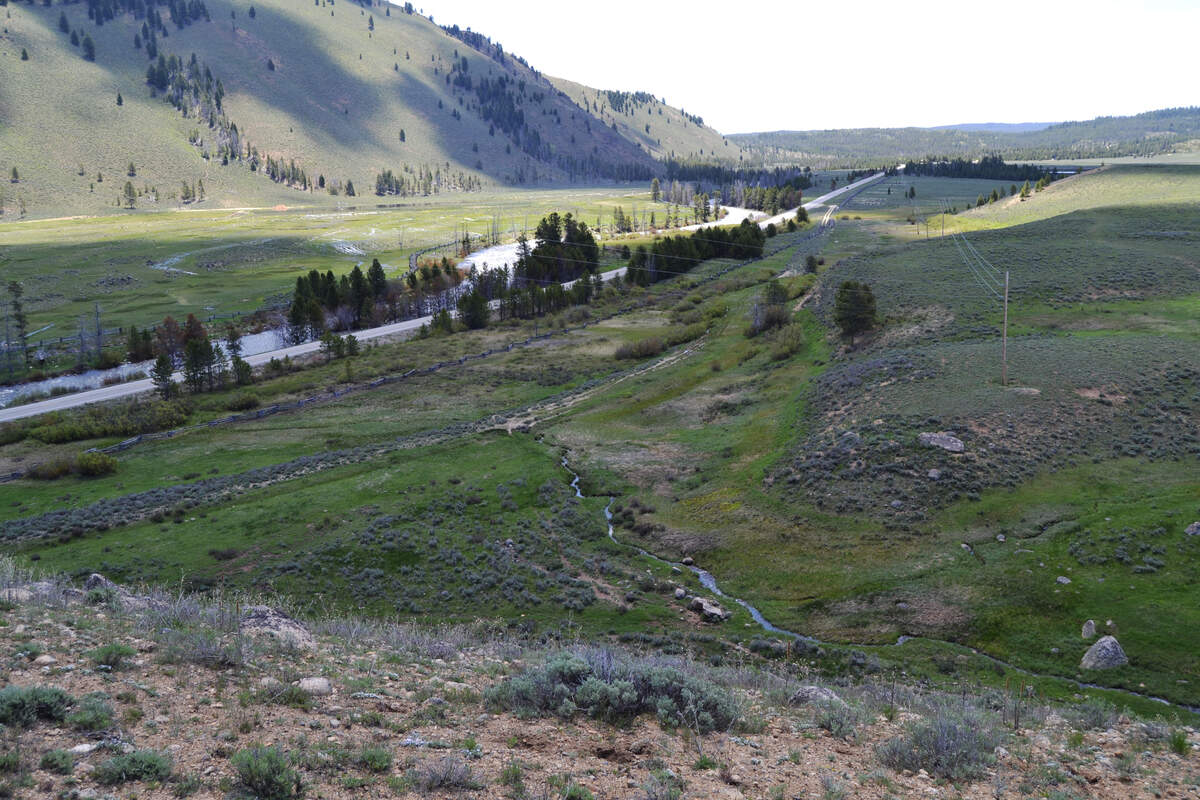
Botti said he doesn’t think Boren’s alternative is ideal down by the highway. He said it’s not as pleasant to be biking or walking near the highway, and because of the elevated ridge blocking the view on the west side of Boren’s alternative, trail users wouldn’t get as nice of a view of the Sawtooths.
It’s a sentiment echoed by the Idaho Conservation League.
“We concluded that it was consistent with (Idaho Conservation League’s) values of providing thoughtful recreation on accessible trails,” John Robison, the Idaho Conservation League’s public lands director, told me in a phone interview. “And what I really like about it is the safety issue. So its physical separation of the trail from the highway is crucial for getting folks out to enjoy the (Sawtooth National Recreation Area), you’re going to have reduced public safety risk, reduce pollution, and actually, you can immerse yourself into the sights and sounds and smells of (the Sawtooth National Recreation Area).”
Having walked both routes, I would rather be closer to the highway than up on the plateau, where you’re surrounded only by high desert sagebrush, exposed to the beating sun.
Along Boren’s proposed alternative, it’s noticeably cooler, and some parts are shaded by trees that stand between the trail and the highway. Most of the alternative route is far enough away from the highway, as much as 100 to 200 feet in some parts, so you’re not right along the road.
For sure, views of the Sawtooths are much better on the plateau, but along Boren’s alternative, you make your way past the elevated ridge, and the Sawtooths come into full view.
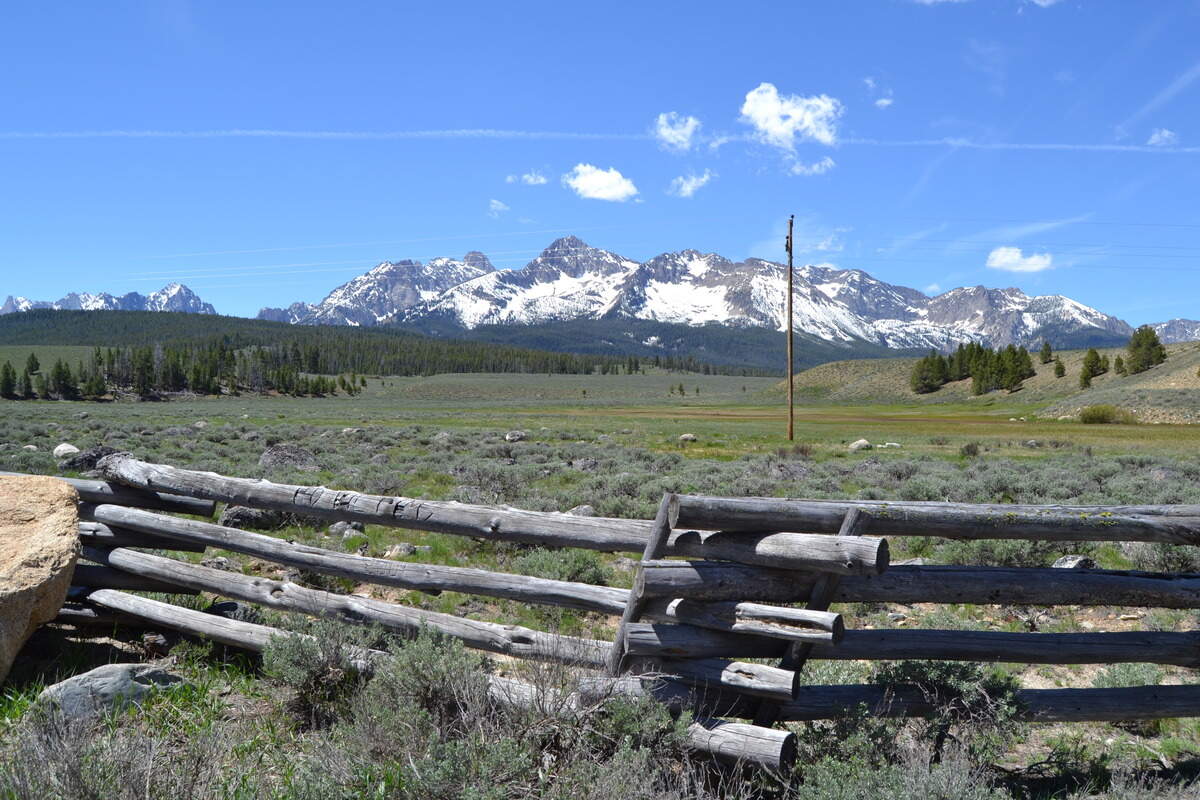
Most problematic with Boren’s proposal, though — a concern raised by Botti and Robison — are two short stretches impeded by steep hillsides that come right down to the edge of the highway. Boren said he inquired about those spots with the Idaho Transportation Department. Boren said the problem could be mitigated by cutting into the hillside, building a retaining wall or putting up a Jersey barrier to separate the trail from the highway.
Botti said that’s still a major sticking point.
“Just looking at the terrain, that seems daunting to me to put a trail in there that close to the highway,” Botti said. “I would much rather see them put it away from the highway, which is where the easement is and it’s quieter, and you got these spectacular mountain views, which I think was the reason the Forest Service purchased that easement in the first place. They were thinking, ‘This would be a nice scenic place to put the trail,’ so that’s kind of my general take on it.”
The easement
Contemplating a Stanley-to-Redfish Trail as far back as the early to mid-1990s, the Forest Service purchased a 30-foot-wide public trail easement from previous owners of the land in 2005. The Forest Service began studying the trail on the easement in 2012 and sent out notice to the public about the trail in February 2014.
The easement has its origins as a popular snowmobile trail, which Boren himself rode on even before he purchased the property in 2016.
“It is a really cool snowmobile trail that’s been used for a long time,” he said. “And I think it’s great. And even when I was not the owner of the land, just using that trail, I thought it was great. Now, when I own the land and other people use the trail, I still think it’s great.”
But in the winter, Boren points out, when snowmobiles are running the trail, you don’t have any of the problems that you have in the summer. In the winter, there are no cattle grazing, no elk calving, fewer airplanes landing at the airport, less wildlife to be disturbed and no spoiling of the landscape.
“Basically, the problem is they chose the snowmobile path,” Boren said. “It’s fine for snowmobiles, it’s just not fine for bikes and people to hike.”
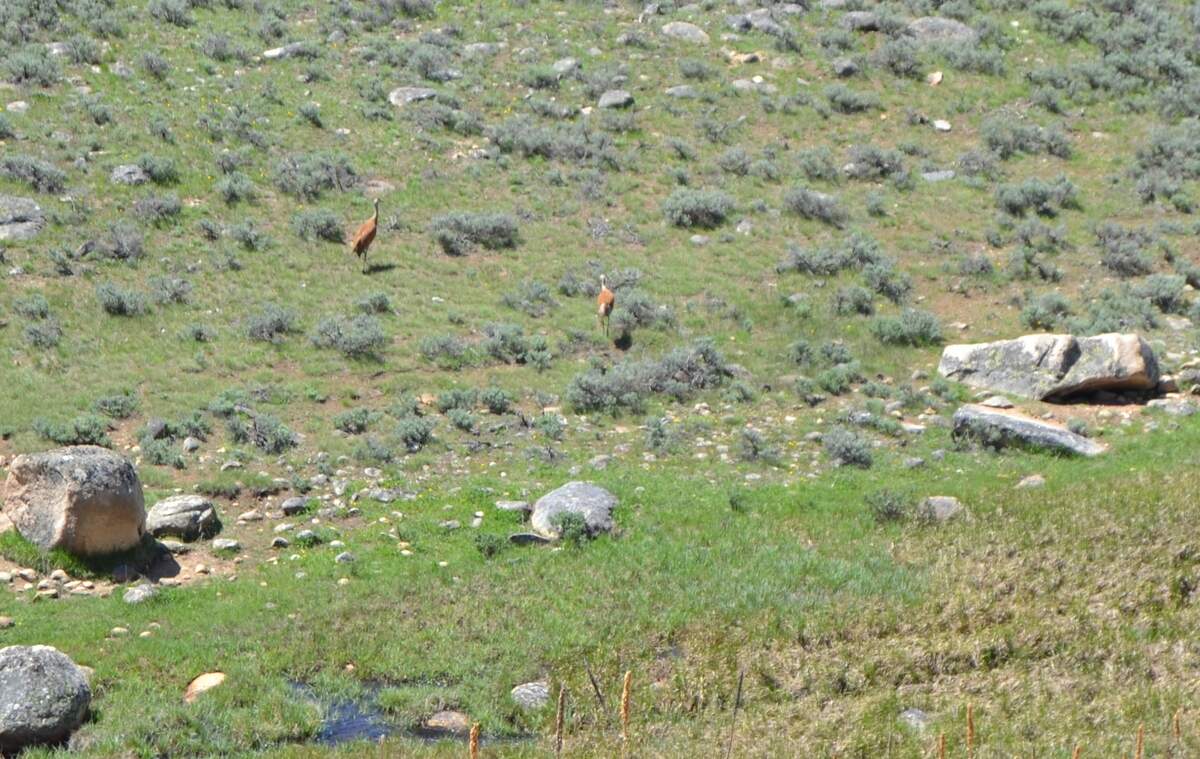
Because the snowmobiles, obviously, are running on snow, the land itself is relatively undisturbed. On my visit, with no snow on the ground, it was nearly impossible to see any evidence of snowmobiles or even any other human impact on the land.
Boren was aware of the easement when he bought the property in 2016, but it appears from the court record that it didn’t start to become an issue until mid-2018, when the Western Lands Federal Highway Division began making firm plans to construct the trail and started soliciting bids.
It was then that Boren said he realized the Forest Service’s proposal would not be a trail that “lays lightly on the land,” a tenet of Forest Service trail construction. Boren said he tried to work with the Forest Service to pitch his alternative route, but talks grew cold, and Boren said the Forest Service said it wouldn’t change its plans.
Boren said he would be willing to buy back the easement from the Forest Service, so that the taxpayers are made whole in the deal, and he would still allow snowmobiling on the property in the winter.
Scar across the land
For those who know Stanley well, the Forest Service’s proposed trail starts near the Stanley Airport, next to the Sawtooth Valley Meditation Chapel, at the top of the hill above Stanley’s “downtown.” The rustic log chapel with wooden pews and stained-glass images of wildlife is a popular place to hold weddings. That’s because the chapel’s front yard looks out onto the iconic Sawtooth Mountains.
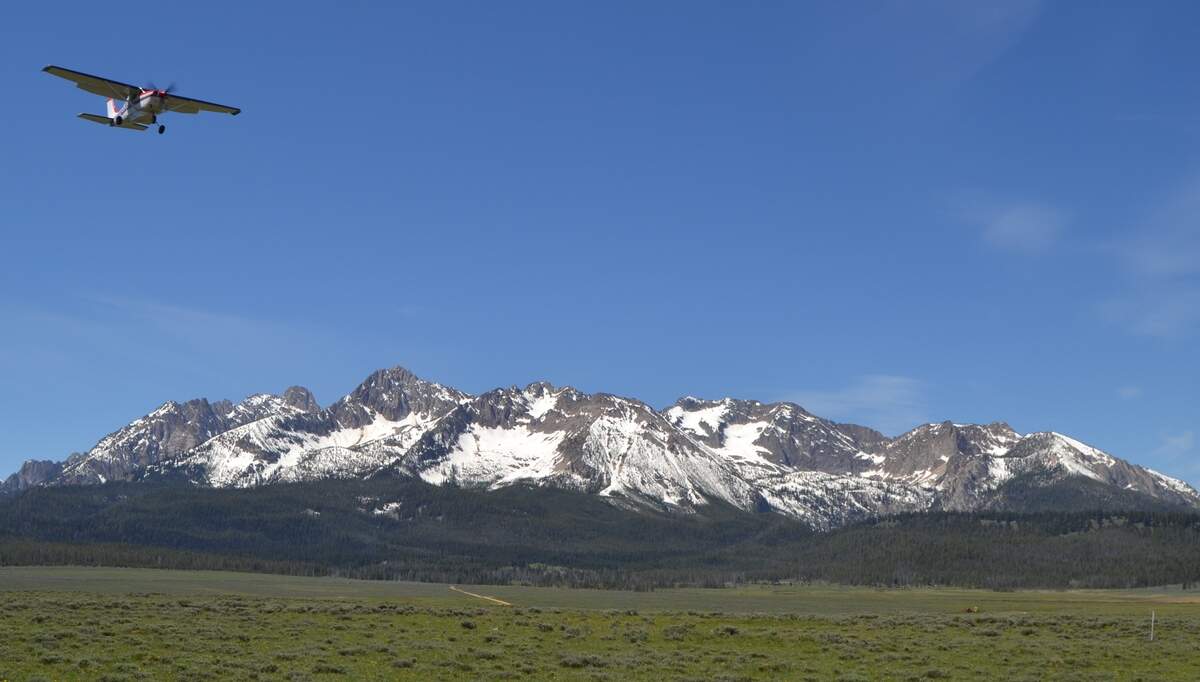
The day I was there, Lonnie Mustion, of Kelso, Washington, was doing a soundcheck for his daughter’s wedding scheduled for that evening. Wooden chairs for guests were arranged in the chapel’s front yard facing the mountains.
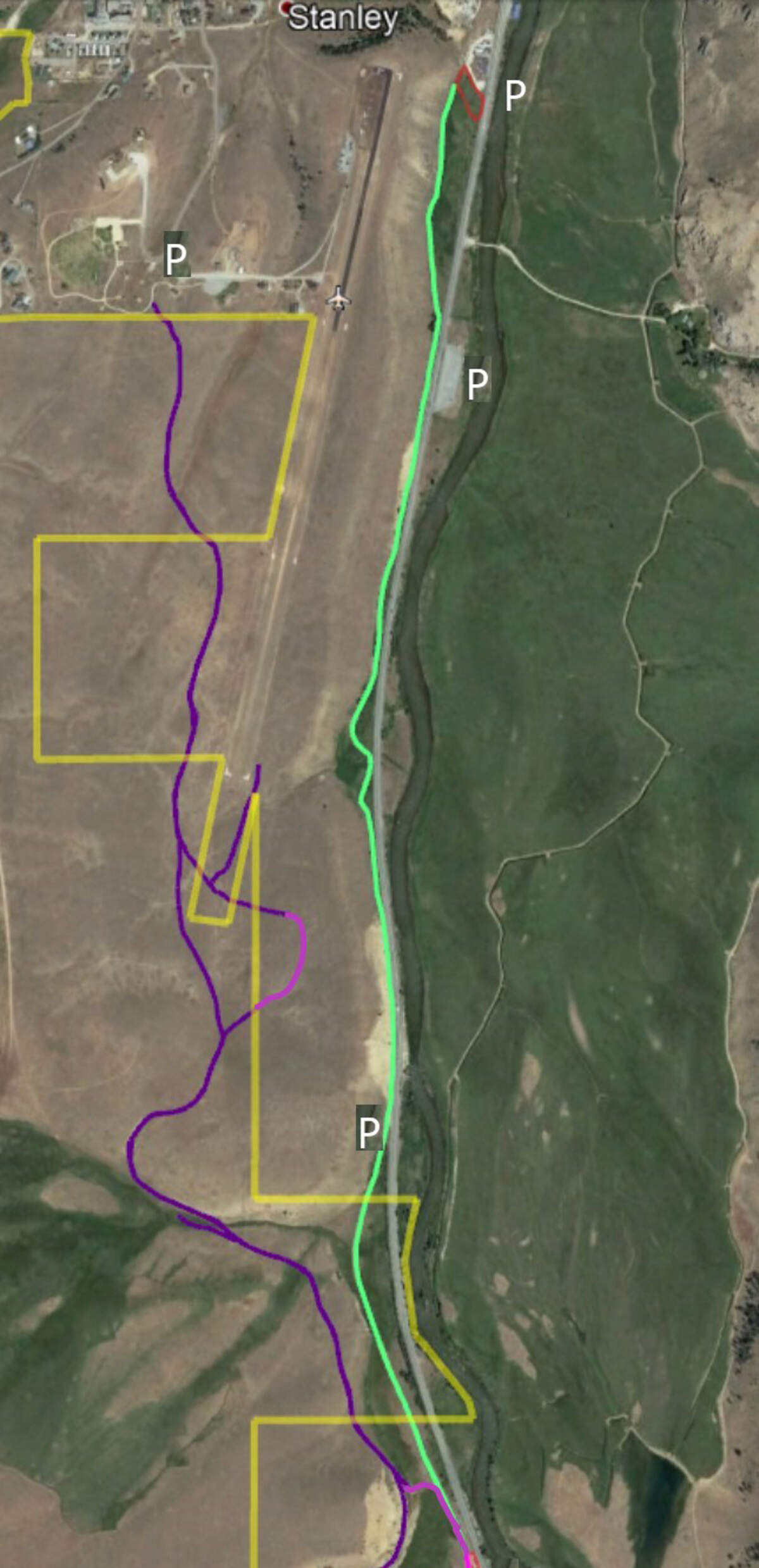
Between the chapel and the mountains lies Boren’s property, the now-untouched plateau where the trail would run. If the trail goes through as proposed, that plateau would have a scar running through it, and people walking, riding horses and riding bikes between Stanley and Redfish Lake would be the backdrop for wedding parties.
The trailhead is at Stanley Pioneer Park and is still about a quarter-mile from the nearest business, the popular Stanley Bakery.
Botti concedes that the location poses a problem for the city. The city would need to come up with some sort of trail extension to get hikers off Airport Road, which doesn’t have much room for pedestrians on the sometimes-busy stretch. But Botti said the city would be able to come up with something.
Boren also noted that the trailhead has only four parking spaces, not nearly enough to accommodate the number of visitors expected to use the trail.
As part of his alternative, Boren has suggested building a large parking lot on land owned by the Idaho Transportation Department next to Idaho 75, just south of the junction with Idaho 21.
A better trail
Boren, the founder of Clearwater Analytics, a Boise tech company success story, also recognizes that he has to overcome the image of being a rich landowner who’s just trying to keep a trail off his land.
“For me personally, people have initial levels of suspicions of me because they say, ‘Oh yeah, you just don’t want it on your land,’ ” he said. “What they don’t realize is the trail that (I’m proposing) also goes through my land. So I’m not saying don’t come through my land. I just know that land, because I’m on it all the time, and there’s a better place for it. I’m just saying, if you’re going to do it, make it a great trail.”
Boren first filed suit in April 2019 and asked U.S. District Court Magistrate Judge Candy Dale to stop construction over compliance with federal environmental laws. Although Dale denied the motion to stop construction, she allowed the lawsuit to proceed. Construction did not begin as scheduled last summer, and Boren has since filed an amended complaint on additional claims, including claims of violations of the Endangered Species Act and the Clean Water Act. On Wednesday, Boren filed another motion to halt construction on those claims, and a decision from Dale on that is pending. In the meantime, the Forest Service crews are preparing to get started on construction.
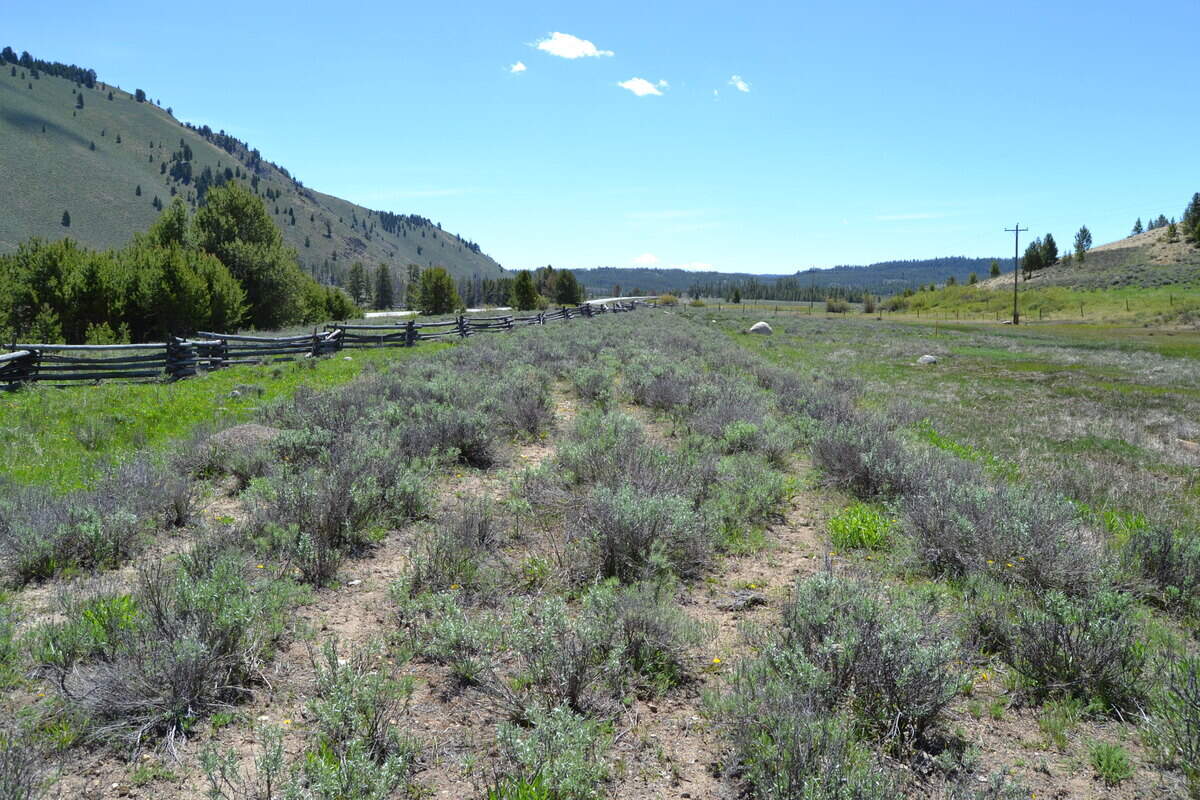
In the big picture, I can understand the opposition to Boren’s proposal. This is a key piece to the complex Boulder White Clouds Wilderness Bill. The mile or so stretch that we’re talking about here is but a small piece of that big puzzle. And the Forest Service spent years working on that little stretch, already got the easement, did the paperwork and did the public input part of it. Boren contends the Forest Service didn’t do enough analysis on the environmental impacts of its proposed trail, but that will be for the court to decide.
To determine whether Boren’s alternative route mitigates problems with wildlife, wetlands and views would require more study — and more time.
But Boren said it’s worth it. After all, this is a trail that’s contemplated as being around for generations to come. Get it right now, he says, even if it does take a little more time.
“So my only issue is, I think, while we’re putting a trail in, we should say we should really kind of have higher standards,” Boren said. “We shouldn’t just say, ‘Well yeah, any trail will do.’ And I think that’s the main problem that’s happened with the Forest Service’s current plan, is they’ve said, ‘Would you like a trail from Redfish to Stanley?’ And people say, ‘Yes.’ Very few people would say no.
“And I say yes. But I think we should ask a different question, which is, ‘Would you like a safe trail from Redfish to Stanley? Would you like a trail that respects the environment? Would you like a trail that allows people to use it and enjoy the views? While still preserving the views?’ And I believe we can have this trail from Redfish to Stanley that does all those things.”
BEHIND THE STORY
MOREWhat is this column all about?
This column shares the personal opinions of Idaho Statesman communities editor Scott McIntosh on current issues in the Treasure Valley, in Idaho and nationally. It represents one person’s opinion and is intended to spur a conversation and solicit others’ opinions. It is intended to be part of an ongoing civil discussion with the ultimate goal of providing solutions to community problems and making this a better place to live, work and play.
Want more opinions each week?
Subscribe to The Idaho Way weekly email newsletter, a collection of editorials, columns, guest opinions and letters to the editor from the Opinion section of the Idaho Statesman each week. You can sign up for The Idaho Way here.
Want your say?
Readers are encouraged to express their thoughts by submitting a letter to the editor. Click on “Submit a letter or opinion” at idahostatesman.com/opinion.