Already on the ropes, newspaper business faces uncertain future because of coronavirus
Editor’s note: This column has been corrected to change the date that Olson laid off the staff to March 19.
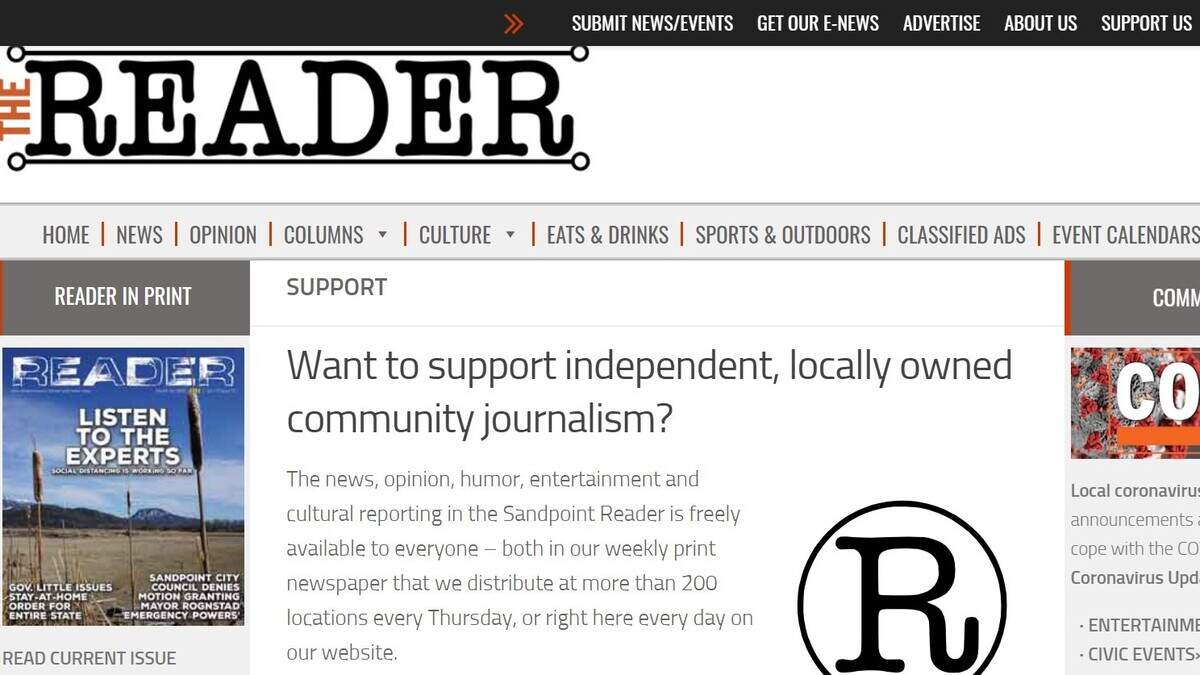
The effect of the coronavirus outbreak on the Sandpoint Reader, an alternative weekly newspaper in North Idaho, quickly became evident.
“The writing was on the wall real quick,” co-owner and publisher Ben Olson told me by phone Friday. “All the events were canceled. I was erasing events from our calendar spread one by one, and I realized there was more white space than filled space, and the next day there were three events, and then there were none. … I realized real quick that nobody had any events to advertise, and many businesses had been in the process of shuttering.”
On March 19, Olson acted quickly himself, laying off all three of his employees, leaving Olson to put out the paper by himself.
It was a hard decision, he said, but it was a decision he considered necessary for the long-term health of the paper.
“My staff, they’re my family,” he said, noting that he’s been best friends with editor Zach Hagadone since they were in the 7th grade. “The thought of them out of work right now, it pains me every single day. Not just because I have to do the work of four people but because I miss having them around every day. And our town misses their words in our paper.”
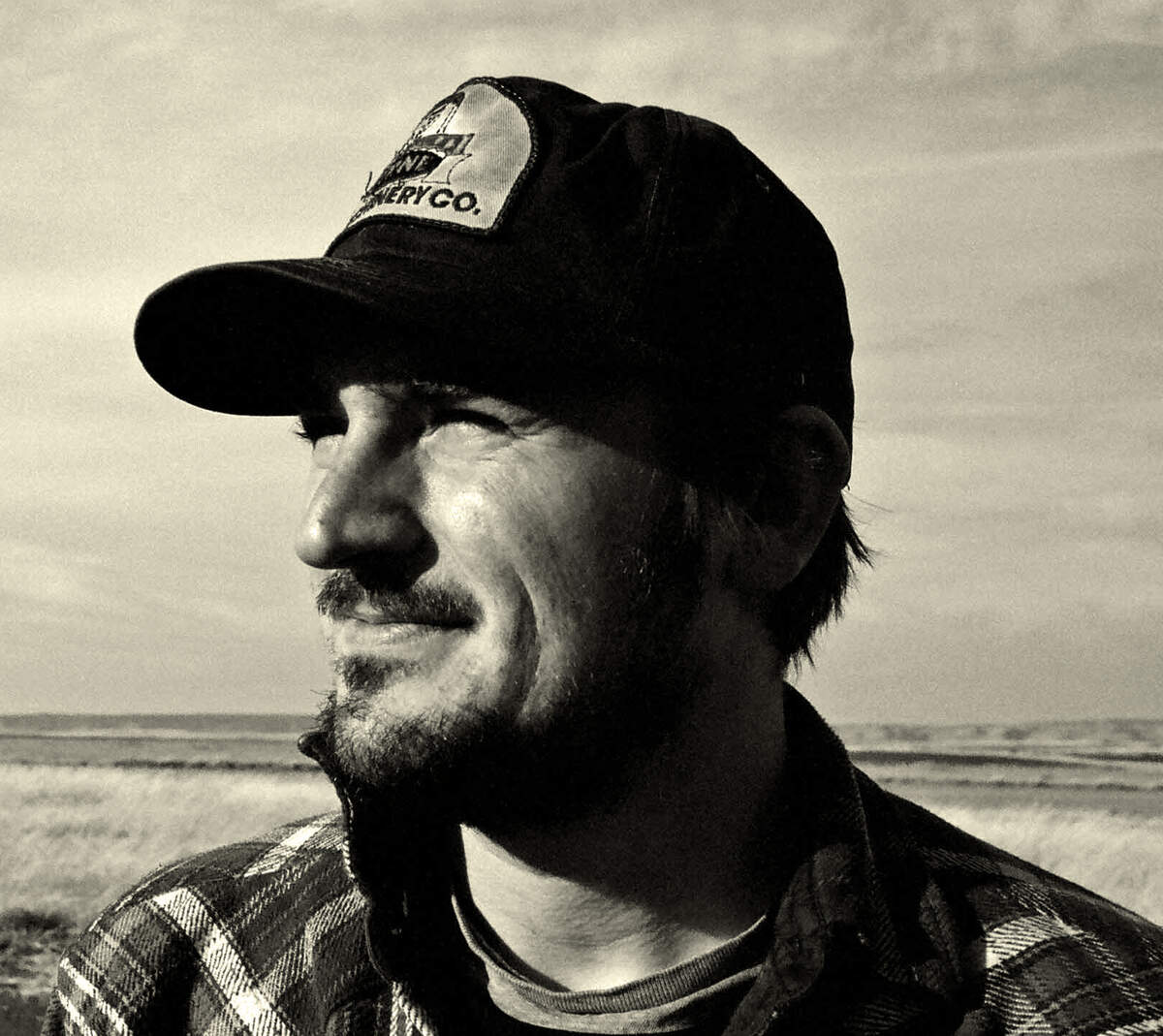
However, Olson said, “I don’t want these people to lose their jobs permanently. I very much think this is a temporary layoff.”
Time will tell whether that holds true at a precarious time for newspapers, especially alternative weeklies, which rely almost exclusively on advertising revenue from bars, restaurants and businesses that put on events — activities that have been all but shut down in the coronavirus outbreak.
Some have speculated that the coronavirus pandemic will be the death knell for alternative weeklies. The Nieman Journalism Lab ran a story this month with the headline, “‘Total annihilation’: Coronavirus may just be the end for many alt-weeklies.”
Nieman, the Columbia Journalism Review, The Washington Post, The New York Times, The Atlantic, the New Yorker and several others are all weighing in on the fate of the newspaper industry in general.
Most of it is not optimistic.
Athough not related to the coronavirus outbreak, the Idaho Statesman’s parent company, McClatchy, is in the midst of bankruptcy proceedings. In my former hometown, Rochester, New York, City Newspaper, an alt-weekly, suspended its print operations because of the outbreak. The Sacramento News & Review abruptly shut down and laid off its staff. Adams Publishing, owner of the Idaho Press in the Treasure Valley, where I was previously the editor, announced 30-hour work weeks for its employees, essentially a 25% pay cut for everyone.
Adams also owns the Post Register in Idaho Falls and the Idaho State Journal in Pocatello, along with dozens of community newspapers across the country.
Gannett on Monday announced one-week-per-month furloughs for the next three months. The Stranger in Seattle suspended print publication and laid off 18 staffers. Portland Mercury in Oregon suspended print and laid off 10 staffers. Monterey County Weekly in California laid off staff and cut salaries. The list could go on and on.
If you value local journalism and you don’t want to see it go away, it’s vital that you subscribe to your favorite local news source. For the Idaho Statesman, you can subscribe by clicking on “Subscribe” under Customer service at idahostatesman.com.
Newspaper downturn
Many have speculated that the downturn will do serious damage to local newspapers, which have been on the ropes and in decline for the past decade or so.
Over these past couple of weeks, I have seen some of the best journalists I’ve ever worked with produce some of the best journalism I’ve ever read at a time when we need it most.
Digital readership at the Idaho Statesman has never been higher, with hundreds of thousands of pageviews per day, mostly from people searching for local news and accurate information about the coronavirus outbreak in their community.
Our email and voicemail inboxes are filled with comments from readers thanking us for keeping them updated and providing stories, both gloomy and uplifting, that document our troubled times.
Under the dire headline, “The Coronavirus is killing local news,” in The Atlantic, writers Steven Waldman of Report for America and Charles Sennott of the GroundTruth Project argue that keeping local news sources afloat needs to be part of the governmental and philanthropic response to the pandemic.
“Among the important steps you should take during this crisis: Wash your hands. Don’t touch your face. And buy a subscription to your local newspaper,” they wrote. “The coronavirus pandemic may be global, but the crisis has kept many people glued to local news. Trustworthy, accurate, and local information is now a matter of life and death.”
It’s a terrible irony, then, at a time when the value and importance of local journalism have never been higher, the very crisis we are covering portends the possible extinction of that local journalism.
It’s also a strange irony that most journalism outlets have lifted our paywalls for coronavirus stories. In other words, the very news and information that we are extolling as extremely valuable to our readers, we are posting for free.
With local journalism already on the ropes, this couldn’t have come at a worse time.
‘Like somebody kicked the legs out’
The Sandpoint Reader had been doing well, with revenues going up every year from print advertising. The Reader was able to add a full-time reporter two years ago.
“A couple of years ago, we got to the point we needed more content and we needed more coverage,” Olson said. “And the budget was there. We were doing really well. We were doing really well all the way up until the coronavirus outbreak. It was like somebody kicked the legs out.”
That’s because 90-95% of the Reader’s revenue is advertising, nearly all of it print advertising. Amid the coronavirus outbreak, the Reader has lost about 90-95% of that revenue.
“Most of our advertisers are events-based or service industry-based and those are the sectors of the economy that are completely dormant right now,” Olson said. “We still have restaurants that are serving take-out and delivery, but they’re hurting. Their numbers are way, way down, and advertising in a time of struggle is often viewed as a luxury. I can’t blame any of them for taking care of themselves first.”

The Reader dipped its toe in the water of reader-supported journalism a couple of years ago, when the paper was being attacked by a robocaller who targeted some of The Reader’s advertisers. The Reader set up Paypal and Patreon accounts that generate some revenue from reader donations.
Those donations in the wake of the layoffs have seen an uptick, Olson said.
“They don’t want the paper to die,” he said of his patrons. “They believe in the function of it. All week I’ve had people sending checks in, donating through PayPal, emailing me, calling me with encouraging words, ‘We’re here for you, we’re going to help you get through this.’ … People still value small-town journalism, and they don’t want it to die and that in itself is enough for me to keep it going.”
Olson said looking ahead, some sort of hybrid revenue model would make sense.
“Looking forward, small papers across the country have already been struggling, this is going to have a devastating effect on these newspapers scattered around the country that cater to a smaller audience than the national newspapers,” he said. “So I do see a potential of entering a new world where you have a hybrid of advertiser-supported and patron-supported news.”
Olson is continuing to print a newspaper, and he has no plans to switch to an online-only model. He estimates he gets 95% of his advertising revenue from print advertising.
“I’m a print guy all the way,” he said. “I believe in print. I know that it’s a dying art, but I’m kind of one of these guys that I got into this to make a newspaper you can hold. I appreciate the legacy that print journalism has instilled.”
The Reader previously printed 5,000 to 5,500 copies per week, typically 28 pages per issue, and distributed those copies to 300 distribution points in two counties.
Now, he said, he’s down to 16 pages of 4,000 copies per week at 12 distribution points, he said.
Olson believes The Reader can come back at the same level as before.
“I may be pie in the sky a little bit, but I do believe that we will be able to come back at the same level,” he said. “... But I think it’s going to have to be helped out by individual patrons to get to that level again before the advertising takes the brunt of the load again.”
Olson said he can foresee a few weeks of struggle, but he’s not sure he could sustain this for months.
“I feel like this economic downturn will be the thing that really proves whether papers can survive or not,” he said. “Will the confidence come back from advertisers? Will their coffers rebuild quickly enough to actually advertise? I want to believe they will because I want to believe that after all this social distancing, people are going to explode back into the public gathering points when it’s safe again. I want to believe the economy will kick-start with a boom, but there’s uncertainty right now, so I can’t say one way or another that that’s going to be the true nature of how we’re going to rebound from this.”
So in the end, Nietzsche’s aphorism, “that which does not kill us makes us stronger,” could yet hold true for newspapers. If this is the thing that gets us to diversify our revenues and makes the public recognize the need to pay for valuable local news, if we can survive this crisis, we just may be stronger because of it.
This story was originally published April 1, 2020 at 5:00 AM.