These ‘tiny homes’ built in the recession were a godsend. Let’s build more of them today
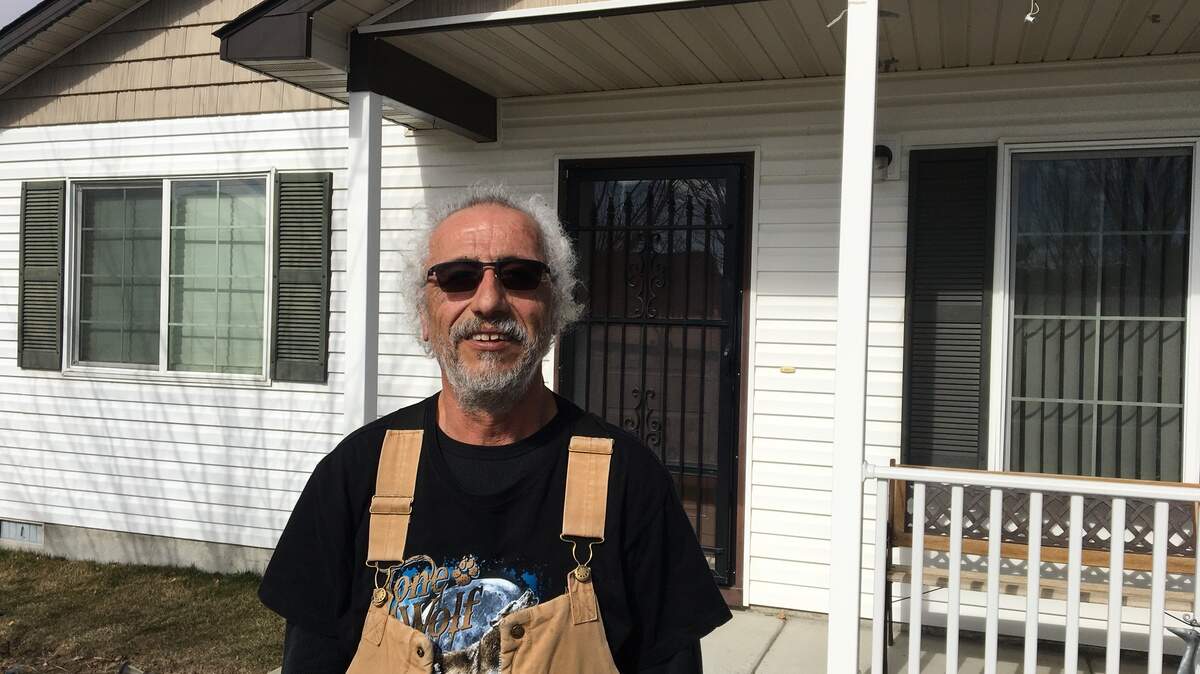
Leo Olivas loves his house in the Silvertip subdivision on the south side of Kuna.
At 870 square feet, with two bedrooms and one bath, it’s just the right size for him and his wife. They’ve lived in the house since it was first built in 2009, amid the throes of the Great Recession.
“I was in dire straits at the time,” said Olivas, 62, a welder by trade until he lost his left index finger in an accident and then switched to being a painter. “I was renting in the Boise area, and the prices at the time were unbelievable. I was having trouble finding a job, and (it was tough times) for a little while.”
The Silvertip subdivision was a godsend to dozens of people like Olivas, at a time when homebuilding and the overall economy came to a grinding halt. As hundreds of people were being foreclosed on, Silvertip offered affordable houses that in some cases had mortgage payments that were less than rents.
Houses sold quickly. Prices at Silvertip began at $84,900 for an 850-square-foot, two-bedroom, one-bath, two-car garage house, and topped out at $119,900 for a 1,663-square-foot, four-bedroom, two-bath house, with the biggest seller being the $99,000 model, with 1,180 square feet, three bedrooms and two bathrooms.
Silvertip was a bright spot in a bleak time, and it spurred a debate about home sizes, affordability and even energy efficiency.
It coincided with the “tiny house” movement, and I always thought Silvertip was Boise’s own version of tiny houses, but perhaps more palatable. These houses, although smaller than your typical suburban house, feature all the amenities of a “regular” house, with full kitchens, full-size refrigerators, dishwashers, real bathrooms with plumbing, two-car garages and backyards.
Build smaller houses today?
I was reminded of Silvertip during a listening session about affordable housing hosted by the Idaho Statesman recently in Nampa.
Given today’s problem of a lack of affordable housing in the Treasure Valley (median home prices hit $365,000 in Ada County in January, a far cry from the $184,000 median price in 2009), could we build more subdivisions like Silvertip today?
I asked that very question to the guy who built Silvertip.
“No,” Randy Hopkins said definitively in a phone interview with me last week. “Land costs are too expensive, and construction costs are too expensive.”
Hopkins is CEO and founder of Hopkins Financial, the company that had financed Silvertip originally, before the developer ran out of money and couldn’t sell any houses. Rather than sell out and take their losses, Hopkins decided to build the subdivision, the first foray into homebuilding for the company, which primarily does lending for projects, not building.
Instead of building high-end houses as originally planned, though, Hopkins put together a team to build and market smaller houses, mostly single-story, with either two or three bedrooms and one or two bathrooms.
The concept took off, with 24 houses sold in the first month alone, and the remaining houses going quickly thereafter.
But do that today?
“The dirt price is too expensive,” Hopkins said. “The land and the lot prices are way too expensive to do that now, and that was an aberration that happened because out of the recession, the lot values went down to such a degree and construction costs were low enough to do that. It would be impossible to do that now because land value and construction costs are way higher.”
Caleb Hood, planning division manager for the city of Meridian, said his city has nothing “prescriptive” requiring smaller square footage, but Meridian doesn’t have anything preventing it, either. If a developer wanted to build smaller houses and was able to zone property R-8 or R-15, those zones do not have minimum house sizes, Hood said.
“It’s something we certainly talk about,” Hood said. “I won’t go as far as saying it’s something we struggle with, although I am concerned about it, but that proper role of government? How do we require a certain thing? There’s a market out there. If people want more 850- or 1,000-square-foot homes, it seems like developers will build those.”
A typical subdivision
I remember interviewing residents of Silvertip when it was first built. One was a widow who didn’t need a big house and needed to live on a single floor. She had moved back to the Treasure Valley from Florida and was looking for a smaller house and yard to take care of, but wanted something large enough to hold a lifetime of belongings. The one-story, 1,100-square-foot house she bought in Silvertip was perfect, and the small town of Kuna reminded her of the town in Kentucky where she was born.
She was planning to turn her entire backyard into a vegetable and flower garden — no lawn to mow. She had no stairs to climb but still had enough room for relatives to come stay with her.
At the time, critics said such small, inexpensive houses would lead to a transient clientele, renters and houses and yards eventually in trashed condition.
Far from trashed, the neighborhood today is well-kept, with houses and yards that are clean and tidy.
I was somewhat surprised when I returned to the neighborhood last week, and the first two people I talked to, including Olivas, were original residents.
Rather than a transient neighborhood, I found a neighborhood not unlike most other places you’d find in the Treasure Valley.
“We watch out for each other here,” said Linda Sullivan, who has lived in her 1,400-square-foot house since the subdivision was first built. “We all kind of group together.”
Sullivan noted there were a few rentals in the neighborhood, but most people in Silvertip were homeowners.
Property values up
Home values and property taxes have risen dramatically in the past decade, but are still considered reasonable.
In 2009, a 1,176-square-foot, three-bedroom, two-bath house at 665 E. Great Bear St. was assessed at $97,900 and had a tax bill of just $737 for the year.
Today, it’s on the market for $239,700. It’s assessed at $201,400 and has a property tax bill of $1,261, after a homeowners exemption.
While today we see a 200-house subdivision with mostly the same two-story, 2,000- or 2,500-square-foot houses, I could imagine a mix of smaller, 850- to 1,200-square-foot houses catering to either first-time homeowners or empty nesters looking to downsize.
Eleven years after the experiment known as Silvertip, I would say it’s been a success that should be repeated in today’s housing climate.
A smart developer likely would see a market for these “starter” houses. City planners and elected officials, meanwhile, should see the value in making sure these houses are in their cities. If not outright requiring smaller houses, they should be encouraging them. It would go a long way toward solving the housing affordability problem we’re facing in the valley.
“It’s a very good neighborhood,” Olivas said. “It’s a good community around here, a very good community. Very joyous.”
This story was originally published March 12, 2020 at 12:00 AM.