‘A new war’: Kuna veteran recalls his struggles in returning home from the Iraq War
Jared Hatch has been through hell. Twice.
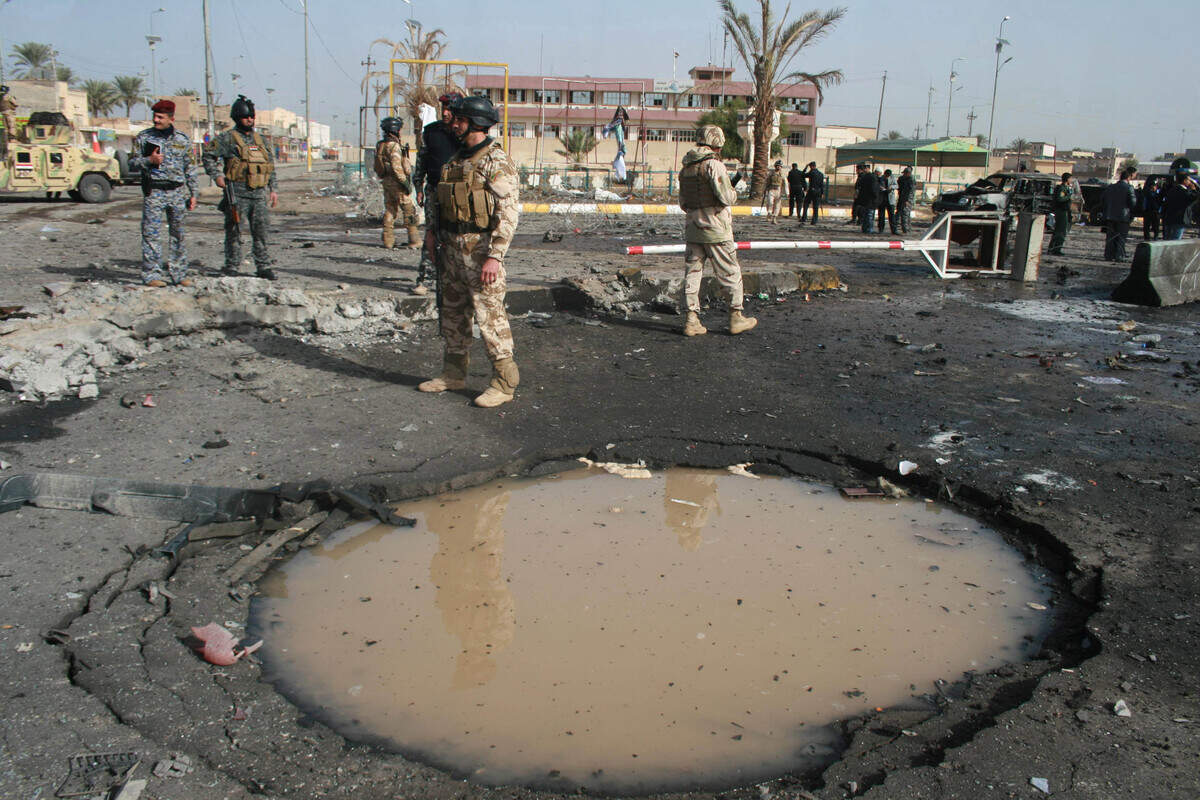
The first time was when he was stationed in Ramadi, Iraq, in 2006, surrounded by seemingly endless enemy fire and hit in the leg by shrapnel from a rocket-propelled grenade that blew up the chair he had just been sitting in.
The second time? That’s the journey the Kuna resident has been on the past 10 years, fighting a different kind of battle, a battle with his demons, a battle with memories of war, with medications, with himself.
“I went through a new war,” Hatch said. “I survived the coming-back-from-war, but the coming-back-from-war, you’re going through alone. In the real war, you’re going through it with other guys. But coming back, I was the only one there. No one actually saw me. I felt like I was never in the room, because no one could understand what was tearing me inside.”
Today, Hatch is off his medications completely, has been seeing a counselor most every month for the past four years and is piecing together a semblance of a normal life. He runs Patriot Motors, a used-car dealership in Nampa, and maintains a clear-eyed view of where he’s been and what he’s been through since enlisting in the Army in 2003, shortly after the invasion of Iraq that followed 9/11.
“Guys are still dealing with their own demons,” he said. “There’s clarity that I have about the suffering that I’d been putting myself through for eight-plus years. You can’t win the war afterward, but just find a way to let it go. Find a way to let it go.”
I first met Hatch when he was running a coffee shop in Kuna in 2008 and I was running the local newspaper. I noticed there was a Purple Heart plaque hanging on the wall, and I asked whether it was his. I wrote a story at the time about him, a newly minted veteran who had just returned from war, serving in Ramadi, one of the fiercest and deadliest battlefields, one that was documented in the later-released book and movie “American Sniper.”
Effects of the war on Hatch were evident at the time, especially in the form of a facial tic related to post-traumatic stress. He jokes now that he was “bobblehead” back then because his head jerked and jiggled so much. He told me at the time that he would always check for the nearest exits and constantly fought anxiety.
Today, completely off medications, his tics have mostly disappeared and he seems more at ease, more comfortable and certainly more philosophical about life.
Post-traumatic stress and its effects
Since his return from the war in Iraq, Hatch has been through two divorces; lost a business; declared bankruptcy; checked himself into a psychiatric hospital at Christmastime after his first marriage fell apart; spent time as a horse whisperer on a ranch outside Spokane; and spent six months living in a tent on a mountainside near the Canadian border while he detoxed — after quitting cold turkey all of the medications he had been prescribed.
At one point, he found himself spending his days in his car in his mother’s driveway, so he wouldn’t be too far from help in case he went into seizures or had a heart attack withdrawing from his medications.
“Is this really what my life has come to?” he remembers thinking to himself. “I learned what it is to lose everything that I have.”
At any given time, he was on medication for anxiety related to post-traumatic stress and another medication to offset that medication, anti-psychotic medication and other medications to prevent seizures.
“I was one bad move away from suicide,” Hatch said. “The thing about all the medication is that it takes away your anxiety, but you need anxiety. You take that away, you’re doomed. I know why the veteran suicide rate is so high. Medication just regulates anxiety, emotions. I spent eight-plus years of higher and higher medication, seven to nine psychiatrists. I knew I was going to kill myself if I continued on the medication.”
Haunted by war, with suicide rate high
In 2017, the suicide rate for veterans was 1.5 times the rate for other adults, according to the 2019 National Veteran Suicide Prevention Annual Report, which includes the most recent analysis of veteran suicide data from 2005 to 2017.
In total, 6,139 U.S. veterans died of suicide in 2017, according to the report. The number of veteran suicides exceeded 6,000 each year from 2008 to 2017. The average number of veteran suicides per day rose from 15.9 in 2005 to 16.8 in 2017.
“There are so many people living with (the war) after the fact,” Hatch said. “You realize how many people are haunted by it. Some are completely destroyed by it.”
Hatch, too, remains haunted. And there is one incident in particular, from Dec. 6, 2006. He remembers the date.
Hatch was on lookout duty over the north entry control point of his combat outpost in Ramadi. He noticed an anomaly, a parcel or something about the size of a fast-food bag. He noted it and reported it to the command center. Later, back in his barracks, he heard the call come in that a Marine convoy was coming in through the north entry control point and that all was clear. Hatch ran up to the command center to remind them of the parcel, but it was too late.
It was an IED, and it blew up a Humvee, killing four of the five occupants in a horrific blaze. Hatch thinks about the soldiers who had to clean up the mess, thankful that he never had to feel or smell the flesh himself. It’s clear, though, that the incident torments him. He remembers his first sergeant, coming back from cleanup duty, sitting on the edge of his bed, just a blank look of death on his face, looking down at his hands.
Hatch had never told me that story in the times I had talked to him. He admits now that it’s hard for him to retell it, but it’s part of the process of healing and recovery, still a process these 13 years later.
“That was one of those days that I had a hard time getting over,” he said.
Reminders of war live with veterans
It is perhaps an odd paradox, then, that Hatch carries so many reminders of the war with him.
On his office walls hang his Purple Heart commendation, his dog tags, a painting of a war scene from Ramadi and a framed copy of the “Stars & Stripes” newspaper article that detailed the attack on Combat Outpost Falcon where Hatch received the injury for which he received the Purple Heart.
On his desk is the copy of the book, “Success Through a Positive Mental Attitude” by W. Clement Stone and Napoleon Hill, which he was reading when they were attacked. The book is torn, dotted with shrapnel from the RPG and split in half from the blast, open permanently to Part 2, appropriately titled, “Five Mental Bombshells for Attacking Success.”
Hatch proudly slaps down a sticker and logo designating alumni of the 1-37 Armor Regiment.
“That’s what it’s all about,” he said. “That logo. You see that logo, it’s an open door anywhere you go.”
Hatch recognizes that it’s hard to understand why someone would choose to remember and hang onto something so awful.
“I talk to guys now, and I hear guys say, ‘Man, I miss that place,’” he said. “It’s hard to understand. It’s the most horrific place, and you’ve been through the most horrific things. But you miss the guys, you miss what it was like to be with those guys. It was like a family and it was like being in your house. It was horrific, but it’s not just about the terrible things you went through.”
Journey to war
Hatch enlisted in 2003. He was 22 years old, had been married for six years and had two boys at the time.
He had never been inspired to join the military until the terrorist attack of Sept. 11, 2001. Then he thought he could either be a part of the solution or part of the problem, so he enlisted right after the U.S. invaded Iraq.
He turned 23 when he was in basic training and went to Germany for training to go to Iraq. His first stint, in northern Iraq starting in January 2006, was almost a dream. It was a “hearts and minds” mission, meaning soldiers like Hatch were deployed among the people in the fields and peaceful small towns, helping farmers and villagers.
But then, everything changed, literally in the middle of the night, as they were awakened and deployed straight to Ramadi, that last Al-Qaida stronghold and one of the most brutal and deadliest sites in the Iraq War.
Hatch remembers driving into Ramadi and seeing Chinook helicopters flying all around the outskirts of the city and hearing explosions going off all around them. Hatch thought the Chinooks were dropping bombs, but it turned out they were setting off radio frequencies to detonate enemy bombs that had been planted all around the city, awaiting their arrival.
Three days after arriving in Ramadi, Hatch was sitting on top of a Humvee with another soldier when a torrent of mortar rounds suddenly began to rain down, tearing up the walls of the buildings all around them. When the shooting stopped, an unexploded 120mm mortar round was lying on the ground right behind them. A Navy SEAL team came and got them to safety before detonating the round.
“And that was my first week, night three,” Hatch said, laughing. It was a far way from the fields and villages of northern Iraq.
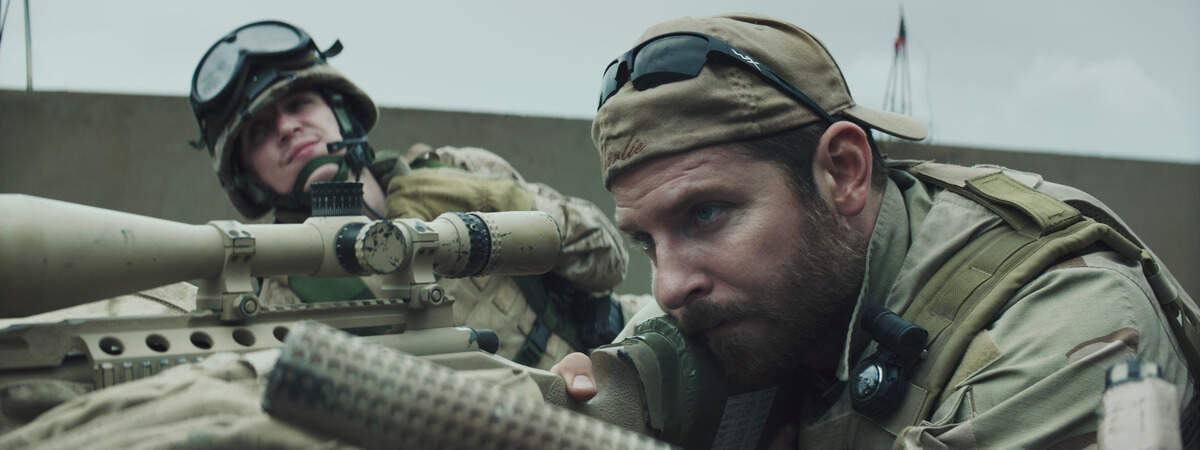
The attack in which Hatch was injured came three days of quiet following the death of Marc Lee, a Navy SEAL who was the first SEAL to lose his life in Operation Iraqi Freedom in a firefight while on patrol against insurgents in Ramadi. That firefight and Lee’s death were immortalized in “American Sniper.”
After the firefight that killed Lee, Hatch and his regiment retaliated in an attack that took out many of the enemy. Three days after that attack, relaxing in the outpost courtyard, smoking cigarettes, Hatch remarked how quiet the enemy was, right before his outpost was attacked.
When the American Sniper book and movie came out, it was a revelation. Much of the book, by Chris Kyle, describes the parts of Iraq where Hatch was stationed.
When the movie came out, in 2014, Hatch said his fellow soldiers from the time started to say, “’Wow, we were part of something big.’ Now the significance of what they’ve been through has been shown and it’s known by everyone.”
He said looking back at the war, the odds of doing every single thing right and not making a mistake is like picking the right numbers in Powerball. The odds are against you.
“You can’t let it haunt you the rest of your life,” he said. “There’s no way you could pick all the right numbers. There’s too many variables. I’ve overcome quite a bit, but there’s always going to be stuff with me. It’s never over, but I have acceptance what I’ve gone through. I’ve accepted the decisions I’ve made. I made the best possible decisions I could have made at the time.”
When I ask Hatch, knowing what he knows now, if he would do it all again, he quickly answers.
“In a heartbeat,” he said. “In a heartbeat. You know, I’d go through everything I went through in war and after the fact a thousand times over. It doesn’t matter necessarily what the war was about; it’s what the people were about. ... Our mission wasn’t necessarily the overall mission or the reason we were at war, but the reason we were there that day and every day that we were there was defending somebody and protecting everybody around us.”
This story was originally published November 11, 2019 at 5:00 AM.