
Idaho’s delegation must reject this tactic, protect public land use | Opinion
Obscure-sounding but vitally important votes that will impact Idaho’s federal lands, and federal lands throughout the West, is coming up this week. It is crucial that Idaho’s congressional delegation opposes a growing effort to throw into chaos resource management plans throughout the West.
The effort involves a 1996 law called the Congressional Review Act, which was passed with the intention of creating something like a congressional veto over federal agency rules.
The CRA allows the House and Senate to pass, by a simple majority, a resolution that revokes a federal agency rule. Until very recently it was seldom used.
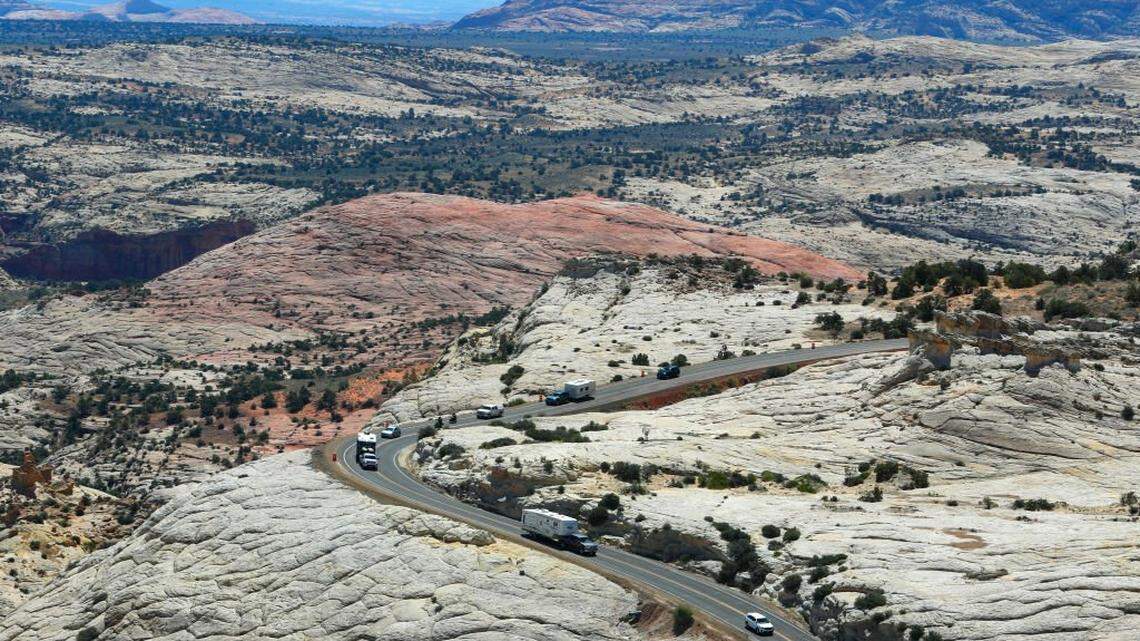
But as the federal land-grab movement centered in Utah, including Rep. Celeste Malloy and Sen. Mike Lee, has been emboldened, some of its big proponents in Congress have sponsored CRAs to revoke resource management plans in protected areas, including Grand Staircase-Escalante National Monument in southern Utah and Boundary Waters Canoe Wilderness Area in northern Minnesota.
Resource management plans are complex, detailed plans that govern the use of a specific area of land for many years or decades. They govern where motorized use is allowed and where it’s prohibited, where resource extraction like logging and mining can take place, where grazing leases are allowed, how wildfires will be managed and countless other details.
The espoused reason for attempting to revoke established resource management plans is to open up more areas for extraction and motorized use, but public lands advocates warn it will throw these areas into chaos and uncertainty.
The CRA prevents a substantially similar plan from being enacted again. But because there is no precedent as to what counts as a substantially similar plan, and because management plans are so multifaceted and complex, it will be virtually impossible to draw up a new management plan that agencies are sure will pass court muster. They’ll be wandering in the dark.
They have already passed CRAs revoking management plans in parts of Alaska, Wyoming, North Dakota and Montana, as Bloomberg Law reported. Resolutions for Grand Staircase and Boundary Waters could be voted on as early as this week.
There is simply no reason to destroy a process that works, for the most part, very well.
The resource management plans are negotiated over years, involving stakeholders from natural resource extraction industries, local governments, outfitters and guides, ranchers and countless other stakeholders. They exemplify the kind of balanced, careful dealmaking for public lands management that serves local communities.
Using the CRA’s congressional veto risks upending all of that, and it’s worth noting that the tactic cuts both ways. If a Republican Congress can override a management plan because they disagree with its environmental protections, there’s nothing to prevent a Democratic Congress from using the same tactic to halt logging, mining or grazing wherever they please. Cementing this precedent means logging in North Idaho, public lands grazing throughout the state and mining in Central Idaho will never have any certainty that their leases will last longer than the next congressional election.
Rep. Mike Simpson and Sens. Mike Crapo and Jim Risch must lobby their colleagues to vote against these CRAs. Being from a major public lands state, their voices carry particular weight with colleagues from states that have little federal land and little on-the-ground understanding of what it would mean to put every resource management plan up for contention every two years. It would deprive all public land users and the businesses that rely on them of any certainty about the future, and that would be a terrible blow to our economic future.
Statesman editorials are the opinion of the Idaho Statesman’s editorial board. Board members are opinion editor Scott McIntosh, opinion writer Bryan Clark, editor Chadd Cripe, assistant editor Jim Keyser and community members John Hess, Debbie McCormick and Julie Yamamoto.