
Should Boise State change the name of Cesar Chavez Lane? | Opinion
A shocking new report from The New York Times documents allegations that Cesar Chavez, the celebrated champion of farmworker rights and the United Farm Workers co-founder, used women and girls for sexual gratification.
In addition to on-the-record interviews with those who were assaulted, the Times corroborated their accounts, in part, by interviewing more than 60 top aides, union members and relatives, as well as reviewing hundreds of pages of union records, confidential emails, photographs and contemporaneous audio recordings, according to the Times.
In light of the revelations, even the United Farm Workers union is distancing itself from Chavez, canceling its annual celebrations honoring him, in response to what the union he once led called “profoundly shocking” accusations.
The New York Times reported that marches to honor Chavez were called off in Austin, Texas; Tucson, Arizona; and elsewhere.
In California, where Chavez’s birthday is a state holiday, Gov. Gavin Newsom told the Times that he planned to discuss with legislators whether to rename Cesar Chavez Day on March 31.
Officials in multiple states said they would consider renaming the scores of streets and schools named in his honor, according to the Times.
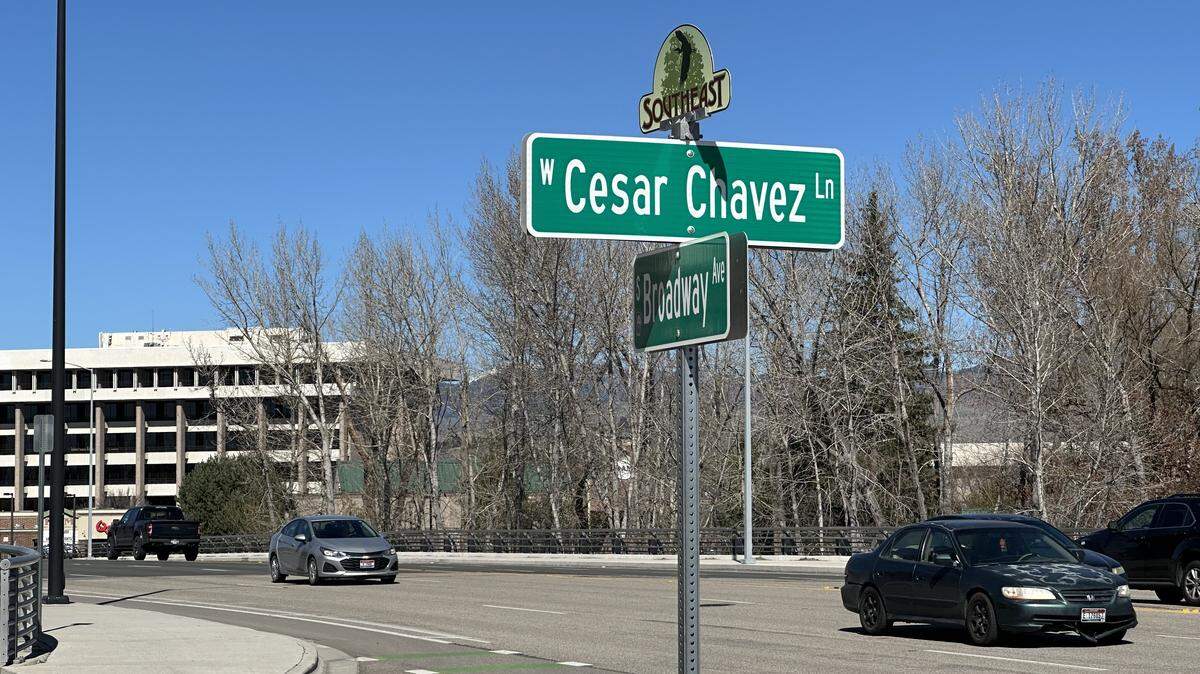
That should include Boise State University, where Campus Lane was renamed in 2006 to Cesar Chavez Lane.
Dozens if not hundreds of streets, schools, parks, plazas, courthouses and community centers all over the country are named after Chavez.
According to a 2022 article in The Arbiter, Boise State’s school newspaper, Campus Lane was renamed to Cesar Chavez Lane in March 2006 in reaction to a controversy over the renaming of the university’s arena to Taco Bell Arena at a time when the national organization was being boycotted for labor violations.
The street, a small road for vehicle traffic with a dedicated bike and walking path that runs through the campus along the Boise River, was renamed in just nine days.
Just as quickly as it was renamed once, it should be renamed again.
Chavez is just the latest name in a growing list of people once considered heroes whose past crimes have caught up with them.
Just as there should be no Bill Cosby Boulevards or Jeffrey Epstein Ways, given these revelations about Chavez, we should have no Cesar Chavez Lane. And it’s good to hear that Boise State told Idaho Statesman reporter Sally Krutzig on Wednesday that it will move “as quickly as feasible” to discuss a possible name change.
We could think of many other, better options for a new name.
How about Dolores Huerta, who cofounded United Farm Workers and was just as much a tireless worker for farmworker rights?
As part of the Times’ investigation, Huerta, now 95, Chavez’s most prominent female ally in the movement, said for the first time publicly that he sexually assaulted her, and that she had two children from those encounters.
Huerta’s name on the lane would be a fitting substitution.
Locally, we offer up the name of the late J.J. Saldaña, a much beloved leader within Idaho’s Latino community who died at the age of 49 in 2023. He served on the Idaho Commission on Hispanic Affairs for more than two decades, working as a community resource development specialist. Saldaña, who also served as a community member on this editorial board, graduated from Boise State University in 2000.
We could think of no better way to honor Saldaña’s memory, his ties to Boise State and the work that he did for the state of Idaho.
Changing the name of a street is not erasing history. Chavez’s legacy will be forever cemented in history. But now his history is more complex — and troubling. Naming things after people, whether it’s a street or a library, or erecting a statue or monument to someone is a way of honoring them. And we should not honor people in our history who have done horrible things. Remember, yes; honor, no.
And the naming of a street is more than just symbolic.
One of the women in the Times investigation, who said she was secretly abused by Chavez for several years starting when she was 13 years old, learned that her city was planning on naming a street near her house after Chavez.
Imagine living near a street named after someone who had sexually abused you when you were a child and having to look at their name on a street sign every day.
Knowing what we know now about Cesar Chavez, Boise State officials should waste no time in changing the signs that bear his name.
Statesman editorials are the opinion of the Idaho Statesman’s editorial board. Board members are opinion editor Scott McIntosh, opinion writer Bryan Clark, editor Chadd Cripe, assistant editor Jim Keyser and community members John Hess, Debbie McCormick and Julie Yamamoto.
This story was originally published March 19, 2026 at 4:00 AM.