
Idaho’s senators should spike Pearce’s nomination to lead BLM | Opinion
AI-generated summary reviewed by our newsroom.
- Idaho senators should oppose Pearce’s BLM nomination to prevent large-scale land sales.
- Records show Pearce backed multi-decade public-land sell policies and the HEARD Act.
- Pearce lacks management and diplomatic skills, risking unchecked land disposals.
Just last week, Rep. Russ Fulcher embraced the public lands transfer — which really means sell-off — movement.
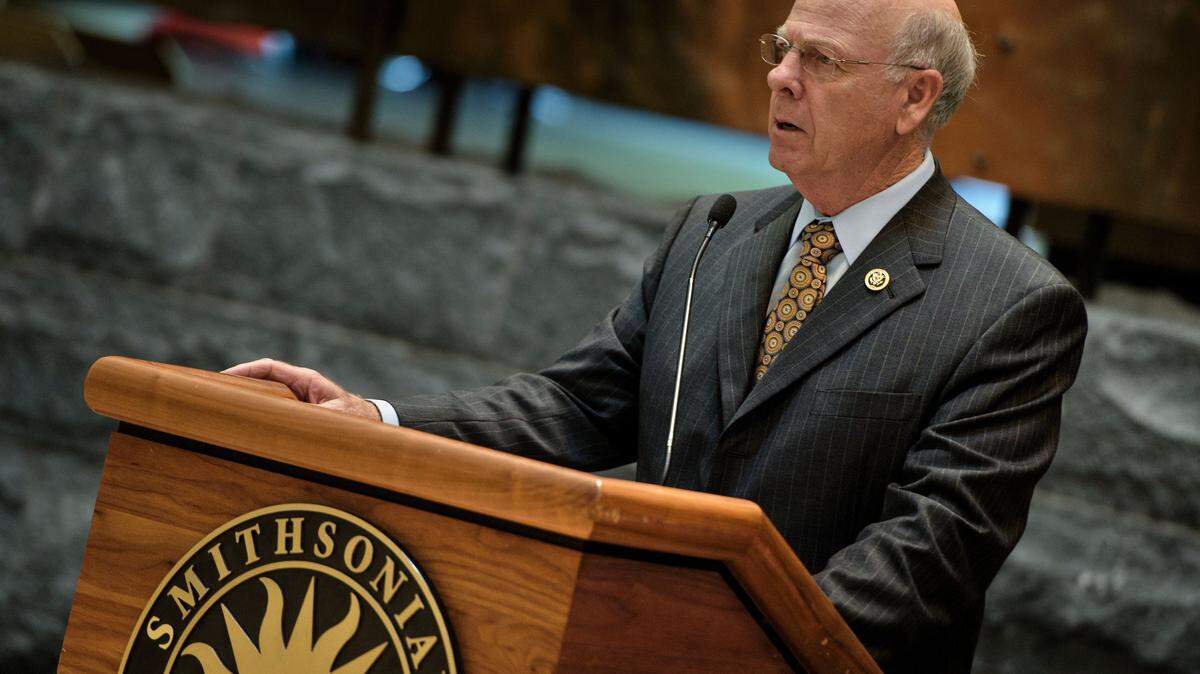
Soon, Idaho’s senators — who’ve previously stood up for public lands when it counts — will be put to the test again when they have to vote on the nomination of Steve Pearce, a former congressman from New Mexico, to lead the Bureau of Land Management.
Pearce’s nomination is understood as a five-alarm fire by public lands advocates, for good reason. It’s not just because Pearce is a retired oil man — it’s not unusual for BLM policy to shift between a greater emphasis on extraction under Republican governance and a greater emphasis on conservation under Democratic governance. The chief concern is Pearce’s long and well-documented record of support for selling off America’s public lands — a project he could greatly accelerate as the head of BLM.
As the Center for Western Priorities documented, Pearce’s support for land sell-off goes back two decades and includes major actions like sponsoring the HEARD Act to sell public lands to local governments and proposals to sell off public land to reduce the deficit.
The Bureau of Land Management is governed by the Federal Land and Policy Management Act, which allows for the sale of federal land under limited but somewhat vaguely specified conditions — including if management is considered too difficult or if it is deemed to be in the national interest. Public lands are sold off on that basis from time to time now, but generally in very small quantities and partially offset by small new public land acquisitions.
But with a radically anti-public lands director like Pearce, the agency could easily decide to unilaterally pursue a much more aggressive land disposal agenda.
The Boise Foothills? Need them for affordable housing, which is in the national interest. Sell it.
Land around Henry’s Lake? Housing is too expensive in that area, too. Sell it.
The Owyhee Front? Too darn hard to manage. Sell it.
The best way to stop outcomes like these is to stop Pearce from becoming BLM director, something Idaho’s delegation can work to do.
And there’s another reason for Sens. Jim Risch and Mike Crapo to oppose Pearce’s nomination: He’s shown himself to be generally incompetent. This was precisely the point made by Patrick Brenner, president and CEO of the conservative Southwest Public Policy Institute.
After losing elected office, Pearce became head of the New Mexico Republican Party, where he led with what Brenner described as “bitterness, infighting and ineptitude.”
“A state party chair has two jobs: raise money and win elections,” Brenner noted. “Under Pearce’s leadership, New Mexico Republicans did neither. Over his six years, Pearce alienated moderates, purged reformers and lost credibility with donors.”
Pearce even drove the state’s oil and gas industry into donating more to Democrats than to a GOP he drove into electoral irrelevancy.
So even if Pearce managed to push through conservative priorities Risch and Crapo support — more timber sales and mining leases, for example — the projects might never come to fruition. Those projects have to survive court challenges, to build public support and to navigate complex, competing interest groups involved in multiple-use management. A good BLM director is a competent diplomat. Pearce simply lacks these qualities.
But selling off land would actually be easier in some ways for Pearce than permitting more extraction, making that a far bigger threat.
Because of the changes the Supreme Court has made to the administrative state — heavily concentrating power in the heads of executive agencies as extensions of the presidency — our senators probably only get one bite at this apple. If they let Pearce in, there will be almost no opportunity to stop him from running wild for the next three years.
Just ask Sen. Bill Cassidy, R-Louisiana, a physician who understand the importance of vaccines, who was talked into backing Robert F. Kennedy Jr. as health secretary. He didn’t do so without extracting specific promises from the nominee that he would not seek to undermine the nation’s vaccine program. RFK made those promises and immediately broke them. Cassidy has been left with no recourse other than squirming.
Risch and Crapo have no good reason to follow Cassidy down that road to despair.
Fulcher has chosen his side. Rep. Mike Simpson and Sens. Crapo and Risch have long stood on the other side, with the vast majority of Idahoans. They should make that stand again.
There’s no indication President Donald Trump is deeply wedded to Pearce as a nominee, and he’s shown willingness to withdraw nominees in the past when it’s clear there’s opposition. This is one nominee who clearly is in Idahoans’ interests to oppose.
If you care about the future of Idaho’s public lands, let Crapo and Risch know that you want them to oppose Pearce.
Statesman editorials are the opinion of the Idaho Statesman’s editorial board. Board members are opinion editor Scott McIntosh, opinion writer Bryan Clark, editor Chadd Cripe, assistant editor Jim Keyser and community members John Hess, Debbie McCormick and Julie Yamamoto.
BEHIND THE STORY
MOREWhat is an editorial?
Statesman editorials are the consensus opinion of the Idaho Statesman’s editorial board. The editorial board is composed of journalists from the Idaho Statesman and community members. Members of the editorial board are Statesman editor Chadd Cripe, opinion editor Scott McIntosh, opinion writer Bryan Clark, assistant editor Jim Keyser and community members John Hess, Debbie McCormick and Julie Yamamoto.
How does the editorial board operate?
The editorial board meets weekly and sometimes invites subjects to board meetings to interview them personally to gain a better understanding of the topic. Board members also communicate throughout the week via email to discuss issues and provide input on editorials on topics as they are happening in real time. Editorials are intended to be part of an ongoing civil discussion with the ultimate goal of providing solutions to community problems.
Why are editorials unsigned?
Editorials reflect the collective views of the Statesman’s editorial board — not just the opinion of one writer. An editorial is a collective opinion based on a group discussion among board members. While the editorial is written by one person, typically the opinion editor, it represents the opinions and viewpoints expressed by members of the editorial board after discussion and research on the topic.
Want your say?
Readers are encouraged to express their thoughts by submitting a letter to the editor. Click on “Submit a letter or opinion” at idahostatesman.com/opinion.
Want more opinions each week?
Subscribe to The Idaho Way weekly email newsletter, a collection of editorials, columns, guest opinions and letters to the editor from the Opinion section of the Idaho Statesman each week. You can sign up for The Idaho Way here.