
Indoctrination in Idaho public schools? Christian nationalist group says, ‘bring it on’ | Opinion
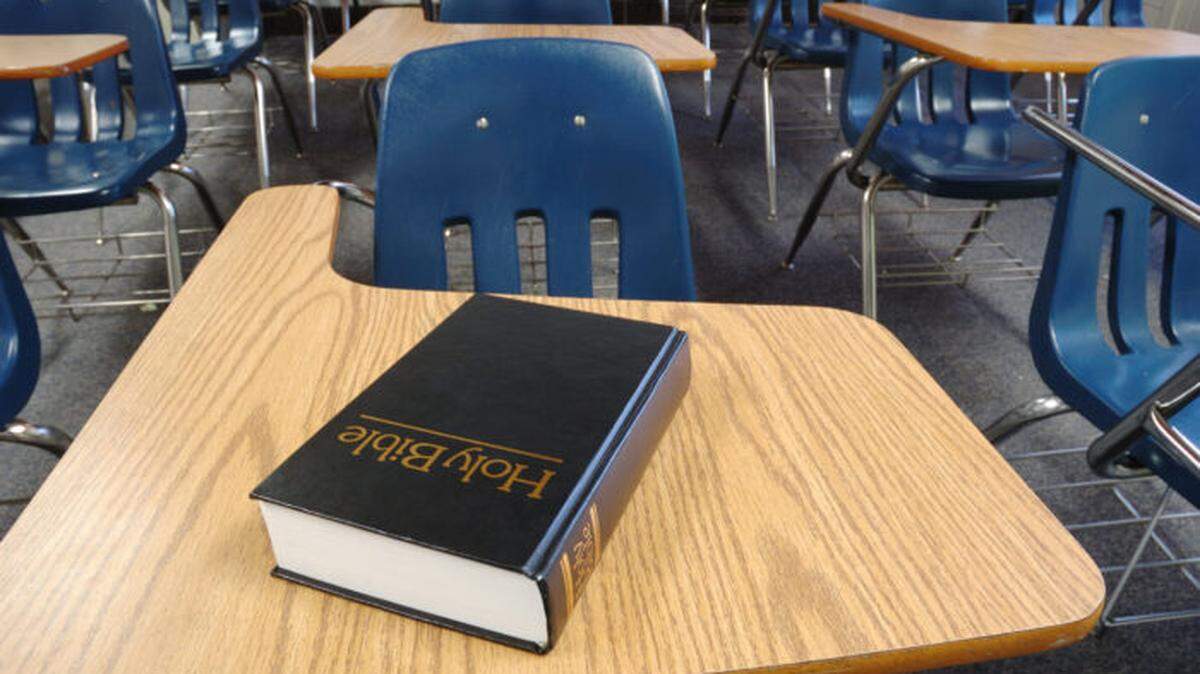
Talk about indoctrination in public schools.
Idaho’s resident Christian nationalist organization, the Idaho Family Policy Center, is circulating a petition to “call upon the Idaho State Legislature to pass legislation so that daily Bible readings — without instruction or comment, and with appropriate conscience protections — will once again take place in every state-funded public school.”
To justify its bill, the Idaho Family Policy Center quotes William H. Clagett, R-Shoshone, president of the Idaho Constitutional Convention, as saying, “[T]o exclude the children of the state from access to this great reservoir of moral principles and political maxims of daily duty [found in Scripture would do] a great injustice to the state at large.”
But no one is being excluded from access to the Bible.
Are there no bookstores? Are there no churches? Are there no libraries?
The government isn’t arresting people who possess the Bible or go to the church of their choosing. There is no exclusion of access. Any student who wants to read the Bible can find a copy in the library for no charge. As usual, the Idaho Family Policy Center has things backwards.
The First Amendment of the U.S. Constitution says, “Congress shall make no law respecting an establishment of religion.”
You no doubt will hear the inane argument, “See, the Constitution doesn’t say anything about a state legislature requiring the reading of the Bible in school.”
Poppycock. Why did the framers of the U.S. Constitution add that amendment, the very first words of the very first amendment, no less?
They didn’t want the government telling its citizens what religion to follow.
They wanted every citizen to have the freedom of their own religious convictions without government interference.
The guiding principle in the U.S. Constitution to keep the federal government out of religion should be the guiding principle for all government.
The Idaho Family Policy Center apparently doesn’t believe in individual liberty and freedom. They want you to believe what they believe and follow the rules in the book that they believe is the divinely inspired word of their God.
But we have a message for Christian nationalist organizations like this: If you want to recruit kids to come to your church, you’re more than welcome to try; just don’t use taxpayer-funded public schools as your recruiting tool.
The U.S. Supreme Court in 1963 ruled in Abington School District v. Schempp that public schools cannot sponsor Bible readings or recitations of the Lord’s Prayer.
So if Idaho legislators pass this law, it most certainly will be challenged in court, leading to more legal costs to the Idaho taxpayers.
But groups like the Idaho Family Policy Center recognize that the U.S. Supreme Court today is in control of the far right, so Abington v. Schempp very well could get overturned. After all, most people believe Roe v. Wade was settled precedent, and look how that turned out.
How about Idaho sit this one out, though, and let other states, such as Oklahoma, be the test case for the Supreme Court?
Bible passages
Blaine Conzatti, the head of the Idaho Family Policy Center who said “government should promote Christian values,” said the bill would require the entirety of the Bible to be read in public schools over a 10-year period, which equates to roughly 20 verses per school day.
So here’s a sampling of some of the passages your child could be exposed to:
“Therefore I delivered her into the hands of her lovers, the Assyrians, for whom she lusted. They stripped her naked, took away her sons and daughters and killed her with the sword.” (Ezekiel 23)
“If two men, a man and his countryman, are struggling together, and the wife of one comes near to deliver her husband from the hand of the one who is striking him, and puts out her hand and seizes his genitals, then you shall cut off her hand; you shall not show pity.” (Deuteronomy 25:11-12)
“Say to David, ‘The king wants no other price for the bride than a hundred Philistine foreskins, to take revenge on his enemies.’” (1 Samuel 18:20-30)
“If a man have a stubborn and rebellious son, which will not obey the voice of his father, or the voice of his mother, and that, when they have chastened him, will not hearken unto them: Then shall his father and his mother lay hold on him, and bring him out unto the elders of his city, and unto the gate of his place; And they shall say unto the elders of his city, This our son is stubborn and rebellious, he will not obey our voice; he is a glutton, and a drunkard. And all the men of his city shall stone him with stones, that he die: so shalt thou put evil away from among you; and all Israel shall hear, and fear.” (Deuteronomy 21:18-21)
“Our father is old, and there is no man around here to give us children — as is the custom all over the earth. Let’s get our father to drink wine and then sleep with him and preserve our family line through our father.” (Genesis 19:30)
Idaho public school children will get the benefit of learning these laws from Leviticus:
• Don’t eat animals with split hooves (11:4–7).
• Don’t eat animals that don’t have fins and scales (11:9–10).
• Don’t mate two different kinds of animals (19:19).
• Don’t plant two different kinds of seed in your field (19:19).
• Don’t wear clothing made from two different types of fabric (19:19).
• Don’t trim off hair at your temples (19:27).
• Don’t trim your beard (19:27).
Conzatti said the proposal would give teachers and students with parental consent “reasonable accommodations” to opt out of the Bible ritual if they object to it.
But these kinds of opt-out clauses can lead to ostracization. It provides an opportunity to determine who is “us” and who is “them,” who is with us and who is not like us. Not only among the students but also teachers, who might feel compelled to go along with reading the Bible if everyone else is doing it and the school administrator favors it.
What of the Jewish teacher? The teacher who is atheist? The Muslim teacher?
The kind of people pitching these kinds of forced religion bills are the same people who believe that a doctor shouldn’t be forced to treat someone if it goes against their religious beliefs, that a pharmacist doesn’t have to dispense a vaccine if they believe it goes against their religious beliefs, that a religious school doesn’t have to hire a gay teacher because it doesn’t condone homosexuality.
But a Muslim teacher could feel pressured to read a Bible passage, even if it goes against their religious beliefs.
The hypocrisy is astounding.
If you want to teach your children Christian values, then do so. But don’t force other children to learn your religion.
If you want your children to learn the Bible, go to church.
But don’t bring your church into our schools.
This story was originally published November 21, 2024 at 4:00 AM.
BEHIND THE STORY
MOREWhat is an editorial?
Statesman editorials are the consensus opinion of the Idaho Statesman’s editorial board. The editorial board is composed of journalists from the Idaho Statesman and community members. Members of the editorial board are Statesman editor Chadd Cripe, opinion editor Scott McIntosh, opinion writer Bryan Clark, assistant editor Jim Keyser and community members John Hess, Debbie McCormick and Julie Yamamoto.
How does the editorial board operate?
The editorial board meets weekly and sometimes invites subjects to board meetings to interview them personally to gain a better understanding of the topic. Board members also communicate throughout the week via email to discuss issues and provide input on editorials on topics as they are happening in real time. Editorials are intended to be part of an ongoing civil discussion with the ultimate goal of providing solutions to community problems.
Why are editorials unsigned?
Editorials reflect the collective views of the Statesman’s editorial board — not just the opinion of one writer. An editorial is a collective opinion based on a group discussion among board members. While the editorial is written by one person, typically the opinion editor, it represents the opinions and viewpoints expressed by members of the editorial board after discussion and research on the topic.
Want your say?
Readers are encouraged to express their thoughts by submitting a letter to the editor. Click on “Submit a letter or opinion” at idahostatesman.com/opinion.
Want more opinions each week?
Subscribe to The Idaho Way weekly email newsletter, a collection of editorials, columns, guest opinions and letters to the editor from the Opinion section of the Idaho Statesman each week. You can sign up for The Idaho Way here.