
Idaho Republican Party’s rule changes have a precedent: The Soviet Politburo | Opinion
Imagine Rep. Jane Smith voted against a bill to censor public libraries.
Returning home to her rural Idaho district, she is ordered to appear before the Central Committee, where Party officials pepper her with questions. Her answers are unimportant.
The Central Committee announces the decision it made weeks ago: Smith will be cast out, the fact that she won the support of 70% of voters in the last election notwithstanding.
Because the requirement for wielding power is not loyalty to the people who elected you, but loyalty to the party bosses.
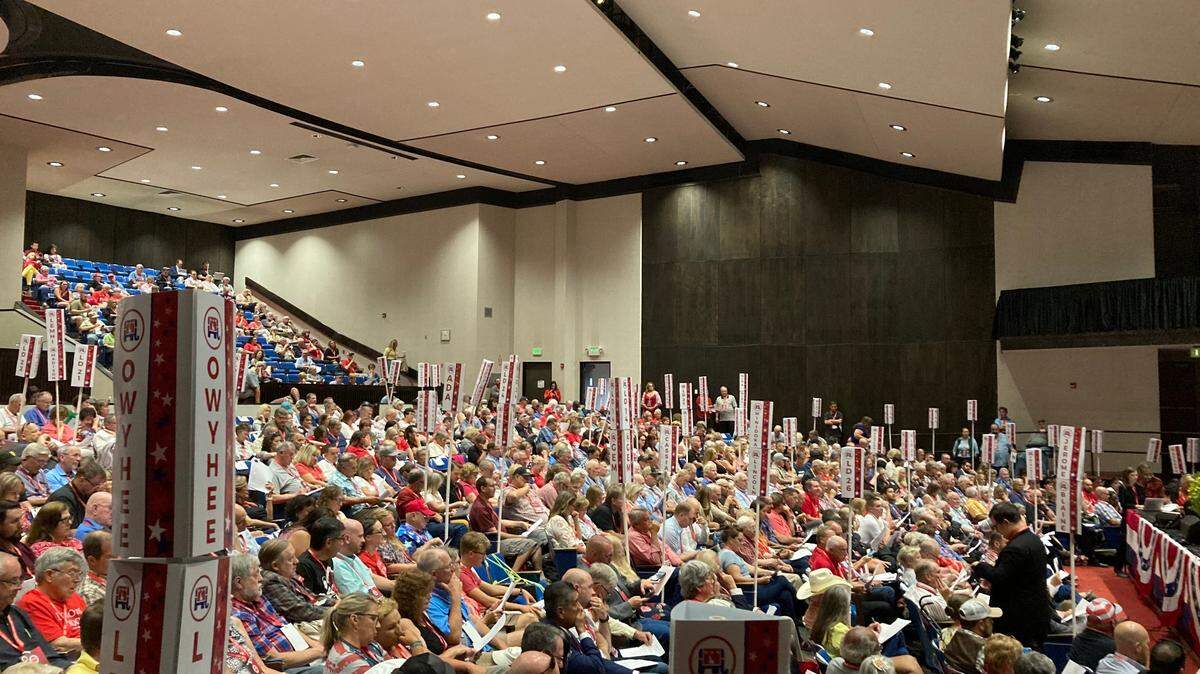
This isn’t a scene from the Soviet bloc. It’s the Idaho Republican Party’s immediate plan for running politics in the Gem State under the guidance of Premier Dorothy Moon, a plan it moved at its summer meeting in Challis to begin implementing with a series of rules.
As Melissa Davlin of Idaho Public Television reported, the party passed resolutions that include allowing central committees to summon, censure and even revoke the right of lawmakers to run as Republicans; revoking the voting privileges of the Young Republicans, College Republicans and Republican Women; supporting a constitutional amendment to allow the party to control the primary; and issuing a vote of no confidence in Gov. Brad Little and a number of Republican House members for failing to support library censorship.
The organizing logic is simple: Whatever power there is, it ought to belong to the Party.
Whatever power these ideologically extreme and power-hungry Party bosses successfully take, it will come at the expense of Idaho voters.
Because policy positions favored by huge numbers of Republican voters in Idaho are formally verboten under the Idaho GOP’s official platform.
- If a Republican lawmaker doesn’t sign on to a proposal to revoke your right to cast a ballot in U.S. Senate elections, they’ve violated the GOP platform, which requires support for revoking the 17th Amendment.
- If they support the continued existence of some number of grizzly bears or wolves in Idaho, they’ve arguably violated it as well.
- Or if they don’t support a return to the gold standard.
- Or if they don’t support the repeal of Medicaid expansion.
- Or if they don’t support nullifying the U.S. Supreme Court decision recognizing marriage equality.
- Or if they support the right of a child who was raped by a family member to have an abortion, or if they think that such an abortion should be handled in some way other than with a murder charge.
For these and countless other examples of crimethink, the people’s elected officials could be hauled in and stripped of their right to call themselves Republicans by a bunch of people that most Idaho Republican voters have never heard of, much less voted for.
With Idaho’s most powerful party fully hijacked, the open primary initiative seems to be the best bet for keeping the political process under popular control, precisely because it would diminish the political relevance of parties. It would allow everyone to weigh in on which candidates will face off in the general election, regardless of party, and it would allow voters to rank general election candidates in order of preference, so they wouldn’t have to worry they’re throwing their votes away if a third-party candidate is their first choice.
None of this would help people the extremist Party has termed RINOs or secret liberals or any of that nonsense. Conservatives would do well with an open primary and ranked-choice voting system because Idaho is full of conservative voters.
Those elected under such a system would know that it was the people, not the Party bosses, who put them in office. They would know it is the people, not the Party bosses, to whom they answer for their record.
This story was originally published June 30, 2023 at 4:00 AM.
BEHIND THE STORY
MOREWhat is an editorial?
Statesman editorials are the consensus opinion of the Idaho Statesman’s editorial board. The editorial board is composed of journalists from the Idaho Statesman and community members. Members of the editorial board are Statesman editor Chadd Cripe, opinion editor Scott McIntosh, opinion writer Bryan Clark, assistant editor Jim Keyser and community members John Hess, Debbie McCormick and Julie Yamamoto.
How does the editorial board operate?
The editorial board meets weekly and sometimes invites subjects to board meetings to interview them personally to gain a better understanding of the topic. Board members also communicate throughout the week via email to discuss issues and provide input on editorials on topics as they are happening in real time. Editorials are intended to be part of an ongoing civil discussion with the ultimate goal of providing solutions to community problems.
Why are editorials unsigned?
Editorials reflect the collective views of the Statesman’s editorial board — not just the opinion of one writer. An editorial is a collective opinion based on a group discussion among board members. While the editorial is written by one person, typically the opinion editor, it represents the opinions and viewpoints expressed by members of the editorial board after discussion and research on the topic.
Want your say?
Readers are encouraged to express their thoughts by submitting a letter to the editor. Click on “Submit a letter or opinion” at idahostatesman.com/opinion.
Want more opinions each week?
Subscribe to The Idaho Way weekly email newsletter, a collection of editorials, columns, guest opinions and letters to the editor from the Opinion section of the Idaho Statesman each week. You can sign up for The Idaho Way here.