
Jan. 6 hearings give delegation last chance. Do they want to be marked as cowards?
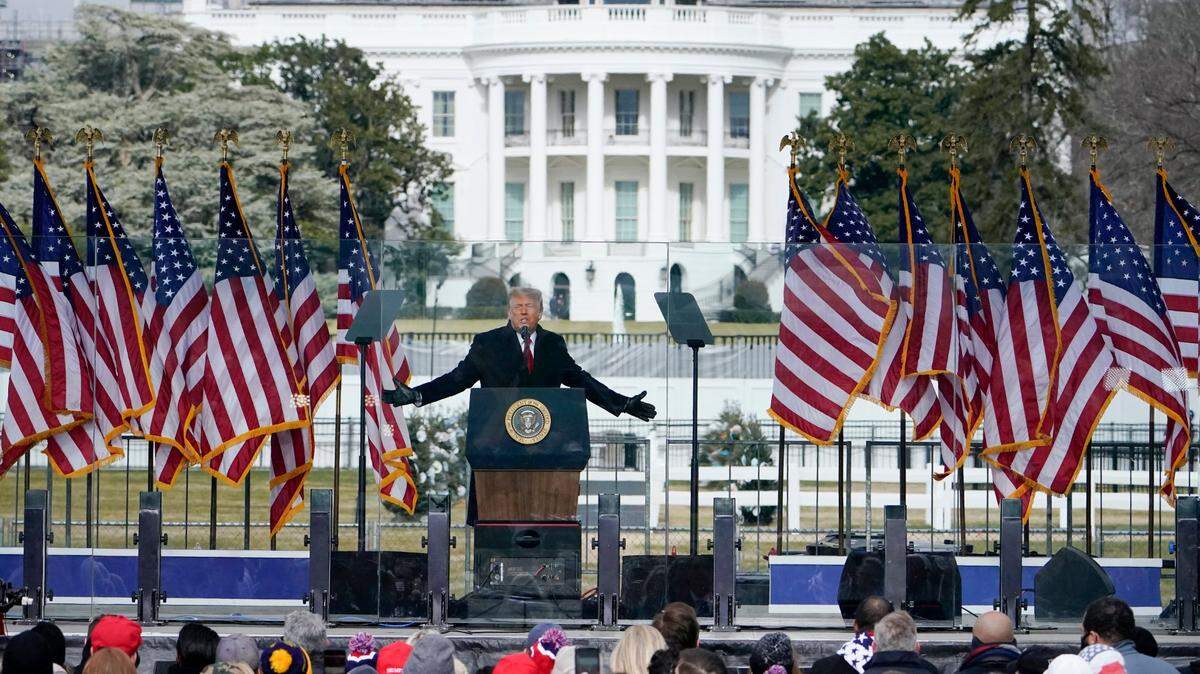
At 6 p.m. Mountain Time tonight, the House Select Committee to Investigate the January 6 Attack on the U.S. Capitol will begin public hearings to present the findings of its yearlong investigation.
Our congressional delegation should attend to it closely. Sens. Mike Crapo and Jim Risch, and Reps. Mike Simpson and Russ Fulcher have an obligation to the nation they swore to preserve and defend — an obligation they have not so far met.
They need to speak out and denounce the Big Lie. The committee’s hearing gives them yet another occasion to do so.
They must also state clearly that the illegal actions of Jan. 6 were not “legitimate political discourse” and not some peaceful protest. The attack on the Capitol was an unprecedented attempt to undermine our government and its peaceful transfer of power, and a congressional investigation into such actions is not some “witch hunt” — it’s a necessary review of what happened, what led to it and what could and should have been done in a nation that, prior to Donald Trump’s takeover of the Republican Party, prided itself on its recognition of free and fair elections.
The committee, composed of seven Democrats and two Republicans, is signaling that it has important evidence that the public has not yet seen. Our delegation should carefully consider that evidence.
But no matter what the committee reveals, an effort to set aside the legitimate outcome of the 2020 presidential election took place in plain public view. This includes both the physical violence from which our delegation had to flee to shelter, and efforts to manipulate government processes to change the outcome.
Those efforts failed this time, but they could be easily repeated. And if they ever succeed, democracy ends.
It is long past time for Crapo, Risch, Simpson and Fulcher to denounce these actions.
There were repeated, public calls for former Vice President Mike Pence to set aside the results of the election. Pence, honorably, rejected all such notions. Former law professor John Eastman disgraced himself by producing a series of memos arguing that such an action — a coup d’etat, to be clear — would be legal. He currently faces a legal ethics investigation from the California state bar.
Fulcher participated in this broader coup attempt by objecting to the certification of the election results. In doing so, he betrayed his country.
Former President Donald Trump’s responsibility for sparking and failing to halt the violence on Jan. 6 is known to our congressional delegation. Text messages to then-House Speaker Mark Meadows on the day of the attempted insurrection, recently published by CNN, make it clear that even those more closely aligned with Trump knew who was responsible at the time.
“My friend — I weep for our country today,” wrote Raúl Labrador, Republican candidate for Idaho attorney general. “Somebody needs to come out and calm this down. I believed in Trump and I would probably object to the certification today. You guys need to get Trump to say something to calm down the people, a tweet is not enough. This is crazy. I pray that people of goodwill can act to bring the tensions down. Praying for you and our nation.”
“Mark I was just told there is an active shooter on the first floor of the Capitol,” wrote Rep. Marjorie Taylor Greene. “Please tell the President to calm people This isn’t the way to solve anything”
So our delegation should watch the hearings for new revelations. But more than that, they should fulfill the obligation they have so far failed to meet.
Stop lending silent toleration to the lie that Trump won the 2020 election. State clearly that the Big Lie is a lie.
Historians will certainly mark the year they failed to do so and call it cowardice. But there remains an opportunity for our delegation to redeem themselves, at least in part, by telling the truth they already know.
BEHIND THE STORY
MOREWhat is an editorial?
Statesman editorials are the consensus opinion of the Idaho Statesman’s editorial board. The editorial board is composed of journalists from the Idaho Statesman and community members. Members of the editorial board are Statesman editor Chadd Cripe, opinion editor Scott McIntosh, opinion writer Bryan Clark, assistant editor Jim Keyser and community members John Hess, Debbie McCormick and Julie Yamamoto.
How does the editorial board operate?
The editorial board meets weekly and sometimes invites subjects to board meetings to interview them personally to gain a better understanding of the topic. Board members also communicate throughout the week via email to discuss issues and provide input on editorials on topics as they are happening in real time. Editorials are intended to be part of an ongoing civil discussion with the ultimate goal of providing solutions to community problems.
Why are editorials unsigned?
Editorials reflect the collective views of the Statesman’s editorial board — not just the opinion of one writer. An editorial is a collective opinion based on a group discussion among board members. While the editorial is written by one person, typically the opinion editor, it represents the opinions and viewpoints expressed by members of the editorial board after discussion and research on the topic.
Want your say?
Readers are encouraged to express their thoughts by submitting a letter to the editor. Click on “Submit a letter or opinion” at idahostatesman.com/opinion.
Want more opinions each week?
Subscribe to The Idaho Way weekly email newsletter, a collection of editorials, columns, guest opinions and letters to the editor from the Opinion section of the Idaho Statesman each week. You can sign up for The Idaho Way here.