
Boise State football shouldn’t be associated with the ugliness of Barstool Sports
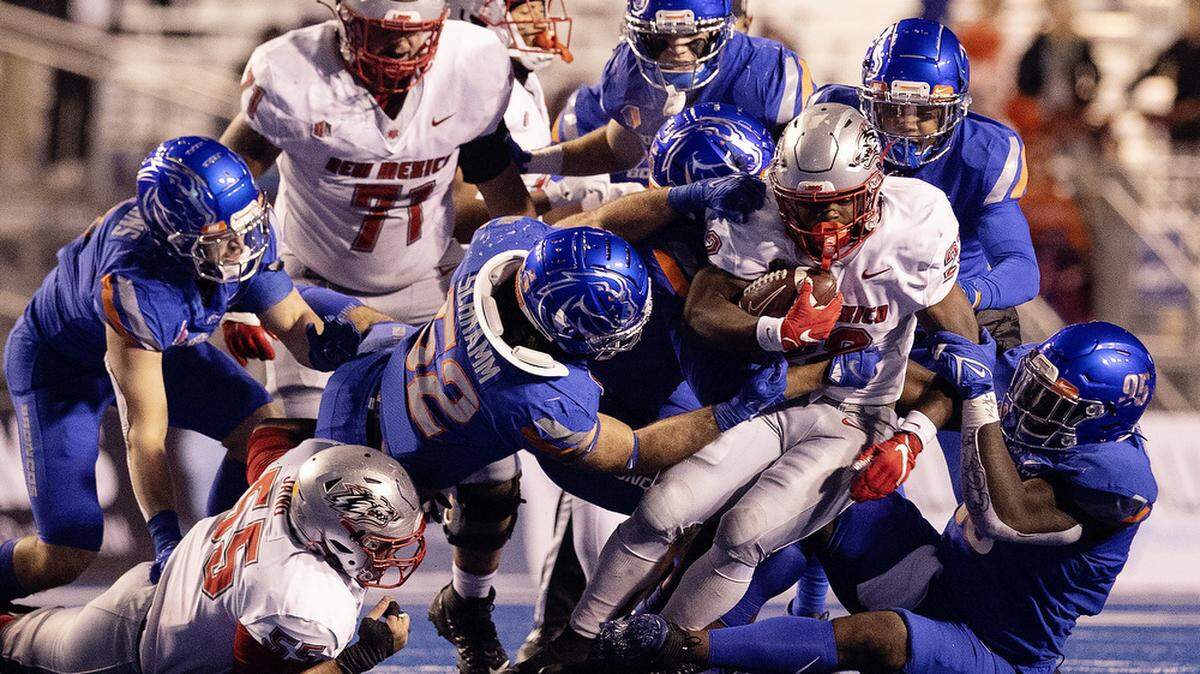
The Boise State football team is in a tough spot, being slotted to go to the Arizona Bowl, which has been held at the University of Arizona since 2015, to face off against Central Michigan University.
Any other year, there wouldn’t be much to say about that, aside from, “Go Broncos.”
But this year, the Arizona Bowl is the most controversial postseason game in the nation — not because of the teams or the stadium, but because of its sponsor: Barstool Sports.
The sports and “entertainment” website is, quite simply, a cesspit. It’s hard to think of something terrible that you can’t find associated with it. To list only a few:
- Last year, it launched a podcast whose initials spell out the n-word.
- Early on, it featured a nude photo of a one-and-a-half-year-old child, with commentary on the size of his genitalia.
- Hosts have made sexual comments about minor girls.
- Its founder, Dave Portnoy, faced controversy as recently as November for allegedly subjecting women to violent and humiliating sex acts, using racial slurs and violating labor laws, among other things.
This list barely scratches the surface of the bigotry, misogyny and general putrescence associated with the site.
Barstool — which infamously lost a partnership with ESPN after one episode of “Barstool Van Talk” in 2017 — also holds the broadcast rights to the bowl game, which means it will be available only through Barstool’s website and other branded channels. ESPN broadcasts the vast majority of bowl games, but the sports giant likely won’t touch anything with Barstool branding after its previous experience. USA Today reported that CBS, which broadcast the game last year, refused to air it with Barstool as a sponsor.
Barstool CEO Erika Nardini told Sportico in July that the company initially planned just to sponsor the game, but became the broadcaster when “it became clear our title sponsorship would have an implication on where the Arizona Bowl could be broadcast.”
Barstool is too toxic for TV partners, but not for universities?
Locals in Tucson, where the bowl will take place, aren’t happy about the partnership with Barstool, either. The Pima County Board of Supervisors (equivalent to our county commissioners) pulled $40,000 in funding from the bowl, citing this Portnoy statement from 2010: “Though I never condone rape, if you’re a size 6 and wearing skinny jeans, you kind of deserve to be raped, right?”
Association with the likes of Barstool Sports is probably the last thing Boise State wants, as the university is still dealing with negative national publicity over a misogynistic screed from tenured professor Scott Yenor.
Boise State certainly could have tried to stop this. President Marlene Tromp — who on Thursday was announced as a new member of the NCAA Division I Board of Directors — and Athletic Director Jeramiah Dickey could have made clear to the Mountain West as early as the summer that the conference’s deal with a Barstool-backed bowl was inappropriate. San Diego State University publicly questioned the arrangement in November.
Boise State also could have told the conference that it had no interest in playing in a Barstool-sponsored game. That may have meant incurring a penalty under Mountain West rules — or perhaps not playing in a bowl game at all — but it would have been the right thing to do.
The NCAA fell down on the job as well. As USA Today noted, it once killed a bowl game because it was going to be sponsored by 5-Hour Energy, and the NCAA had objections — to energy drinks. Evidently, its objections to misogyny and racism are not quite as strong.
Instead, Boise State, the Mountain West and the NCAA will be putting money in Barstool’s pocket.
“The Mountain West, like all conferences, contracts with bowl game partners, which then contract with title sponsors,” Boise State athletics said in a written statement. “These title sponsorships are approved by the NCAA and the bowl. Institutions do not choose their bowl game.”
We understand why the university would be reluctant to boycott the game. It would mean depriving student-athletes who have done nothing wrong of a season-ending reward. And in recent years, a series of unfortunate events have spoiled the Broncos’ postseason tradition. Last year, after a fall season hampered by COVID-19, the team voted not to go to a bowl. In 2018, inclement weather canceled Boise State’s game in Texas during the first quarter.
A boycott would penalize players for Barstool’s and Portnoy’s behavior — and for the failure of the Arizona Bowl, the Mountain West, the NCAA and university leaders to prevent this situation in the first place.
That doesn’t mean the Broncos’ players and coaches, and school officials, have to be silent, though. They can make it clear how they feel about the Arizona Bowl’s sponsor, even though they will be feted on their trip to the warm sunshine.
The organizers of the Arizona Bowl should be ashamed of the situation they’ve put Boise State and Central Michigan in. They should never do it to another team.
This story was originally published December 19, 2021 at 4:00 AM.
BEHIND THE STORY
MOREWhat is an editorial?
Statesman editorials are the consensus opinion of the Idaho Statesman’s editorial board. The editorial board is composed of journalists from the Idaho Statesman and community members. Members of the editorial board are Statesman editor Chadd Cripe, opinion editor Scott McIntosh, opinion writer Bryan Clark, assistant editor Jim Keyser and community members John Hess, Debbie McCormick and Julie Yamamoto.
How does the editorial board operate?
The editorial board meets weekly and sometimes invites subjects to board meetings to interview them personally to gain a better understanding of the topic. Board members also communicate throughout the week via email to discuss issues and provide input on editorials on topics as they are happening in real time. Editorials are intended to be part of an ongoing civil discussion with the ultimate goal of providing solutions to community problems.
Why are editorials unsigned?
Editorials reflect the collective views of the Statesman’s editorial board — not just the opinion of one writer. An editorial is a collective opinion based on a group discussion among board members. While the editorial is written by one person, typically the opinion editor, it represents the opinions and viewpoints expressed by members of the editorial board after discussion and research on the topic.
Want your say?
Readers are encouraged to express their thoughts by submitting a letter to the editor. Click on “Submit a letter or opinion” at idahostatesman.com/opinion.
Want more opinions each week?
Subscribe to The Idaho Way weekly email newsletter, a collection of editorials, columns, guest opinions and letters to the editor from the Opinion section of the Idaho Statesman each week. You can sign up for The Idaho Way here.