
Idaho tax cut bill would help the wealthiest, not the Idahoans who need it most
A proposal in the Idaho Legislature to lower income and sales taxes across the board would mostly benefit the wealthiest Idahoans.
It also would reduce state tax revenues by a quarter-billion dollars per year at a time when the Legislature has starved basic services, such as public education and transportation infrastructure.
Meanwhile, moderate- and low-income families would see negligible benefits. Idahoans who earn less than $100,000 per household are not only the hardest hit from the pandemic, they also would stand to help Idaho’s economy the most.
The bill from Rep. Steven Harris, R-Meridian, would drop the highest personal income tax rate from 6.925% to 6.5% and the sales tax from 6% to 5.3%.
Harris’ bill, House Bill 199, also would eliminate a grocery sales tax credit that all Idaho residents receive.
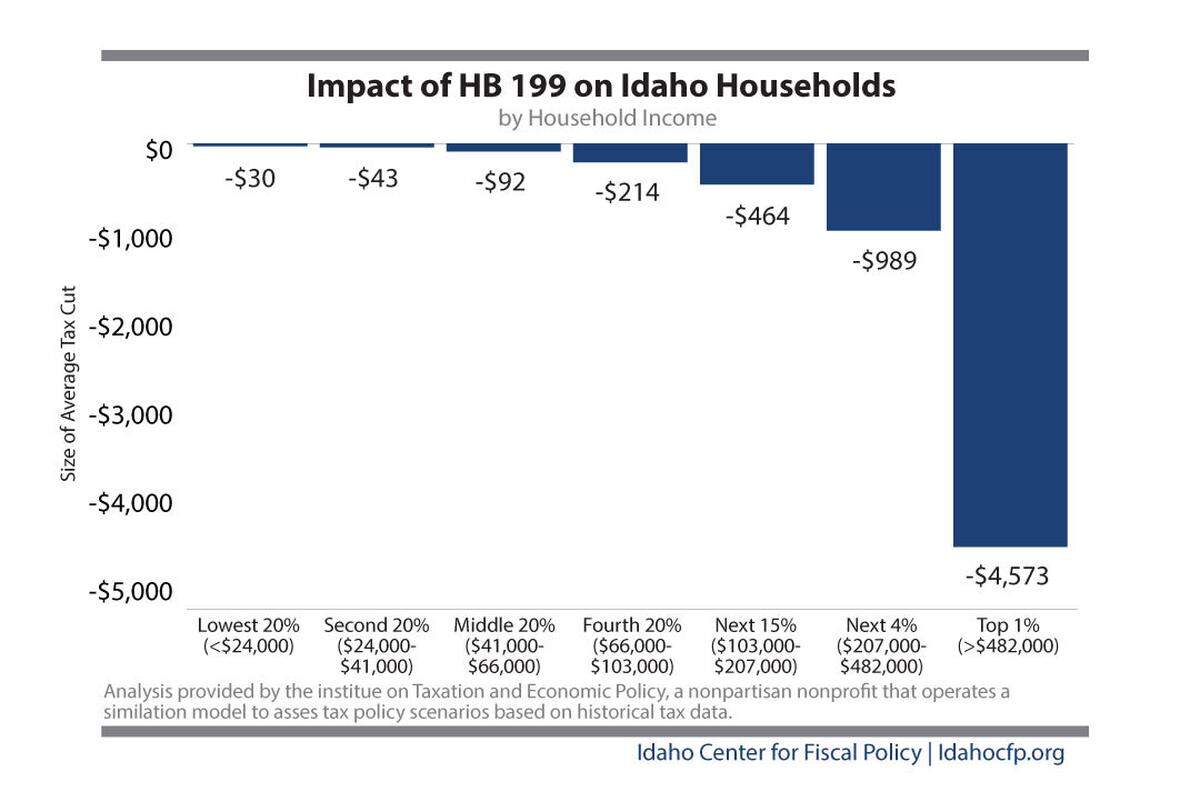
The net result of these changes would be a negligible to nominal benefit for the bottom 60% of Idaho households and a sizable benefit for the top 1% of households — those making more than $482,000 per year.
The Idaho Center for Fiscal Policy estimates Idaho households with incomes up to $66,000 a year would see an average decrease in their tax liability in the range of $30-$92, depending on their exact circumstances. The top 1% – those with incomes of $482,000 and above – would see a $4,573 tax cut, on average.
The impact on state tax revenues is anywhere from $240 million to $270 million.
One could make the case against this tax cut scheme on a pure equity and social-justice basis. Giving a low-income wage earner a $30 tax break while giving someone who earns $500,000 another $4,573 just isn’t fair.
That kind of argument, we recognize, won’t resonate with some Idaho legislators, particularly those who are always eager to “give back” taxes to Idaho taxpayers.
So we’ll make a different case that this type of targeted tax cut doesn’t benefit Idaho overall. While we don’t oppose “giving back” taxes to Idaho taxpayers, whom we target for tax breaks matters. Returning taxes to moderate- and low-income Idahoans is better for Idaho.
Lower-income workers were the most negatively affected by the coronavirus pandemic. They arguably are suffering the most and are trying to get back on their feet. A $30 tax break isn’t going to do much to get them back on their feet — and Idaho needs them back on their feet.
Imagine how much further a tax break goes for someone making $30,000 a year compared with someone making $500,000 a year. A significant tax cut for a low-income resident could mean the difference between paying rent and homelessness, paying for medication or taking an expensive tax-paid trip to the emergency room, buying groceries or turning to the food bank or food stamps. Targeting a tax cut to lift people out of poverty pays dividends for all of us.
Moderate- and low-income families are more likely to spend that money on such needs as school supplies, a car repair or new shoes for their children. That money gets injected into the economy right away. For someone who already earns $500,000 a year, that $4,573 likely would just be added to the savings account or invested for retirement.
Finally, when you’re talking about cutting state revenues by hundreds of millions of dollars, the people who get most affected by cuts to things like public education, road repairs and Medicaid are low-income Idahoans.
If you’re going to cut $284 million out of the budget, make sure it doesn’t disproportionately harm one segment of the population. In this case, it’s a double whammy for Idaho’s low- and moderate-income families.
If we want to get Idahoans off food stamps, rental assistance programs and Medicaid — programs that are paid by taxpayers — the best way to do so is by providing a tax environment that rewards hard work and allows them to be successful and self-sufficient.
That benefits all Idahoans.
This story was originally published February 24, 2021 at 4:00 AM.