Air stagnation, dense fog advisory issued in Ada County, will last through the week
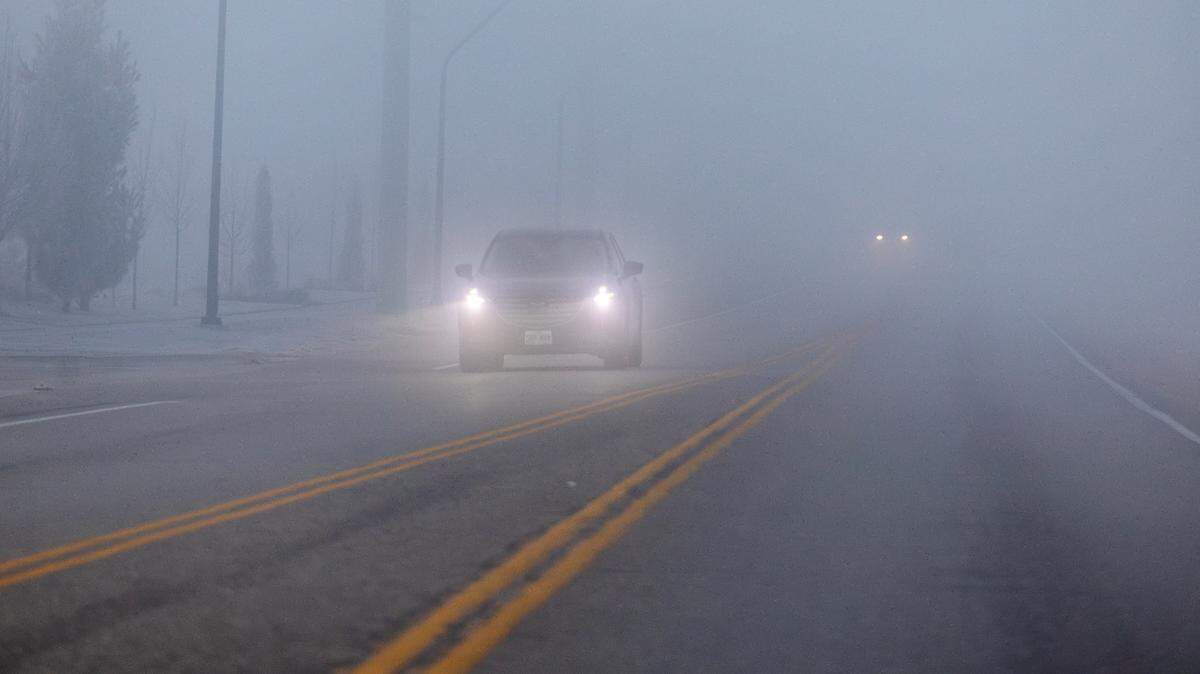
Hazardous weather conditions are set to continue in Boise for the rest of the week as the National Weather Service issued an air stagnation and dense fog advisory. The Department of Environmental Quality has also issued a yellow or moderate air quality forecast for Thursday as the air quality index is expected to reach 75.
When AQI value is above 100, the air quality is unhealthy.
The dense fog advisory is set in the Treasure Valley until Friday, while the air stagnation advisory will last until Saturday. Both are the result of an inversion that keeps cool air underneath warm air and traps low-level fog near the surface.
Officials in Boise have extended the air stagnation advisory multiple times since it first went into effect Nov. 29. High temperatures are expected to stay below 40 degrees for the rest of the week, and lows will stay well below freezing.
How does the inversion affect air quality?
An inversion is when warm air traps colder air at the surface level, and instead of the temperature getting colder as you travel to higher elevation, it becomes warmer, as described by Jackson Macfarlane, a meteorologist with the NWS in Boise in previous Idaho Statesman reporting.
Micheal Toole, the regional air shed coordinator at the DEQ in Boise, explained in an interview that the inversion causes limited ventilation and wind in the area. Then, pollutants that are introduced will reduce the air quality.
“The inversion layer acts like a lid on the valley,” Toole said. “We have the pollution from all sorts of sources that’s being emitted down here in the valley. It doesn’t have anywhere to go. As it warms up during the day, it can rise as that inversion layer rises, then at night when it cools off it compresses back down.”
Toole said it would take a storm system or low-pressure system to push the inversion out of the valley. The NWS in Boise expects a new weather system to enter the Treasure Valley by Sunday.
A burn warning was also issued for Ada County, asking residents not to conduct outdoor burning.
What triggered the Boise dense fog advisory?
While there was dense fog earlier this week, the NWS in Boise did not issue a dense fog advisory until Wednesday, and it will last until Friday. The air stagnation advisory was also extended to Saturday evening.
Bill Wojcik, a meteorologist at the NWS, said in an interview the dense fog moved into the Boise area from West Ada County.
“It was primarily west of Boise, in Caldwell or Nampa,” Wojcik said. “Cold air is more dense, so it settles down in the low spot, like oil and water. The density creates cold air near the surface and warm air aloft. And so the winds don’t have a chance to mix up the cold air.”
The air stagnation advisory ends Saturday evening because a low-pressure system is expected to push out the inversion, Wojcik said.
“A low-pressure system will come through, bringing some winds and cool air that will mix (the inversion) out, and also bring some precipitation, which will improve conditions,” Wojcik siad. “That will happen as early as Saturday night and then into Sunday.”