The shortest day of the year is this week. Here’s what the winter solstice means for Boise
There’s light at the end of the tunnel for those who can’t stand the long, dark Idaho nights during the winter months.
But first, you’ll have to endure the shortest day — and therefore longest night — of the year: the winter solstice.
The winter solstice is on Dec. 21 every year, meaning it will fall on Wednesday this week.
It marks the official beginning of winter on the astronomical calendar — the calendar that bases seasons off the summer and winter solstices and spring and fall equinoxes. It differs from the meteorological calendar, which views the start of winter as Dec. 1 for easier record-keeping purposes.
The solstice occurs when the sun is at its lowest point at solar noon, which corresponds with the least amount of daylight all year.
But after the solstice, things start to look a bit lighter. In the northern hemisphere, which includes the whole United States, each day after the winter solstice slowly sees more and more sunlight until it peaks during the summer solstice in June.
Why does a solstice occur?
Solstices happen because of the Earth’s axial tilt. According to NASA, it is believed that many millions of years ago, Earth was hit by something large, causing it to rotate on an off-kilter axis. Today, the obliquity of the axis — how far off center the axis lies — is 23.4 degrees, but it is gradually decreasing over time.
The axial tilt causes the two hemispheres to either face away or face toward the sun for longer periods — toward in the summer and away in the winter. During the spring and fall equinoxes, both hemispheres face the sun for an equal amount of time.
In other words, it’s what causes the seasons.
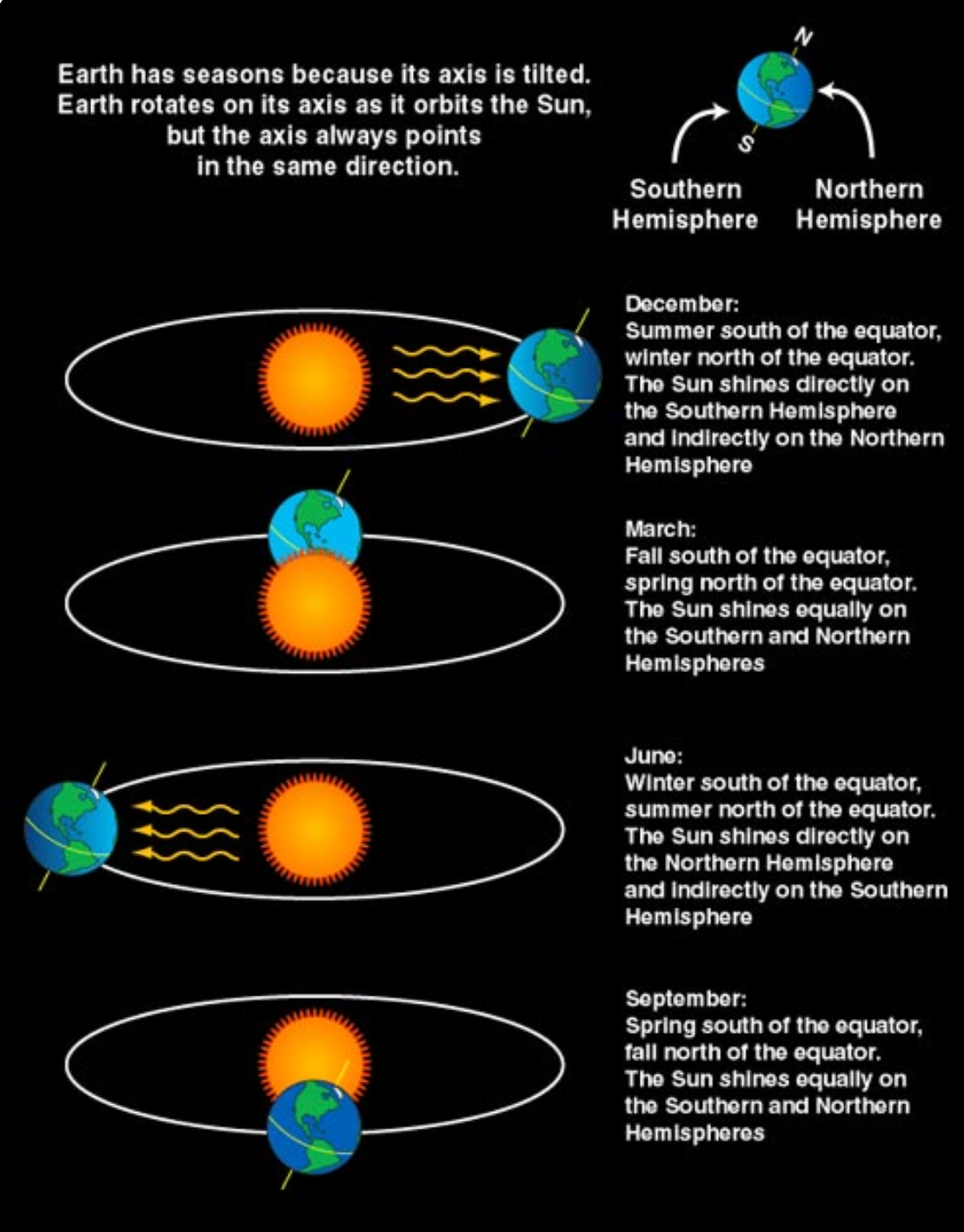
During the winter solstice, the northern hemisphere is tilted away from the sun, resulting in shorter days and longer nights.
How little daylight will Boise have?
The sun will rise in Boise on Dec. 21 at 8:15 a.m. and set at 5:11 p.m., resulting in 8 hours, 55 minutes and 59 seconds of daylight.
Unfortunately for sun-lovers, the amount of sunlight Boise receives each day after won’t be drastically more — the Earth’s axial tilt points the northern hemisphere away from the sun at its most dramatic point around the solstice, resulting in the slightest changes in daylight.
Boise will receive just two extra seconds of daylight on Dec. 22 than on the winter solstice, and by New Year’s Eve, the City of Trees will be enjoying an additional 3 minutes and 44 seconds of daylight.
By comparison, around the fall equinox on Sept. 22, the amount of daylight decreases in Boise by almost three minutes daily.

This story was originally published December 20, 2022 at 4:00 AM.