WeatherWhys: These are crops you should plant in Idaho now. What should wait until summer?
Spring officially arrives on Sunday, and it’s that time of the year when morning frost is replaced by a spring dew and empty garden beds start to spring to life with colorful flowers and fresh vegetables.
But you may be wondering what types of flowers and vegetables you can plant at this time of the year. The average temperatures are rising, but days below average can still bring a morning frost that will either stunt the growth or kill plants that are not meant to be grown in the cold.
In this week’s WeatherWhys, Idaho News 6 chief meteorologist Scott Dorval broke down the best vegetation to plant this time of the year and what seeds should be kept out of the ground until later in the year.
Keep it green this March
St. Patrick’s Day may have come and gone, but your garden beds should still be looking pretty green this month and into April.
Outside of a few summer bulbs like tulips and daffodils, which can grow in colder weather, you should be sticking strictly to cold weather crops for now, Dorval said. This includes different types of lettuce, onions, peas, radishes, spinach, turnips, cauliflower and broccoli.
Even though the daytime temperatures are rising, it can still dip to around 36 degrees in the Treasure Valley through late April, which is the temperature point for frost.
“When the temperature is 36 degrees, the temperature is taken at eye level,” Dorval said. “It’s colder down near the ground, and you can still get frost.”
Dorval even had some gardening tips himself to share using cold weather crops.
“You can get like an old wine barrel or a big planter pot, you put the soil in there, and everything you want in a mixed green salad,” Dorval said. “You find all the different types of lettuce, and you get the soil prepared, and you just sprinkle all those seeds altogether. And it just grows as a complete salad right there.”
From there you can harvest the crops on top but leave the soil and roots and seeds underneath undisturbed, and your “mixed green salad” should keep replenishing itself throughout the year.
More time to grow
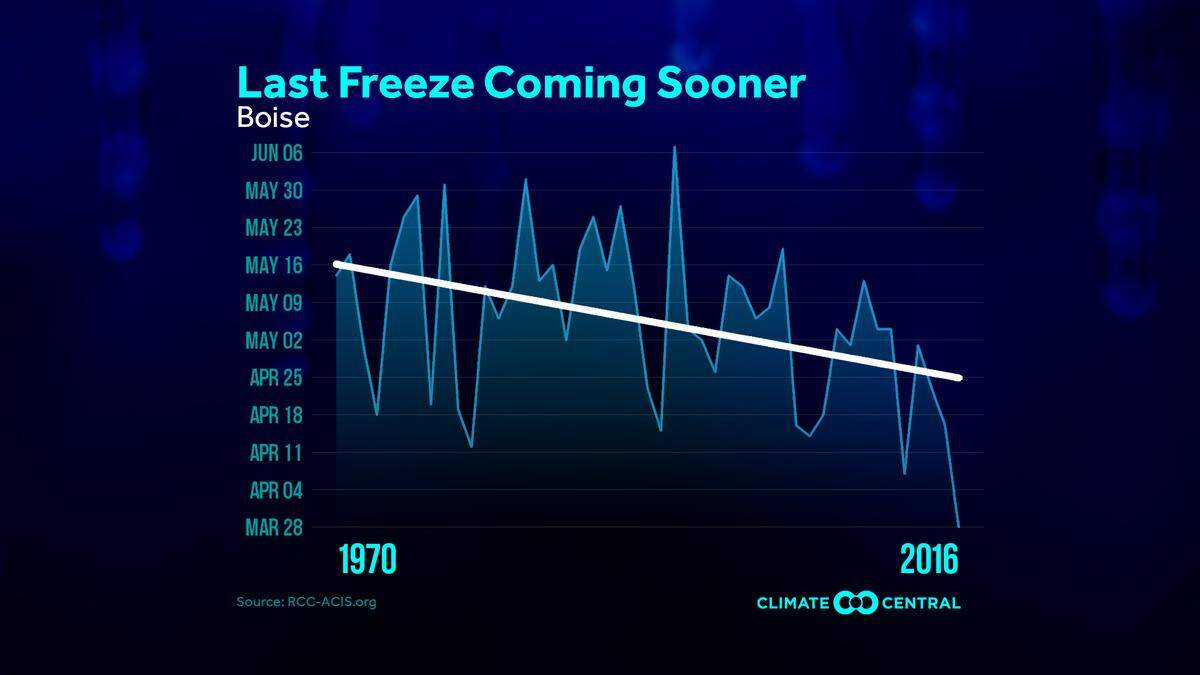
The date of the final freeze in Boise has been moving forward over time, which can be good news for people wanting to grow their own vegetables. In 1970, the average date for the final freeze was May 16. In 2016, the most recent data available from the Applied Climate Information System, the average date for the final freeze was April 25.
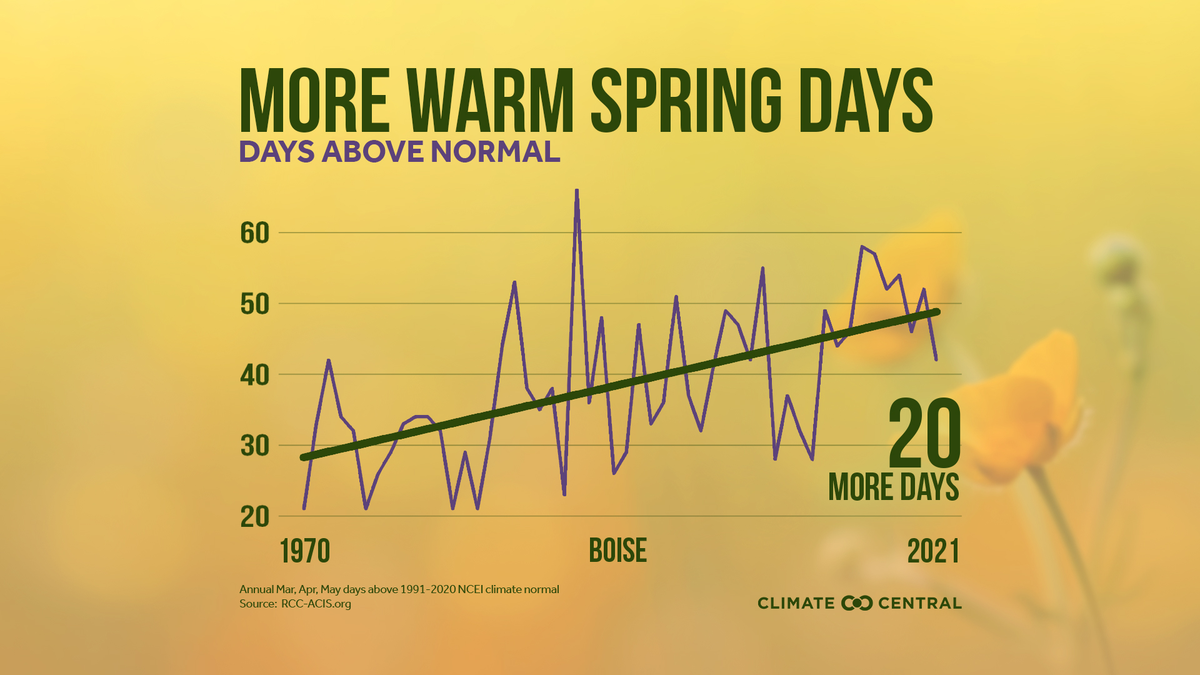
The Treasure Valley is also seeing on average 20 more days above the average temperature in spring since 1970, in essence giving gardeners an extra 20 days every year to start growing their warm-weather crops, according to the ACIS.
Mother’s Day weekend marker
While vegetation is great, there are also plenty of people who are just interested in planting their flowers for the summer.
Mother’s Day weekend is your major marker for flowering plants, as well as vegetables like tomatoes, peppers and pumpkins. It’s these kinds of plants that will die or struggle to grow whenever frost envelopes the ground, but by the first week of May, even the low temperatures in Boise are high enough to avoid frost.
Dorval says there’s no point in trying to plant those types of seeds early because they’ll only wait for the soil to warm up anyway and they don’t benefit from being planted too early.
“They just don’t grow well early on, they’ll just sit there and wait for it to get warm,” Dorval said. “And as the soil starts to warm up, then they take off.”
As we get deeper into the year, Dorval also recommends that bulbs, such as tulips and daffodils, be planted in the fall. Bulbs will survive underground throughout the winter before sprouting in late winter or early spring of the following year and producing an early-season splash of color.
This week, Dorval sees rain in the forecast for Saturday. But by the end of the week, temperatures will rise as high as 70 degrees, making it the perfect time to get outside and plant some crops.
Tell us what you want to know