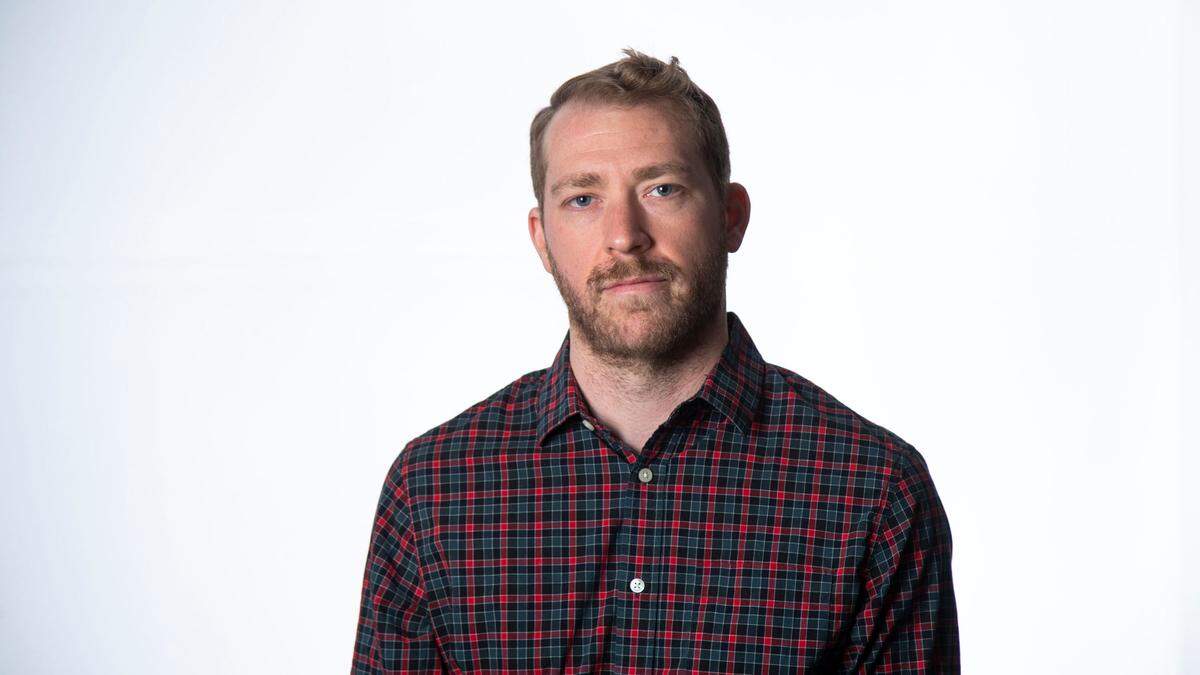
Idaho GOP megadonor, nonresident seeks U.S. gold depot law after state bid stalls
AI-generated summary reviewed by our newsroom.
- Stefan Gleason, his family and companies have given $1 million-plus in political donations
- Money Metals Exchange also spent $170K on federal lobbyists to advance the SILVER Act.
- The federal bill would require two federal depositories in each U.S. time zone.
A major out-of-state donor to the right flank of the Idaho Republican Party has turned his attention toward passing a federal law that would benefit his Treasure Valley business after past state legislative efforts have fallen short.
Stefan Gleason, president and CEO of precious metals dealer Money Metals Exchange in Eagle, his family members and his companies have combined to make more than $1 million in contributions toward state and federal elections. Since 2020, the majority of those donations, totaling $588,000, have gone to Idaho GOP candidates, party central committees and political action committees, according to campaign finance data from the Idaho Secretary of State’s Office.
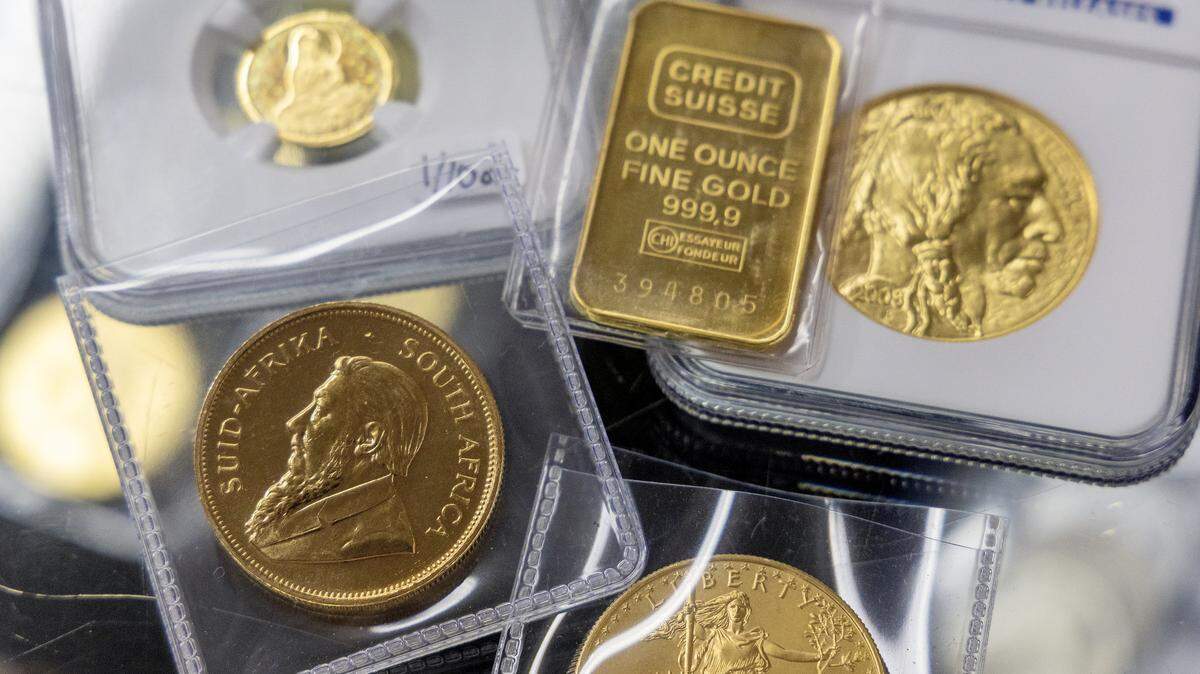
Gleason, 53, a registered voter in North Carolina and resident of Charlotte, founded Money Metals Exchange in 2010 in Idaho, and has since that time had more than 1 million customers, he told the Idaho Statesman in a written statement. In 2024, the company completed construction of a massive $28 million secure depository on East State Street in downtown Eagle for storing gold and silver to rival the likes of Fort Knox.
Gleason called his family’s company, co-owned by his brother, Mike Gleason, and brother-in-law, Clint Siegner — both of whom are Ada County residents — a “bona fide Idaho success story” that now employs more than 150 people in Eagle. Each co-owner is a “significant” taxpayer in the state and has a vested interest in ensuring Idaho remains a good place to do business and raise a family, he said.
Gleason’s push to make political connections in Idaho, and beyond, appears to revolve around backing candidates who support legislation that helps advance the gold and silver sales and storage industries. Conservative state lawmakers who have received tens of thousands of dollars from Gleason and his family are also those who have consistently sponsored, or at least provided their favorable votes, to bills that would directly benefit his precious metals business.
Wealthy donors choose to contribute to political races for a wide variety of reasons, including for partisan and ideological reasons, said Jaclyn Kettler, a political science professor at Boise State University. And financially supporting a candidate’s campaign doesn’t always equate to obtaining a desired policy outcome, she said.
“There are different theories about what a contribution buys, for lack of a better word,” Kettler said in a phone interview. “Maybe it helps make an issue a priority or is going to get access to an incumbent you wouldn’t get if you hadn’t been a big donor to their campaign. You may have a friendlier relationship or more access than those who are not donating at all, or than those making very small donations would have.”
Gleason rejected concerns that hundreds of thousands in campaign contributions in a state in which he doesn’t reside have resulted in outsized political influence for him and his family in Idaho. By comparison over that same period, Gleason donated $143,000 — less than a quarter of the amount he has contributed in Idaho — in state elections in North Carolina, state campaign data showed.
From Idaho legislators to federal lawmakers
So far failing to hit pay dirt with legislation in Idaho, Gleason and his family have shifted to pursuing a federal law with similar aims. Money Metals has spent $170,000 in the past year on lobbyists in Washington, D.C., to meet with members of the U.S. House and Senate and the U.S. Treasury Department on “issues related to commodities trading,” as well as a specific piece of legislation dubbed The SILVER Act, according to federal lobbying reports.
Gleason also acts as chairman of a Charlotte-based public policy group called the Sound Money Defense League that advocates for gold and silver investments at the state and federal levels. The group’s executive director is Jp Cortez, who also lives in Charlotte and works at Money Metals on its “editorial team.”
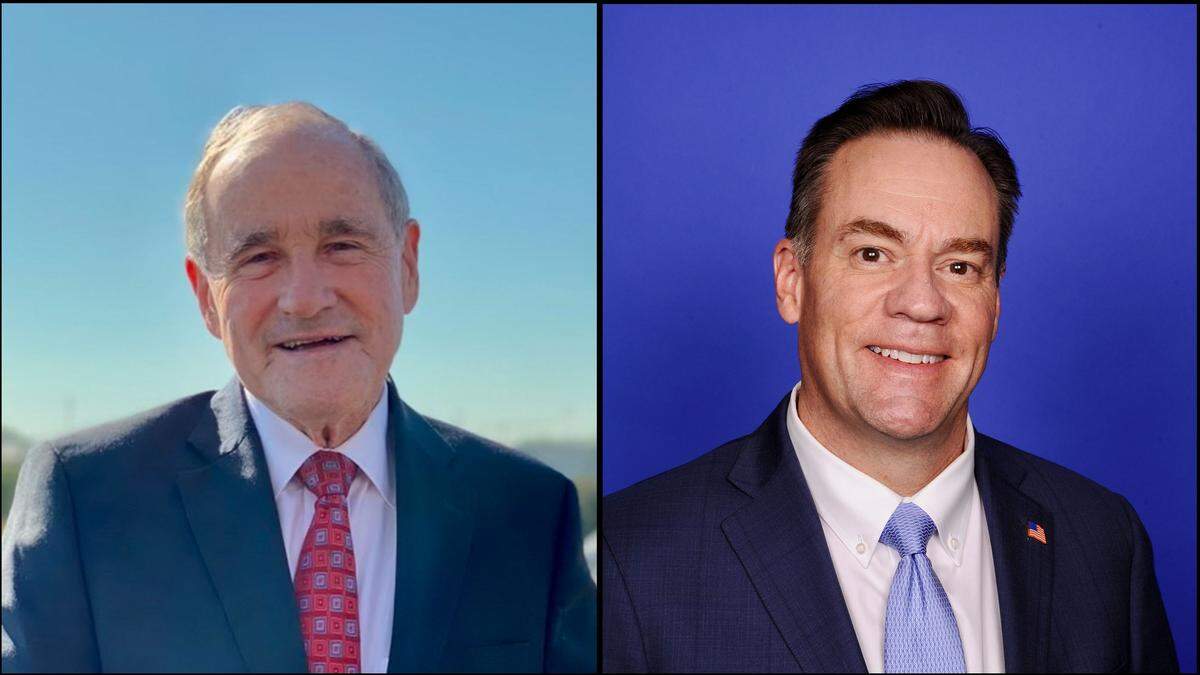
The Eagle-based company is specifically leaning on two of Idaho’s federal lawmakers to win approval for the bill. The System Integrity through Licensed Vault Expansion and Resilience Act would require the U.S. government to designate two precious metals depositories in the U.S. mainland’s four time zones, instead of prioritizing such storage facilities in the Greater New York City area.
Rep. Russ Fulcher, R-Idaho, whose 1st Congressional District encompasses Eagle, where the Money Metals Depository is located, proposed the legislation in the U.S. House earlier this year. Sen. Jim Risch, R-Idaho, followed it up with companion legislation by the same name in the Senate in May.
Gleason contributed a federal campaign maximum of $5,600 to Fulcher for his 2020 reelection bid. Fulcher, 64, is currently running for a fifth term for the seat that represents western and North Idaho, plus a portion of Ada County.
“Having metal depositories located in more than one region in the United States will provide Americans across the country with affordable access to metal exchanges and safeguard assets in the event of a national emergency or extreme weather event,” Fulcher said in a statement in March. “I’m proud to introduce The SILVER Act … strengthening system integrity and resiliency.”
Since 2014, Gleason has donated $416,000 to federal candidates and conservative PACs across 19 states, including far-right firebrands such as Rep. Lauren Boebert, R-Colo., and former Rep. Matt Gaetz, R-Fla., according to Federal Election Commission campaign contribution records. Now surpassing $1.3 million in political spending including the recent federal lobbying blitz, Gleason vowed to double down.
“The more that legacy media or Idaho political hacks attempt to criticize or bully our family business (or us personally) for helping elect public servants who share our values of limited government, free enterprise, and constitutional principles — the more generously we will give,” Gleason told the Statesman. “I give my word on that.”
‘A tale as old as time’
Since 2021, repeated pitches have been made in the Idaho Legislature to allow the state to invest idle taxpayer funds into physical gold and silver. Doing so also would require storage in a depository.
Sponsors of such bills have included former Rep. Ron Nate, R-Rexburg, now president of the Idaho Freedom Foundation, a far-right lobbying group, as well as current Rep. Barbara Ehardt, R-Idaho Falls, and Sen. Phil Hart, R-Kellogg. Each conservative lawmaker benefited from thousands in campaign contributions toward their reelection bids, in races capped at $1,000 per donor each election cycle.
“It’s a tale as old time: A businessperson or someone with an invested interest in policy decides to use money in elections and through lobbying as a way to influence that policy,” said Charles Hunt, also a political science professor at Boise State University. “That kind of thing has been going on since the first dollar was spent in federal or state politics.”

In 2024, the bill sponsored by Hart and Ehardt finally passed both chambers of the Legislature, but Republican Gov. Brad Little vetoed it.
“While the Legislature sought to provide additional flexibility for the state’s investment portfolio, we have a fiduciary responsibility to manage taxpayer dollars with the utmost care and caution,” Little said at the time. “This legislation and its fiscal note fail to take into account the many additional costs that will be borne by taxpayers for the storage, safeguard, and purchase of commodities such as gold or silver.”
Subsequent efforts to pass similar gold and silver investment bills in Idaho have failed, including this year.
Spreading money to Idaho GOP politicians
Of Gleason’s political donations in Idaho, more than $295,000 went to PACs that support far-right candidates and causes, primarily from Money Metals Exchange and SMC Properties, another Gleason-owned business that shares a P.O. Box. Whereas contributions to individual candidates have limits per election cycle, donations to PACs have no such restrictions and are also less traceable in how they spend and must report use of their funds.
“It can broaden your influence if you’re not just donating to candidates, but to PACs or political organizations active in a state’s politics,” Kettler said. “It’s just another way to grow your influence and connections. You want to have as many friends as possible, in this instance — especially over legislation that’s stalled or been defeated one way or another.”
How the U.S. creates and manages its money supply is “the top issue of the day,” Hart said in an email to the Statesman. Aligning with the current Idaho Republican Party platform, he advocates for returning to a financial system where the U.S. dollar is backed by something tangible, such as gold or silver.
“Without our money supply being anchored by precious metals, there is no limit to the amount of money that can be created,” Hart said. “Because this is a federal issue, we cannot directly fix it at the state level, but we may be able to create pressure on the issue by promoting the local use of gold and silver.”
Others to sign off on the state GOP platform — without exception to returning to the gold standard — are Risch, Fulcher, Attorney General Raúl Labrador, Idaho GOP Chair Dorothy Moon, state Sen. Christy Zito, R-Mountain Home, and Rep. Rob Beiswenger, R-Horseshoe Bend. All but Risch have received heavy political contributions from Gleason, his family or his companies.
Labrador tops the list at $34,000 over the past four years, followed by Moon at $13,500 between 2020 and 2021 in her campaign for the Legislature, and then a failed run for secretary of state.
Neither Labrador’s campaign as he seeks a second term as attorney general, nor Moon’s as she seeks a third term as state GOP chair, returned requests for comment.
Beiswenger, running for a second term in the Idaho House, is an employee of Money Metals Exchange and since 2021 has received $9,300 in campaign donations from Gleason, his family and their companies. Beiswenger also did not return email and phone messages from the Statesman.
Through mostly in-kind donations of gold and silver coins, Gleason and his companies have given about $36,000 to the Idaho Republican Party and county central committees throughout the state since 2020, Idaho secretary of state records showed.
Little, Lt. Gov. Scott Bedke and U.S. Rep. Mike Simpson were among a minority of signees who each listed exceptions to the state platform that included declining to endorse returning to the gold standard. None of the three prominent, generally more mainstream Republicans have received contributions from Gleason or his family.
“There’s lots of outside money playing in Idaho politics designed to shape the Republican Party going forward, and to some extent this is just another example of that,” Hunt said.
Gleason previously supported Idaho Falls attorney Bryan Smith, Simpson’s 2nd Congressional District primary challenger in 2022, with campaign maximum donations of $5,800. Simpson defeated Smith by more than 21% of the vote.
“He thinks like I do, that the government should have a limited role, and that the government by and large has exceeded its limited role,” Smith said in a phone interview. “We have a fiat currency that ought to be backed by something. Right now, it’s backed by nothing.”
Americans wary of money in politics?
Risch, 83, is running for fourth six-year term in the Senate, and promoted the SILVER Act as a way to level the investment playing field for his constituents.
“The concentration of precious metal depositories in a single region has left Idahoans at a disadvantage,” Risch said in a statement. “My SILVER Act broadens the geographic locations of these facilities, which will reduce costs, strengthen our national security, and allow Idahoans to store precious metals closer to home.”
The bill counts bipartisan support from Sen. Catherine Cortez Masto, D-Nev. Neither Risch nor Cortez Masto returned requests from the Statesman about their potential connections to Gleason, who is quoted in their news release that announced their co-sponsorship of the federal bill.
“On behalf of our broad industry coalition spanning all segments of the U.S. precious metals supply chain, I thank Sens. Risch and Cortez Masto for taking this important first step in addressing both the national security risks and anti-competitive behaviors caused by geographical concentration in our market,” Gleason said in their announcement.
Sen. Mike Crapo, R-Idaho, who chairs the Senate Finance Committee, signaled his support for the bill.
“I agree with the need to strengthen America’s precious metals infrastructure and to encourage more competition among vault operators,” Crapo told the Statesman by email. “Greater geographic diversity would reduce vulnerabilities, improve market access and support a more resilient domestic supply chain.”
Becca Alcorn, one of the federal lobbyists working on behalf of Money Metals Exchange, is a former policy adviser to Crapo and the Senate Finance Committee. Crapo’s office as a general policy doesn’t disclose details about the senator’s meetings or scheduling, Kyra Smith, his press secretary, told the Statesman. She wasn’t personally familiar with Gleason, she added, and there is no record of him making contributions to Crapo’s campaigns.
About 1% of the U.S. population donated more than $200 toward federal elections in the 2024 election cycle, according to Open Secrets, a nonpartisan nonprofit that tracks campaign finance in U.S. elections. Americans remain particularly wary of money in politics, Hunt said.
“Much more often what’s happening is that you’re paying not so much for votes, but for access and for relationships,” he said of political contributions and lobbying fees. “It’s not that you’re getting nothing, but that you’re paying for something different than what the average person might think.”
The House version of the SILVER Act introduced by Fulcher is co-sponsored by Rep. Mark Harris, R-N.C. Gleason has been a longtime supporter of Harris, Federal Election Commission campaign contributions showed. Since 2017, Gleason has donated $19,000 to the congressional campaigns of his fellow North Carolinian.
Neither Fulcher nor Harris returned requests for comment from the Statesman.
Simpson, 75, seeks a 15th term in office representing the congressional seat that includes East Idaho and parts of Boise. He is still reviewing the bill and had yet to take a position, said Lexi Hammel, Simpson’s congressional spokesperson.
“The bipartisan SILVER Act aims to address significant national security and supply chain vulnerabilities while enabling Western, Southern, and other states to build foundational market infrastructure they presently lack,” Gleason said. “New York is no longer the center of the financial universe, and mineral-rich states like Idaho certainly shouldn’t be formally locked out of precious metals delivery mechanisms for the regulated futures markets.”