Idaho federal lawmakers seek constitutional safeguards in renewal of U.S. spy law
AI-generated summary reviewed by our newsroom.
- U.S. House Republicans failed to extend Section 702 of FISA into 2027.
- President Trump signed a 10-day extension that keeps the spy law in place until April 30.
- Reps. Simpson and Fulcher split their votes for the 2024 extension, which Biden signed.
Efforts to extend a U.S. intelligence surveillance program into late 2027 to monitor people abroad over possible national security threats have failed to reach consensus among the Republican-controlled Congress, and Idaho’s lawmakers are preparing to cast critical votes.
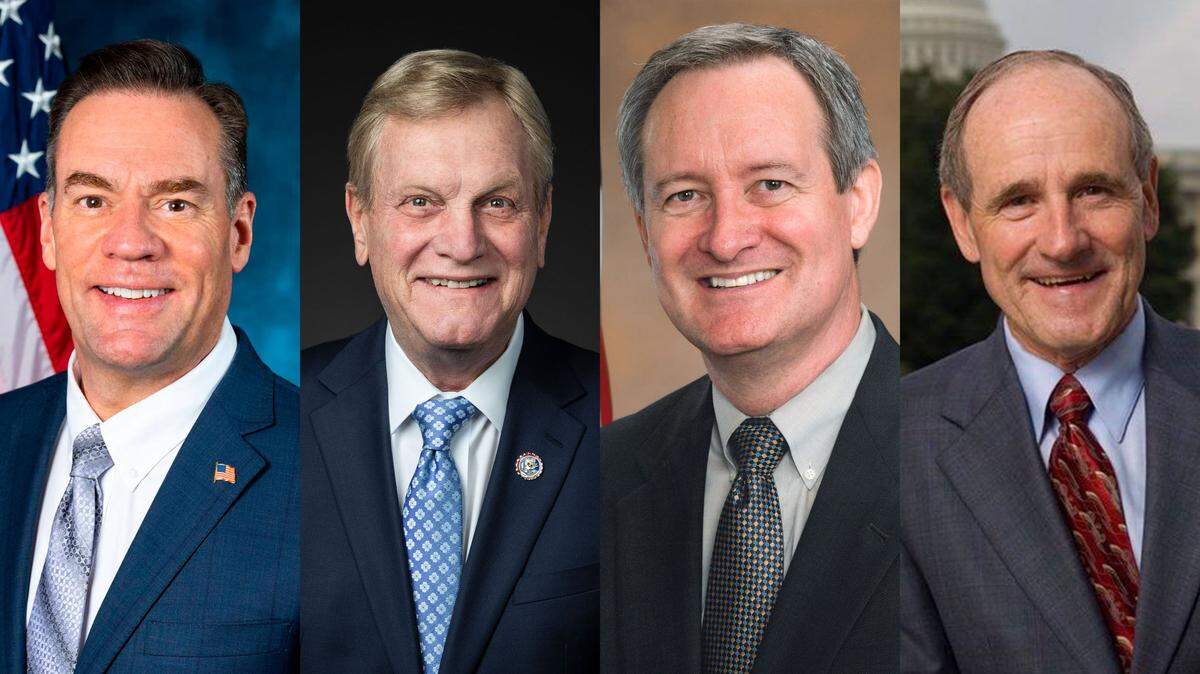
President Donald Trump on Saturday signed a 10-day emergency extension of Section 702 of the Foreign Intelligence Surveillance Act, or FISA, after the House GOP was unable to convince a majority of its members to support a longer-term option. Idaho’s two congressmen, Reps. Mike Simpson and Russ Fulcher — both Republicans — backed the bill in a series of procedural votes last week, but it has yet to earn a majority to pass and move to the Senate for consideration.
Trump has sought an unaltered renewal of the existing law, according to Politico. But several Republican holdouts and all but a few Democrats have so far rejected it.
Section 702 of FISA permits U.S. intelligence agencies to collect information, without warrants, on foreign nationals thought to be a threat and believed to be located outside of the country. It does not allow the agencies to spy on U.S. citizens or non-citizens inside the country. The agencies also must work to minimize retaining or sharing information obtained about people in the U.S. from surveillance of targets who have interacted with domestic individuals.
It all falls under oversight by the U.S. attorney general and Justice Department.
Congress first enacted the law in 2008 under then-Republican President George W. Bush following a warrantless wiretapping program in the aftermath of 9/11.
Some lawmakers hope to revamp the law, while others aim to meet Trump’s desires to keep the program running as-is for the next 18 months.
Fulcher, 64, who represents western and North Idaho, and part of Ada County, appears to want changes.
“I cannot in good conscience support authorizing multiple government channels to have broad, warrantless surveillance authority over Americans,” he posted on social media last week. “When it comes to U.S. citizens, intelligence agencies should be required to obtain a warrant.”
Fulcher’s office did not respond to a request from the Idaho Statesman for more information. Neither did Simpson’s office to explain his position on the FISA extension.
With the new deadline looming as the current extension lapses April 30, the House is under pressure to pass a longer-term version of the bill. It then would head to the Senate.
Idaho’s two senators, Mike Crapo and Jim Risch, have each voted in support of past extensions of Section 702 of FISA, most recently in 2024. But in a statement at the time, they also advocated for updates to improve the foreign surveillance law.
“With global threats increasing every day, it is paramount for our defenses to remain strong in order to protect Americans,” the two Idaho senators said. “This FISA reauthorization creates new, tighter restrictions and timelines to better audit this program and protect Americans’ privacy while ensuring this critical tool can continue to be used to target foreign terrorists.”
Simpson, 75, voted for that extension of the law, while Fulcher opposed it. Then-Democratic President Joe Biden signed it into law.
This time around, Crapo, 74, said he’ll scrutinize the version of the bill that eventually comes through the Senate.
“While we must not allow intelligence-gathering authority to undermine Americans’ constitutional rights, the federal government should have the tools it needs to detect and track threats to our national security,” Crapo said in a statement to the Statesman. “I will review any long-term extension of FISA critically.”
Risch, chair of the Senate Foreign Relations Committee, did not respond to a Statesman request for comment. Like Simpson and Fulcher, Risch, who turns 83 next month, seeks another term in office starting with the May primary election.