Idaho lawmakers finally head home, but fights over money could amp up
On a Thursday morning in March, Rep. Josh Tanner, R-Eagle, co-chair of the state’s powerful budget committee, spoke out against an attempt to fund Meals on Wheels for seniors.
Lawmakers spent the session trying to find millions of dollars in cuts, after slashing $450 million in revenue the year before, largely in tax cuts. Gov. Brad Little in August ordered 3% spending cuts and lawmakers in this year’s session approved an extra 1% cut this fiscal year and 2% in the year starting July 1 for most agencies.
But many of the cuts prompted consternation. People piled into the Capitol to protest potential Medicaid cuts. Senators debated the value of a college education, since the slashes fell heavily on higher education.
And in the case of Meals on Wheels, the governor’s budget director sent a letter in February to the budget writers urging them to put that money back in to fund 31,000 meals, as lawmakers combed through budgets looking for areas that actually did need funding.
But Tanner objected to adding the $130,000 back on an ongoing basis, meaning every year. Instead, along with almost $8.5 million lawmakers added back as of March 20 for next fiscal year, the funding is one-time, meaning the budget committee will likely repeat the debates over those asks in 2027.
And if it’s another tough budget year, Tanner told the Statesman, it could be hard to find the money again.
That means this is just the beginning, even as lawmakers head home to campaign ahead of the May 19 primary election.
There’s an expected $106 million left on the bottom line for this fiscal year and a projected $231 million leftover balance for next fiscal year.
“Some of the budget decisions were not easy, but I am pleased the Legislature stuck to my Enduring Idaho plan — a forward-looking, responsible budget that keeps our state on a strong trajectory,” Little said in a statement. “Idaho’s economy remains the strongest in the nation, and our actions this session position us to continue that record of success. I appreciate my legislative partners for their hard work and commitment to the people of Idaho.”
There’s still major uncertainty with tax conformity, which this year means conforming to President Donald Trump’s tax breaks such as on tips and some overtime. Little’s proposed budget estimated that conformity’s price tag would be $155 million, but not starting this year.
Lawmakers wanted more: They made the tax breaks retroactive to the current year, so people filing their taxes for 2025 could take advantage.
Estimates of the cost have varied widely, to almost $300 million annually. At least one lawmaker, Rep. John Gannon, D-Boise, believes this could blow up the budget after lawmakers have gone home. Others, however, are more confident in the Legislature’s $155 million estimate.
The 2026 session cuts intensified the trend from last year, where lawmakers who wanted smaller government invoked DOGE aka Elon Musk’s Department of Government Efficiency, which slashed thousands of federal jobs in 2025 after Trump returned to the presidency.
In 2025, Lewiston Republican Rep. Lori McCann told the Statesman she wished lawmakers would use a “pocket knife instead of a chainsaw to balance the budget.”
“It’s got a bigger blade. It’s a larger chainsaw for sure,” she said about this session’s cuts. “Instead of whittling away where we need to, we’re just cutting to the bone in some areas.”
In the past two to three years, Senate Assistant Majority Leader Mark Harris, R-Soda Springs, has started to notice discord in the budgets. Those bills used to pass unanimously, he said, but now “every budget is going to have a split vote.” He doesn’t think that will stop anytime soon.
“This year is a little different because of the cuts. Some members want more cuts. Some members think the budgets are being cut too much,” Harris said. “You get kind of a weird voting dynamic with each budget.”
Culture wars: From Pride flags to Islam
Despite the shadow of budget cuts looming over the Statehouse, lawmakers still found time for culture-war issues. They passed a bill fixing the mistake from last year about Boise’s Pride flag, where the law outlawing most flags on government property didn’t have an enforcement mechanism. Every day this session, the rainbow banner hung at City Hall just a couple of blocks from the Statehouse, until just minutes after Little signed the bill on March 31.
They worked on what the American Civil Liberties Union of Idaho called one of the ”most extreme” bills in the country — which after repeated offenses would make using a different bathroom than your sex a felony.
Some lawmakers hopped on the “Sharia law” bandwagon, copying states like Texas that are hardening their stances toward Islamic groups. Lawmakers, for example, passed a resolution to designate the Muslim Brotherhood and the Council on American-Islamic Relations as terrorist organizations, following similar moves by the governors of Texas and Florida.
Lawmakers denied that they were targeting Islam and said there was no Islamophobia at play.
Rep. Bruce Skaug, R-Nampa, brought a bill allowing investigations into schools and health care providers who don’t let parents know within 72 hours that a child wants to “socially transition.”
The move prompted outrage from Democrats, who tried to use a procedural move known as a “minority report” to add seven pages of their concerns to the day’s journal. But the House GOP blocked that move.
Cuts to health care and child care
A repeat effort from last year to repeal the state’s Medicaid expansion, which provides health insurance to nearly 80,000 low-income residents, again failed to gain traction.
But lawmakers looking to rein in state costs of the primarily federally funded program passed a new three-month work requirement that Rep. John Vander Woude, R-Nampa, the bill sponsor, expected would drop at least a quarter of enrollees. Opponents labeled it a “backdoor repeal” and worried the new law could cost health care for as much as half of Medicaid expansion recipients.
Lawmakers opted not to hold a hearing for a bill that would have restored a Medicaid program that allowed parents to be paid caregivers for their children with disabilities. That has left many families struggling as Idaho faces a severe shortage of personal care providers.
The Legislature also approved about $22 million in cuts to residential habilitation reimbursement rates. Residential habilitation, a Medicaid-funded program, provides support and services to helps adults with disabilities to live independently and learn or improve new skills.
Little in his January State of the State address had called for cuts to Medicaid to help balance the budget. Earlier in the session, Democrats held a town hall where hundreds of people packed an auditorium in the Capitol and overflowed into several other rooms to beg lawmakers to preserve Medicaid.
They shared how Medicaid offered lifesaving services, and they warned that cuts could force them or their loved ones into institutions — which they called a dehumanizing, costly and detrimental consequence.
Under concerns of widespread fraud in a federal child care assistance program stemming from violations in Minnesota, Idaho budget writers pulled back $14 million in federal grants to expand the state’s program. They also denied a request for another $16 million in federal dollars for fiscal year 2027, despite a recent Department of Health and Welfare audit that showed limited suspected fraud in Idaho’s child care program.
Controversy and failures on immigration
But tensions perhaps rose the highest on immigration bills. This session, hardliners introduced scads of bills on immigration, most of which failed or did not move forward. But in one of the final days of the session, Senate leaders took a stab at it, drawing the ire of Idaho sheriffs who said the Trump administration was pressuring Idaho leaders.
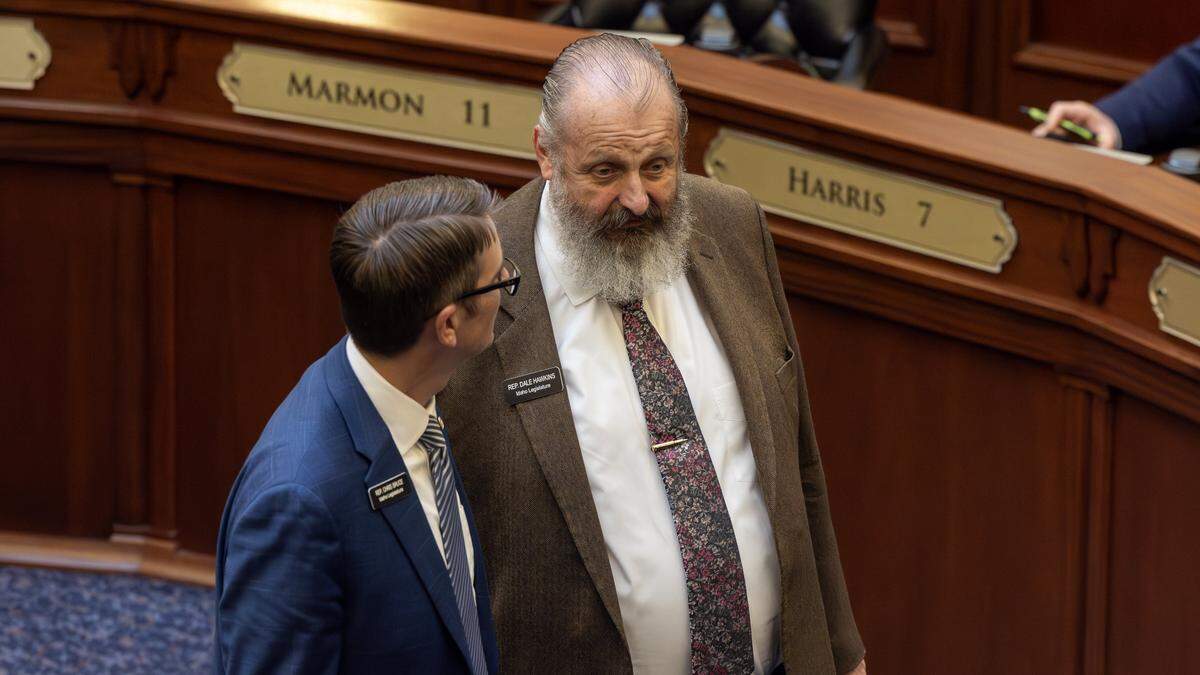
Senate Pro Tem Kelly Anthon, R-Declo, brought back several stalled immigration bills, but this time with a letter of support from the White House behind one of them, which would require law enforcement agencies in the state to apply for a 287(g) agreement with Immigration and Customs Enforcement, or ICE. The federal initiative allows ICE to delegate some of its functions to local law enforcement officials.
On the second to last day of the session, lawmakers in the House narrowly approved a drastic change that turned what opponents viewed as a watered-down E-Verify bill into a bill requiring law enforcement to apply for 287(g) agreements. E-Verify is a federal website to check employee work eligibility.
But ultimately, neither Anthon’s bill nor the drastically changed bill was taken up by the Senate.
The 2026 Legislature’s final days
The Senate used the same process just two days before to revive a bill that, among other things, would prevent schools from taking union dues out of an employee’s pay. The bill had been shelved in the Senate, but the maneuver gave it fresh life.
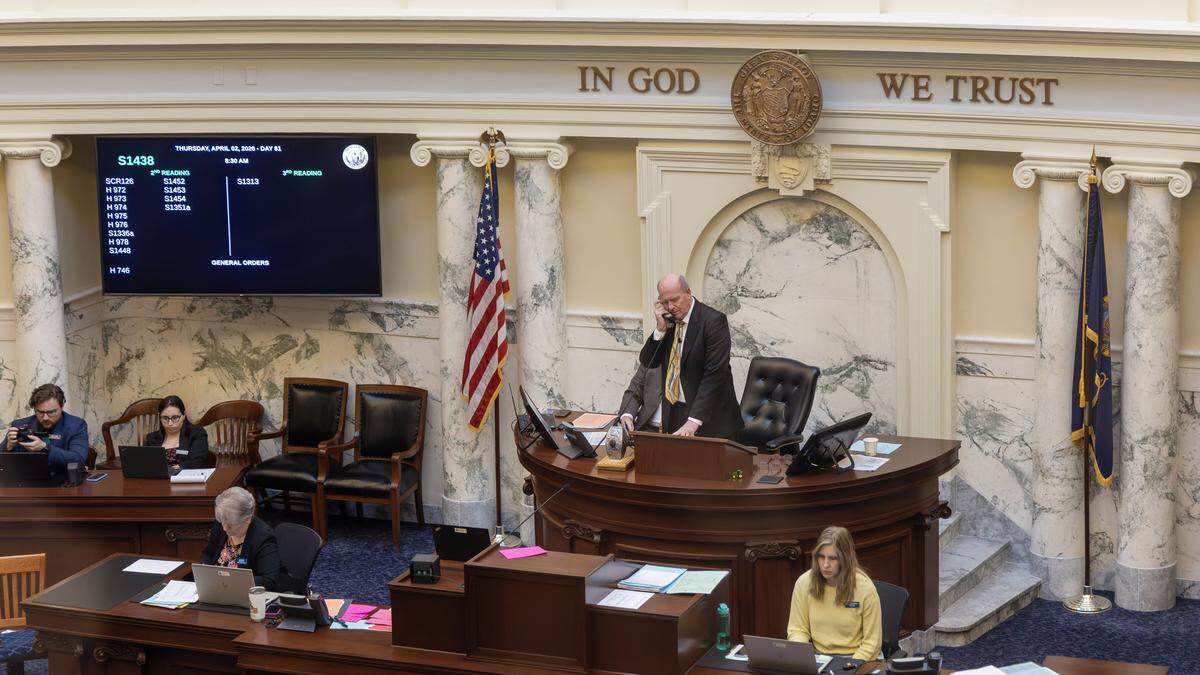
On the final day of the session, lawmakers in the House debated the bill and its intent. Some argued that it simply bars teachers unions from using taxpayer money. Others said it was a political move to attack and destroy the unions. The Legislature ultimately ended up passing the bill, which faces one final hurdle when it lands on the governor’s desk.
This story was originally published April 2, 2026 at 6:39 PM.