Public blocked from photo of key evidence in Moscow murders with OK’d Idaho bill
AI-generated summary reviewed by our newsroom.
- Idaho bill would prevent public release of police, coroner death-scene photos with bodies.
- Only victims’ next of kin can obtain the photos after investigations and cases conclude.
- The change follows the Moscow murders and blocks disclosure of photos showing decedents.
A proposed change to the state’s public records law that would restrict the release of images showing deceased people from death investigations cleared the Idaho Legislature, but it could come with unintended consequences.
Senate Bill 1250 passed the House on Monday with no opposition. Sponsored by Sen. Melissa Wintrow, D-Boise, and Rep. Bruce Skaug, R-Nampa, it did the same in the Senate last month, and next moves on to Gov. Brad Little’s desk for his consideration.
Under current state law, photos used for official purposes that may depict the deceased can also be obtained by members of the public through formal requests, Skaug said on the House floor Monday. Those could be from situations that involve a fatal car wreck, a suicide or a murder, he said.
The police and coroner photos are used “sometimes for nefarious purposes or for public outing on the news when those should not be,” Skaug said. “Think of a family member if that happened in your household.”
Senate Majority Leader Lori Den Hartog, R-Meridian, also sponsored the bill.
In the past year, photos from inside the crime scene in Moscow where four University of Idaho students were murdered in November 2022 were released through public records requests. Members of some of the victims’ families sued and secured a court order that such photos required heavier redactions when disclosed to requesters.
The four U of I student victims were three North Idaho women who lived in an off-campus home on King Road, and the boyfriend of one of them from Washington, who stayed over for the night. Seniors Kaylee Goncalves and Madison Mogen, both 21; junior Xana Kernodle, 20; and freshman Ethan Chapin, 20, died in the early morning knife attack.
The incident generated national and international attention, including because it went without an arrest for almost seven weeks. Amateur sleuths who tried to help solve the shocking case stirred up rumors online — many of which remained active and have only grown in the time since the college student homicides.
The lone perpetrator, Bryan Kohberger, then 27, a graduate student at Washington State University in nearby Pullman, Washington, was taken into custody in late December 2022. The critical piece of evidence that connected him to the crime scene was a leather knife sheath left under the body of one the victims, which investigators found contained some of Kohberger’s DNA.
Law would have barred key Moscow investigation photo
Last summer, Kohberger pleaded guilty to the murders and was handed four life sentences without the chance of parole. As part of a plea deal to avoid the possibility of the death penalty, Kohberger also waived all of his appeal rights.
But in January — six months after Kohberger was sent to prison — the Idaho State Police released nearly 2,800 more photos of the King Road crime scene. The graphic images that included the victims’ bodies were redacted, though blood was visible on walls, floors and the beds in which they were fatally stabbed.
The batch of ISP photos was removed the same day from the agency’s website after it was determined a portion of one victim’s body had not been properly redacted in a photo.
“Imagine the trauma people face when very sensitive, traumatic, exposing photos could be released to the public,” Wintrow told a Senate committee last week. “Because once that happens, you’re never going to get those back.”
A series of photos included showed where detectives located the knife sheath when they first came upon it in the room where two of the victims died. Release of the images has dispelled some of the conspiracies in the public domain about the murders and Kohberger’s involvement, including false claims that the sheath with his DNA had been planted to frame the killer.
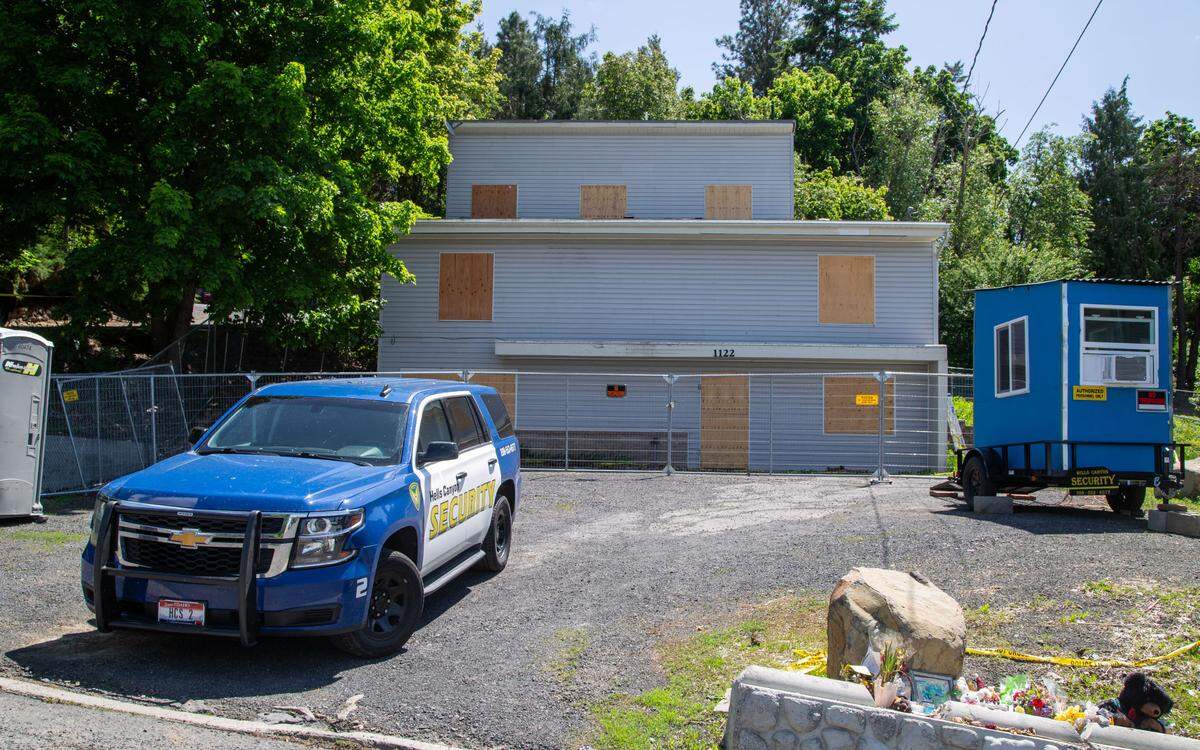
If it becomes law, the change to public records exemptions would no longer allow the disclosure of such images, because of their inclusion of the victims’ bodies. This would apply to coroners and law enforcement agencies going forward in not only the Kohberger case, but to all future criminal investigations with similar evidentiary circumstances.
The bill would not permit the release of such photos, because its language does not contemplate redactions of decedent bodies, Wintrow confirmed in an interview with the Idaho Statesman. If signed by Little, the law would take effect in July.
However, the bill includes a carve-out for victims’ family members, who can request the photos. The investigation tied to the victims’ deaths — including criminal and civil cases, and all appeals — must first be fully resolved before the images can be handed over to the next of kin.
Alivea Goncalves, the eldest sister of Moscow victim Kaylee Goncalves, explained during testimony to the Senate committee last week that she was devastated by the injuries to her sister. She supported the bill.
“The mental images created by this were absolutely horrific, and my fear of the unknown was further compounded by intense public interest — and a very real possibility that these photos might one day find their way to the internet,” she said.
The Idaho Press Club did not support adding an exemption to the Idaho Public Records Act, but it declined to oppose the bill.
“It was surprisingly challenging to actually thread this needle,” Ken Burgess, the Press Club’s lobbyist, told the Senate committee last week. “But I think what ultimately came out of 1250 is something that respects the dignity of the decedents, and then also protects the public’s right to know in certain instances.”
Another bill in the 2026 session was partly inspired by the Moscow murders case. The legislation, which will prevent prisoners from selling their tell-all stories to profit from their crimes, was signed into law and also goes into effect in July.
Editor’s note: Idaho Statesman journalists are members of the Idaho Press Club, and Editor Chadd Cripe serves on its board of directors.