LGBTQ+ Idahoans say they felt unprotected. Now, they’re ‘actively targeted’
AI-generated summary reviewed by our newsroom.
- Idaho House passed a restroom bill requiring sex-designated multi-stall restrooms.
- Multiple bills this session target LGBTQ+ rights and limit local nondiscrimination laws.
- Officials warn compliance could cost cities millions and deter business recruitment.
Idaho lawmakers fiercely debated a proposal to allow people to sue businesses and local governments that allow transgender people to use the restrooms aligning with their gender identity.
For sponsor Rep. Ted Hill, R-Eagle, it boiled down to a question of safety in women’s bathrooms and locker rooms after he received “numerous” phone calls about an incident in which a biological man was showering in the same room as a teenage girl, he said on the House floor Monday.
“Young girls, in the place where they’re most vulnerable — they need to be safe and secure,” he told the Idaho Statesman.
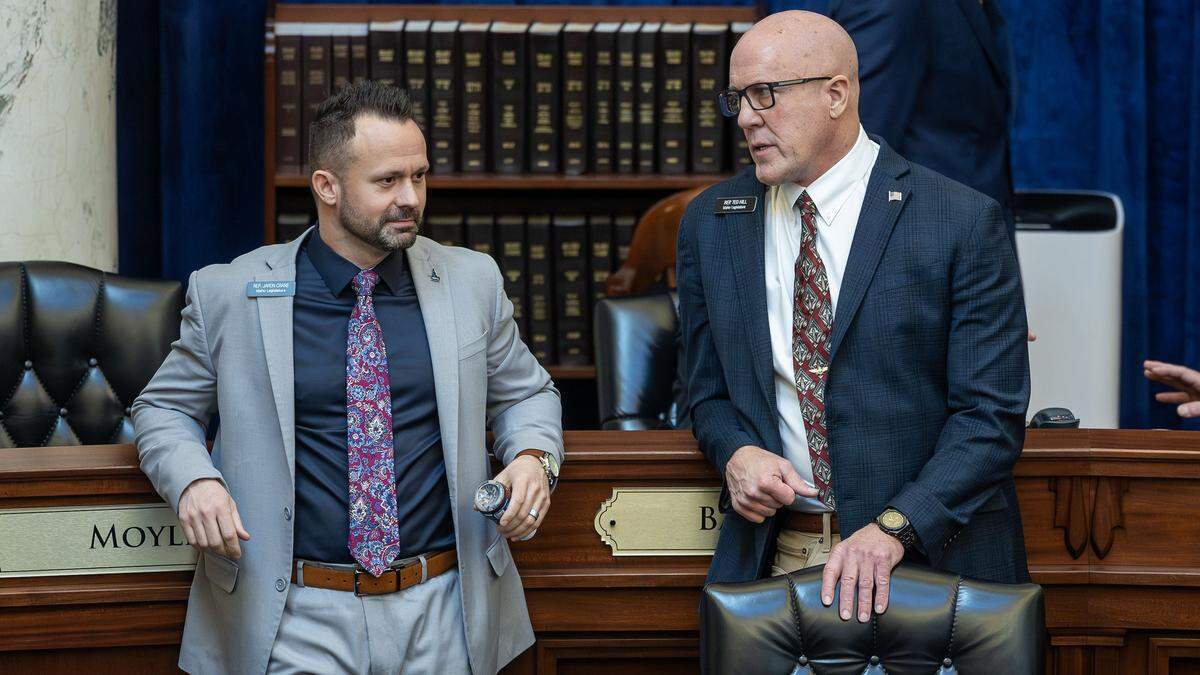
The bill requires every multistall public restroom to be designated for only male or female use based on biological sex. It could cost small businesses — especially those that only have one restroom now — tens of thousands of dollars, Rep. Monica Church, D-Boise, argued on the House floor.
It would cost Pocatello’s Parks and Recreation Department up to $3 million to bring its restrooms into compliance with the bill, said Rep. Rick Cheatum, R-Pocatello.
“We haven’t had a problem, haven’t had a complaint,” Cheatum said on the House floor. “To me, what we’re trying to do here is punish cities and businesses for the misbehavior of an individual.”
Despite the pushback, the bill passed overwhelmingly on the House floor, with 56 of 70 representatives voting in support. It is now set to be sent over to the Senate.
For some members of the LGBTQ+ community, the bill came as yet another blow in a legislative session that has felt like an onslaught of attacks: a bill to ban Idaho cities from enforcing nondiscrimination ordinances that guard against discrimination based on sexual orientation or gender identity. A bill to block Boise and other cities from flying an LGBTQ+ Pride flag on city property. A bill to keep teachers or doctors from talking to children about gender identity or using a child’s preferred pronouns or names without their parents’ consent.
Years after advocates tried unsuccessfully to persuade lawmakers to add the words “sexual orientation and gender identity” to the state’s Human Rights Act, lawmakers “have gone from refusing to protect us to actively targeting us,” said Nikson Mathews, the chair of the Idaho Democratic Queer Caucus, at news conference by five Idaho LGBTQ+ and city leaders.
Mathews, who is trans, made the case that the number of bills focused on the LGBTQ+ community has spiked in recent years.
“Together, these bills deny health care, criminalize doctors, police public spaces, censor speech, override local control, take away parental rights, restrict privacy and target LGBTQ+ people and families,” Mathews said. “This isn’t just an escalation, it is centralized government control, expanding state authority at the expense of personal liberty.”
City leaders call anti-trans legislation ‘hypocrisy’
Hill told the Statesman he had not been spoken with members of the LGBTQ+ community about his bill about bathroom use. But he was adamant that it’s “very fair.”
“It doesn’t impact the (LGBTQ+) community negatively at all, and it’s meant to be just fair, and it’s fair for everybody,” he said. “If we do it the other way, you know, how is that fair for my daughter?”
At Monday’s press conference, two local government officials framed Hill’s and other bills as examples of government overreach.
Hayden Paulsen, a member of Pocatello’s City Council, called such legislation “hypocrisy at its finest.” Lawmakers “want to be in our bedrooms, our schools and our doctors’ offices,” he said.
Boise Mayor Lauren McLean said business leaders have told her the city’s nondiscrimination ordinance was what drew them to set up shop in the city.
“People know they can live, work and participate in public life without fear of discrimination, because when individuals feel safe and respected, they contribute more fully to our economy and our civic life,” McLean said.
She cited the nondiscrimination-ordinance prohibition proposed by Rep. Bruce Skaug, R-Nampa. Skaug’s bill “will weaken the competitive edge that Boise’s businesses and economy have in a growing landscape,” McLean said.
Skaug’s bill, House Bill 557, passed the House Feb. 5 and awaits a committee hearing in the Senate State Affairs Committee. House Bill 561, sponsored by Hill and focused on blocking Boise from flying a Pride flag, was sent to the House’s amending order after a debate on the House floor. House Bill 572, which would bar doctors and teachers from encouraging gender transitions without parental consent, has not yet received a committee hearing.