Little ‘fairly confident’ Idaho will win Supreme Court case, cites law’s ‘fairness’
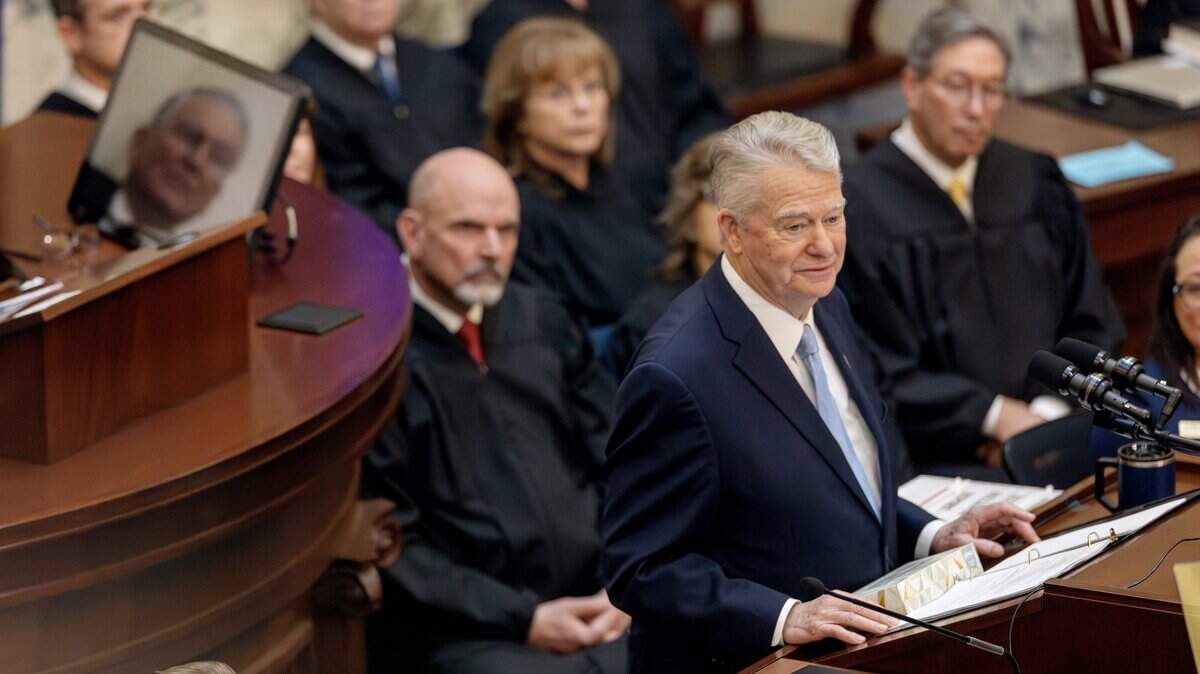
Gov. Brad Little said he expects Idaho will be successful in defending a challenge to its law barring transgender women and girls from playing in sports that align with their gender identity.
His comments come after the U.S. Supreme Court heard arguments Tuesday in the case in which Little is specifically named. The Supreme Court agreed last year to hear the case.
“I would assume that we’ll be successful,” Little told the Idaho Statesman on Tuesday afternoon. “I’m fairly confident.”
He said he hadn’t listened to the Supreme Court’s proceedings, which came just a day after his State of the State speech and the start of the legislative session, but he said he was optimistic.
Little cited an executive order signed last year by President Donald Trump on protecting “opportunities for women and girls to compete in safe and fair sports” and the subsequent decision by the NCAA to restrict women’s sports to those assigned female at birth.
“I think all of those things, taken in total, would probably bode well for our side of the litigation to be successful,” he said.
In 2020, Idaho was the first state in the country to approve the measure categorically barring transgender women and girls from women’s and girls sports. Since then, about half of the states in the U.S. have passed similar bills.
Shortly after Little signed Idaho’s bill into law, Lindsay Hecox, a transgender woman who at the time was a freshman at Boise State University, sued.
The state has argued that males have biological advantages over females, and that the law was intended to protect women’s sports. The opposing side has said that Idaho’s law targets and harms trans women and girls and that Hecox, specifically, mitigated any potential advantages through hormone treatments.
The arguments Tuesday centered around whether barring transgender women and girls from participating in women’s and girls sports violates the Equal Protection Clause of the Fourteenth Amendment. Questions ranged from the definition of sex to the biological advantages males have and how laws should be handled when they adversely affect a small portion of the population.
Hecox last year asked the court to dismiss her case as she is no longer playing sports at Boise State and wants to focus on finishing her education.
Little said his goal when he signed the bill in 2020 was to maintain the “status quo.”
“For women, for competition, they should know that their other competitors don’t have historical, skeletal, muscular, hormone advantage over them,” he said.
During the arguments, Kathleen Hartnett of Cooley LLP, who was representing Hecox, said the law “fails heightened scrutiny as applied to Lindsay and transgender women like her who have no sex-based biological advantage as compared to birth-sex females.”
Little reiterated he doesn’t believe it’s fair for women to compete against trans women.
“I don’t want to discriminate against them, but I just think it’s a fairness,” he said. “Our law in Idaho is the right thing to do.”
A Supreme Court decision is expected later this year.