‘Making the process impossible’: One ballot initiative restriction advances, another stalls
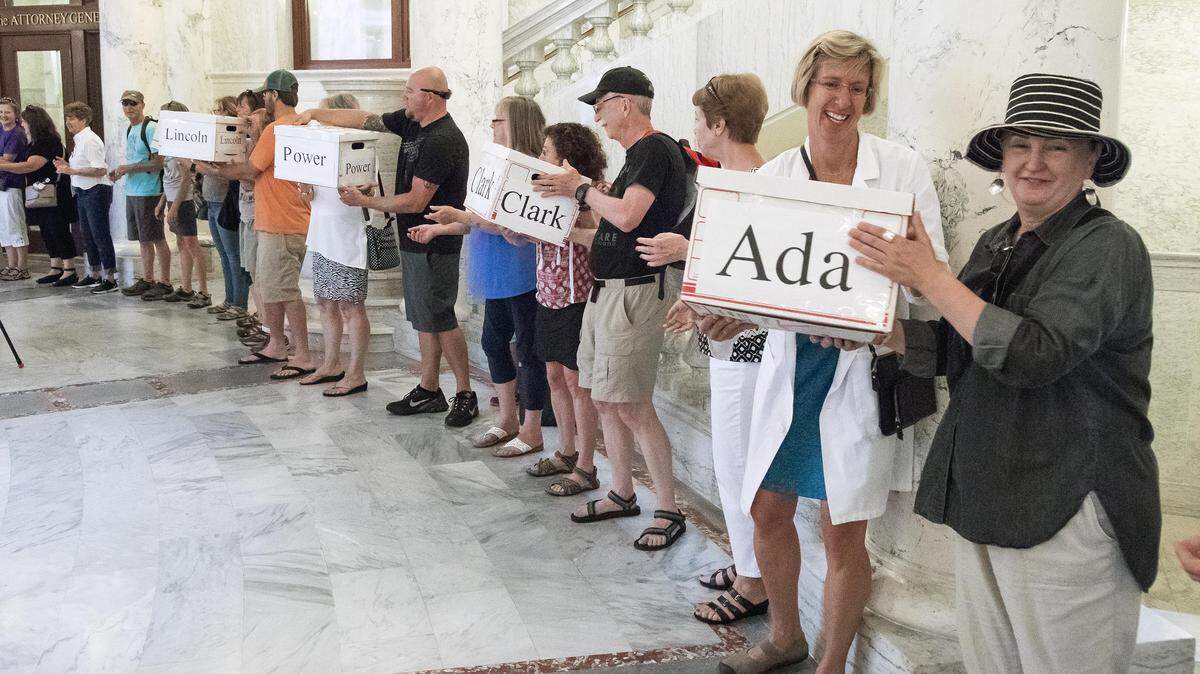
A Republican-led effort to restrict citizens’ abilities to bring ballot initiatives before voters took split paths Friday morning, with one constitutional amendment advancing and one bill dying on a tied committee vote.
Though there have been just 15 ballot initiatives that became law in Idaho in more than 112 years, the state GOP has increasingly bridled at successful signature drives, which have led to Medicaid expansion and higher education funding. Many members of the party oppose the policies, and have pushed in recent years to abolish the initiative process entirely.
Senate Joint Resolution 101, sponsored by Sen. Doug Okuniewicz, R-Haydon, would require proposed ballot initiatives to gather signatures from every legislative district in the state — doubling the current requirement that voters get signatures from 6% of voters in 18 of the 35 districts. The total number of required signatures, which total in the tens of thousands, would not change.
As a constitutional amendment, Okuniewicz’s bill will need approval by two-thirds of the House and Senate, as well as approval by voters.
Though two Republicans and the committee’s lone Democrat opposed the bill, it passed out of the committee and was sent to the Senate floor for a vote.
Okuniewicz told a Senate committee on Friday that his bill was needed because the ballot initiative process has been captured by out-of-state “wealthy elites” who attempt to buy their way onto Idaho’s ballot. He said the amendment would preserve access to the initiative process while ensuring greater participation from voters in different parts of the state.
When Idaho lawmakers tried to impose the same requirement with a 2021 law, it was nullified by the Idaho Supreme Court, which wrote in a fiery opinion that the Legislature’s efforts would cause a “tyranny of the minority” by making ballot initiatives nearly impossible to bring to the ballot.
In its ruling, the justices addressed similar arguments, and indicated they felt the proposal was disingenuous because it claimed to make limited changes to the requirements while doubling the threshold.
“Rather than evenly distributing power across the state, the Legislature has achieved just the opposite,” Justice Gregory Moeller said, saying that it would give any one district veto power over the rest of the state. “While this might theoretically assure that voters with minority interests will have a voice, it will achieve this end at a terrible cost.
“If the Legislature’s actual goal is to prevent any initiative or referendum from qualifying for the ballot, then this is probably an effective tactic,” he added. “This would result in a scheme that squarely conflicts with the democratic ideals that form the bedrock of the constitutional republic created by the Idaho Constitution, and seriously undermines the people’s initiative and referendum powers enshrined therein.”
Thirty-seven residents who testified before the committee agreed during a two-hour hearing for the bill.
Jeff Fereday, a Boise resident, called the effort and arguments about improving the “quality” of the process “subterfuge.”
“No, you’re making the process impossible,” he said.
Three people testified in favor of the bill at the Senate hearing, including Thad Butterworth, chairman of the Ada County Republican Central Committee.
Signature-gatherers largely focus on the most populated counties, neglecting the more rural counties, he said. The proposed amendment was appropriate because it, too, would go before voters, Butterworth added.
“We’re bringing it before the people and saying, ‘Do you see a problem here, and would you like to address it?’”
Sens. Treg Bernt, R-Meridian, and Jim Guthrie, R-McCammon, opposed the bill, saying it went too far in limiting voters’ rights to bring issues to the ballot on their own — even when lawmakers have chosen not to address an issue.
Sen. James Ruchti, D-Pocatello, said he would not oppose asking voters directly whether they would like to abolish the citizen ballot initiative process, which over the years has led to the creation of the Fish and Game Commission, required disclosure of political campaign spending, and expanded Medicaid health care coverage. Last year, an effort to require open primaries and ranked-choice voting in Idaho elections failed.
But the question the resolution would put before voters could confuse them — keeping the initiative process in theory but abolishing it in practice, he said.
“This constitutional amendment language would make the use of the initiative process so difficult that it would essentially just be dead letters in the constitution,” Ruchti said. “The Legislature should be working to protect the people’s fundamental rights, not finding ways every time that people use that right to make it harder to use the next time. And, in this case, make it impossible.”
Second initiative reform effort stalls in House
Happening almost simultaneously in the opposite wing of the Capitol on Friday, another bill seeking to add one more obstacle to the ballot initiative process ran into greater headwinds than that in the Senate — including from fellow Republicans.
Rep. Bruce Skaug, R-Nampa, brought forward House Bill 85 to grant the governor new authority of veto power on a successful ballot measure, unless it passed with a two-thirds majority. Lawmakers face that prospect if their bill clears the Legislature, and the extra check on the route citizens must take to pass a law would make the two pathways equal, he told a House committee.
“We have to face that as a Legislature. Why shouldn’t the initiative process?” Skaug said. “I’m trying to level that by adding the governor veto to make it the same.”
Out of concerns for their rural interests, which can often be drowned out by the populations of urban areas, the Idaho Farm Bureau supported the bill, spokesperson Russ Hendricks testified. In fact, Farm Bureau members believe the entire initiative process is unconstitutional, he said.
Nevertheless, Rep. Judy Boyle, R-Midvale, voted against Skaug’s bill. She shared concerns that approving the proposal would abdicate authority to the governor.
“The Legislature is always to jealously guard our power, and I think we’re giving away our power with this,” she said. “I think it’s very flawed.”
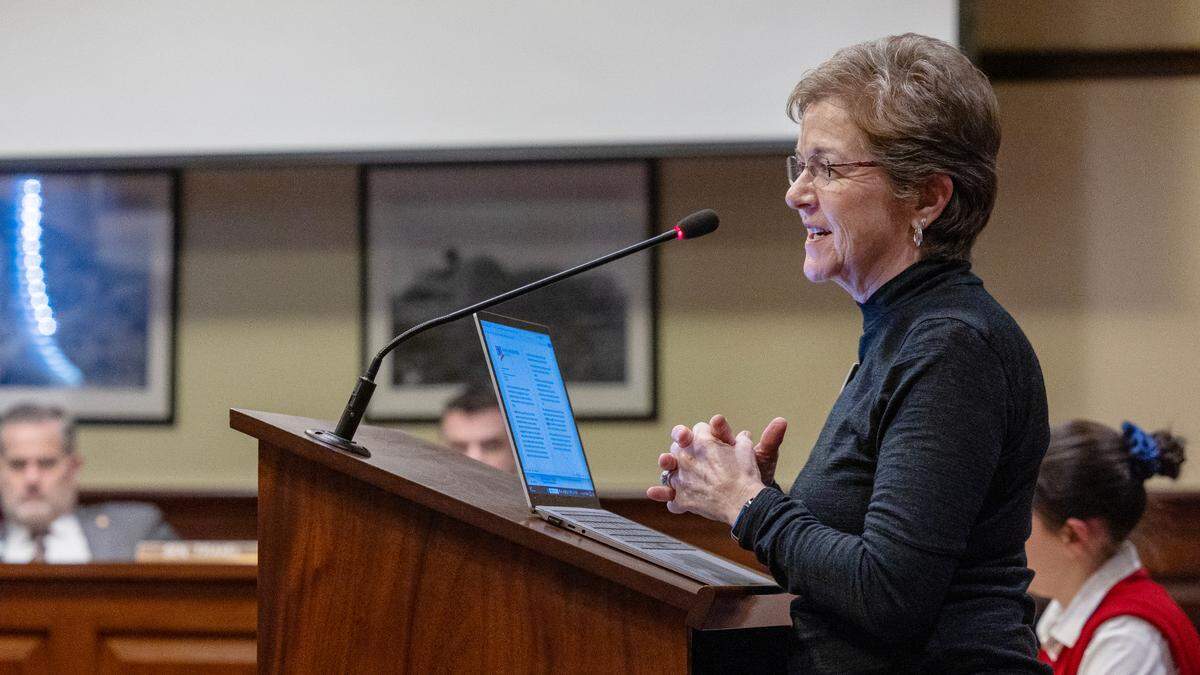
Jean Henscheid, of Star, is co-president of The League of Women Voters of Idaho, which she said opposed Skaug’s bill. She also testified earlier in the morning against Okuniewicz’s bill.
“It is ironic that sponsors of the bill command voters to use their signatures in the ballot box to change their government, and in nearly the same breath remove the voters’ rights to engage in the same way through initiatives,” Henscheid told the House committee.
Passing laws in the Legislature already is much easier than the citizen-led process of passing a ballot measure, added Rep. Todd Achilles, D-Boise, and public testifiers who argued in opposition of the proposal.
A bill needs only a simple majority of lawmakers to send it to the governor’s desk for consideration, Achilles said. Meanwhile, residents must obtain some-70,000 signatures from a variety of legislative districts just to make it to the ballot. Then it still requires a majority vote in an election to pass and become law.
From there, the Legislature still has the authority to revise and repeal a law passed by citizens through the initiative process, Achilles said. Rep. Stephanie Jo Mickelson, R-Idaho Falls, joined him in arguing that enough checks and balances already exist in Idaho’s lawmaking process.
The bill failed to advance to the House floor on a 7-7 vote.
“The problem with this bill is it’s not equal footing,” Achilles said. “All we’re doing is … making it more difficult, we’re making it more complex and we’re making it more expensive. The legislature is already a check on the initiative process.”
This story was originally published February 7, 2025 at 1:52 PM.