Will your taxes drop or your health care costs rise? What a new bill could mean for you
For the third year in a row, some lawmakers are making a version of the same pitch: They want to overhaul the state’s property tax exemption for nonprofit hospitals and let county officials decide each year whether the hospitals qualify for the exemption — and how much of a break they deserve based on how they’re using their property.
It’s the same review process county commissioners use for other nonprofits, and supporters of similar bills in recent years argued that it was only fair to treat all nonprofits the same way.
Changing the law “would return the reasonable checks and balances in place prior to 1999 when nonprofit hospitals changed the rules, so they have different reporting requirements,” Ada County commissioners wrote in a 2023 op-ed in the Idaho Statesman. Commissioners said they wanted to “ensure that individual property owners are not picking up the tab for properties that do not qualify for tax-exempt status under the law.”
“There’s no way to know if hospitals are paying their fair share, because they do not provide counties with information that can be checked or challenged,” they wrote.
At a December meeting with legislators, Commissioner Tom Dayley said commissioners just want to put nonprofit hospitals “back in the mix” of organizations whose charitable status is evaluated every year.
A bill introduced Tuesday by Rep. Josh Tanner, a Republican from Eagle, to the Idaho House Revenue and Taxation Committee sought to give that discretion to county officials.
But for Idaho’s hospitals, many of which already operate with razor-thin margins, allowing each county’s commissioners to make an independent decision each year about the taxes they owe would be chaotic, said Toni Lawson, the vice president of government relations for the Idaho Hospital Association.
The requirements nonprofit hospitals need to meet to receive the property tax carveout are “pretty specific right now, and consistent around the state,” Lawson told the Idaho Statesman. “This bill that was introduced removes all of that language and puts those decisions solely in the hands of 44 different sets of county commissioners. It puts it completely at their discretion with no criteria outlined.”
Such unpredictability would make long-term, strategic planning “impossible” and could push hospitals to raise prices and be more conservative about expanding the services they offer, she said. In rural areas, it could prompt hospital closures, the Statesman previously reported.
Of a similar bill proposed last year, Lawson wrote that it “increases the risk of politicians arbitrarily picking winners and losers with no set criteria that applies consistently from county to county.”
Tanner did not respond to an email or phone call requesting comment. Sara Westbrook, the director of government affairs for the Idaho Association of Counties — which passed a resolution in support of the bill and has supported similar proposals in recent years — did not respond to emails requesting comment.
Tuesday’s hearing was only an introductory hearing and did not include public testimony. Once introduced, the bill is set to return to the House Revenue and Taxation Committee for a public hearing, though the committee did not set a date for that.
How charitable are nonprofit hospitals? How do tax exemptions work?
For years, Ada County commissioners have called into question just how charitable nonprofit hospitals really are.
In 2023, Dayley cited a U.S. Senate report, released by Sen. Bernie Sanders, I-Vermont, which found that “many nonprofit hospital systems across the country are failing to provide low-income Americans with the affordable medical care required by their nonprofit status,” the Statesman reported. That report found that hospitals were receiving millions in tax breaks but failing to provide sufficient affordable care for low-income patients — even as CEO pay “is soaring.”
The president of the American Hospital Association pushed back on the report, which he said did not fully account for the types of benefits nonprofit hospitals provide.
“Under the law, community benefit is defined by much more than charity care” — care provided at free or significantly reduced rates for low-income patients — and “includes patient financial aid, health education programs and housing assistance, just to name a few.”
By that metric, he wrote, nonprofit hospitals provided $129 billion in total benefits to their communities in 2020 — an increase of $20 billion over the previous year and about 15% of overall hospital expenses.
To qualify for property tax exemptions in Idaho, hospitals must first meet the Internal Revenue Service’s “huge list” of criteria to register as nonprofits, Lawson said. That includes conducting a community needs assessment, documenting how they’re addressing those needs and treating underserved populations.
The major hospital systems in Idaho, including St. Luke’s Health System and Saint Alphonsus Health System, are registered nonprofits. In 2022, St. Luke’s paid about $1.5 million in property taxes in Ada County, provided $27 million in charity care and gave $78 million to community ventures, the Statesman previously reported.
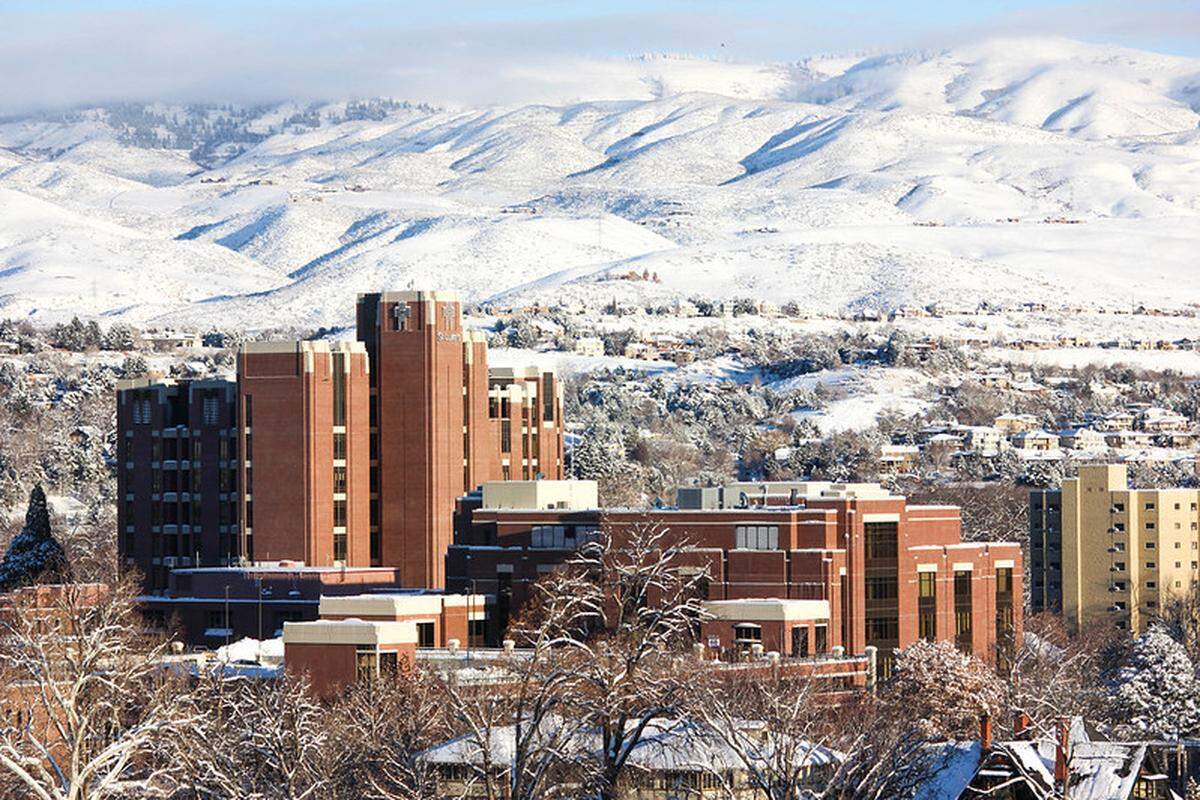
To Lawson, the repeated push to overhaul nonprofit hospitals’ tax breaks stems in part from a “misconception” about how hospitals use their property and pay taxes. Healthcare has been evolving toward a model of “coordinated care,” in which hospitals have increasingly purchased medical offices and doctors’ practices.
But just because a hospital’s name goes up on a building doesn’t mean that property has become tax-exempt, Lawson said. In many cases, the hospital is taking over the office’s lease but not buying the building, so the building remains subject to property taxes.
“There’s just a lot of misunderstanding as to whether that property comes off the tax rolls, and I think a lot of it is perception rather than reality,” she said.
This story was originally published February 6, 2025 at 11:55 AM.
CORRECTION: An earlier version of this story misstated the home city of state Rep. Josh Tanner. He is from Eagle.