Idaho Supreme Court must intervene in new, ‘disastrous’ public defense reform, ACLU says
This story was updated on Tuesday, Jan. 7, 2025 to reflect Gov. Brad Little’s proposal on Monday, Jan. 6, to increase the State Public Defender’s Office’s budget.
The American Civil Liberties Union of Idaho has filed an emergency motion calling on the Idaho Supreme Court to intervene in the state’s new public defense system, which the ACLU called a “disastrous step backward.”
The organization decried “chaotic instances” under the new statewide system in which people were held in jail for weeks or months without being able to speak to their state-assigned defense attorneys. The ACLU called on the court to order the release of defendants who have not been able to reach their lawyers in a timely manner.
“This is an obvious and egregious violation of a defendant’s right to legal representation,” said Leo Morales, the executive director of the ACLU of Idaho, in a news release Thursday.
A spokesperson for the State Public Defender’s Office did not immediately respond to a request for comment.
The ACLU found that “persistent problems were pervasive” in rural and urban parts of the state, Rebecca De Leon, a spokesperson for the ACLU, told the Idaho Statesman.
The new public defense system took effect in October. It was itself the Legislature’s response to an ACLU class-action lawsuit filed in 2015, which accused the state of violating its constitutional obligation to provide legal representation for defendants in criminal and juvenile cases.
The reform consolidated the public defense services of the state’s 44 counties under one statewide umbrella and aimed to equalize pay and standardize case management and other processes.
The new office aims to “create efficiencies in the system” and “unified standards” across the state, according to its website. It raised the pay of nearly 80% of the state’s public defenders, but 15% of the highest-paid attorneys took pay cuts — especially in larger counties such as Ada County, said Patrick Orr, a spokesperson for the State Public Defender’s Office, in an email in late December. With those cuts came “mass resignations” of public defenders and their support staff, the ACLU said.
“We did lose some longtime public defenders in Ada County with the salary adjustment,” Orr told the Statesman in the email. “That was hard — we didn’t want to lose a single attorney in the transition.”
Other parts of the transition were bumpy, too, including tech issues, disorganization and declining office morale, the Idaho Capital Sun reported.
Gov. Little wants to raise public defenders’ pay
To address these concerns, Gov. Brad Little in his Monday State of the State speech called for about $5.5 million in additional dollars for this fiscal year and $37 million more in fiscal 2026, the Statesman reported.
The public defender’s office expressed its appreciation for his recommendation in a Tuesday news release, saying the money would allow the office to offer merit-based raises to attorneys working complex cases and to offer more competitive pay to contract lawyers working in remote or rural areas.
“We’ve learned so much since taking over public defense in October,” State Public Defender Eric Fredericksen said in the release. “We found out we had deeply committed people working to ensure indigent Idahoans have the protection they deserve under the U.S. Constitution. It also didn’t take long to identify the need to increase the budget for public defense across the state.”
At a mid-December meeting of Ada County commissioners and state legislators from the county, Chairman Rod Beck, speaking for commission, said delays resulting from process changes and some attorneys’ resignations could have a “cascading effect,” lengthening jail stays in the county’s already-overcrowded jail.
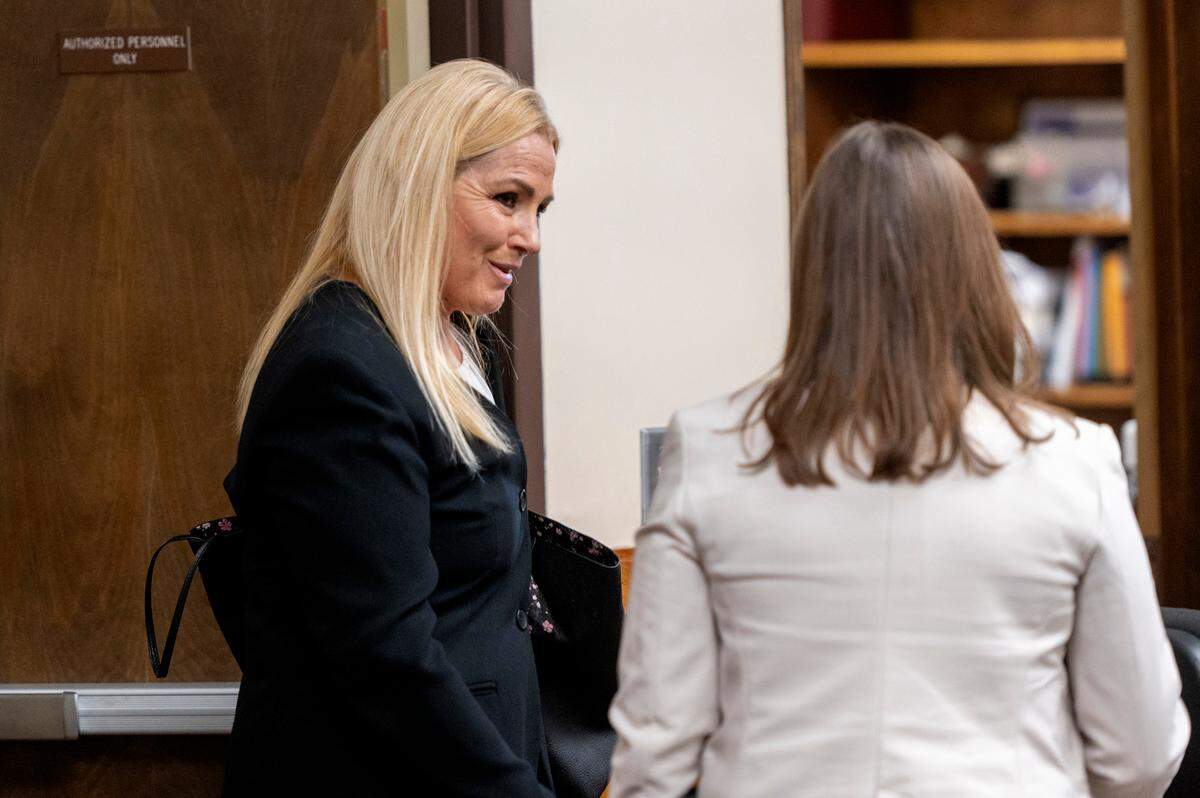
Some judges have begun to dismiss cases because the state couldn’t provide an attorney to represent someone facing charges, according to the ACLU release.
Months before the transition, “attorneys warned SPD leadership that pay cuts and restrictive contracts would drive attorneys out of the system,” the ACLU’s filing says.
Now, “SPD attorneys report that there are simply no more attorneys left to appoint, that defendants’ rights are at risk, and that the best Idaho’s system can offer at this point is ineffective assistance of counsel,” according to the filing.
“As a result, countless indigent defendants have been suffering — appearing at court without counsel, attempting over and over again to get anyone at SPD to tell them who was appointed to defend them, and worrying how they could possibly receive effective representation (or representation at all) on cases that have been pending for months,” the filing adds.
Plaintiffs in the 2015 lawsuit won their case, but the ACLU and its partner attorneys later asked the District Court in Boise to declare that the state had failed to address “pervasive” problems in its public defense system, De Leon said. In February, District Judge Samuel A. Hoagland refused, pointing to the impending launch of the State Public Defender’s Office and saying that “time will tell if the state will live up to the promises it made.”
The ACLU’s emergency motion, filed Dec. 23, comes as part of an appeal of that decision. The concerns the ACLU raised “did not magically dissipate” after the state passed a law to fund a state public defender’s office, its appeal says. “A restructuring of the system falls far short” of resolving “longstanding” problems, such as funding and staff shortages and excessive workloads, it reads.
“Despite winning at the Idaho Supreme Court again and again, now we’re back trying to stave off complete disaster,” Morales said in the release.
This story was originally published January 2, 2025 at 2:27 PM.