Idaho Republicans propose spending $50 million on ‘tax credit’ for private schools
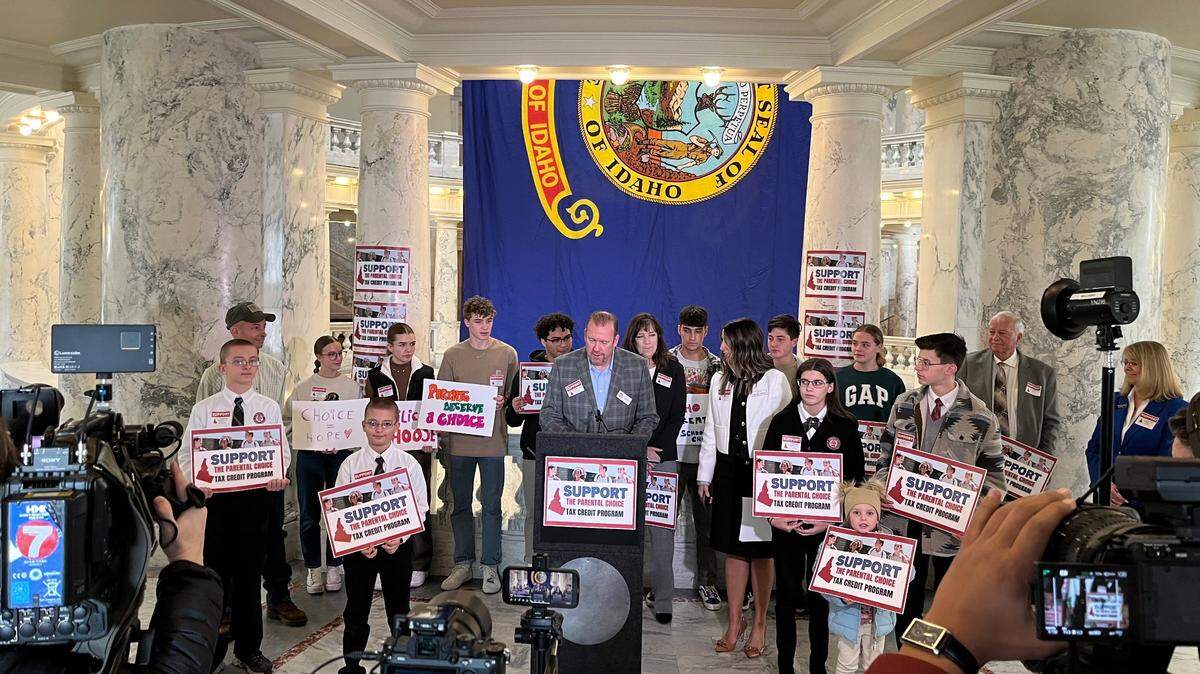
Idaho lawmakers introduced a bill Tuesday to allow tax credits for parents who send their children to private schools, a proposal that opens the door for $50 million in state funds to go toward private education — a system that would create what’s commonly known as school vouchers.
The bill, called the Parental Choice Tax Credit, sponsored by Rep. Wendy Horman, R-Idaho Falls, and Sen. Lori Den Hartog, R-Meridian, would allow families to receive up to a $5,000 tax rebate for school expenses, including private school tuition, textbooks, transportation costs, or to pay for schooling received in smaller “learning pods.” Parents with special needs children who have disabilities could receive up to $7,500.
“I’m passionate about education and I care deeply about every single child in Idaho,” Den Hartog told a legislative committee Tuesday. She said she is not a fan of “budget busting” bills and said the program would not reduce funding for public schools.
Parents would only be allowed to claim an amount that covers their expenses, and the bill directs the Idaho State Tax Commission to “prescribe forms” for the credit.
The bill would require the state to offer $40 million in tax rebates on a first-come, first-serve basis. Another $10 million would be available for low-income parents and administered as grants. To be eligible, families would have to qualify for the federal earned income tax credit.
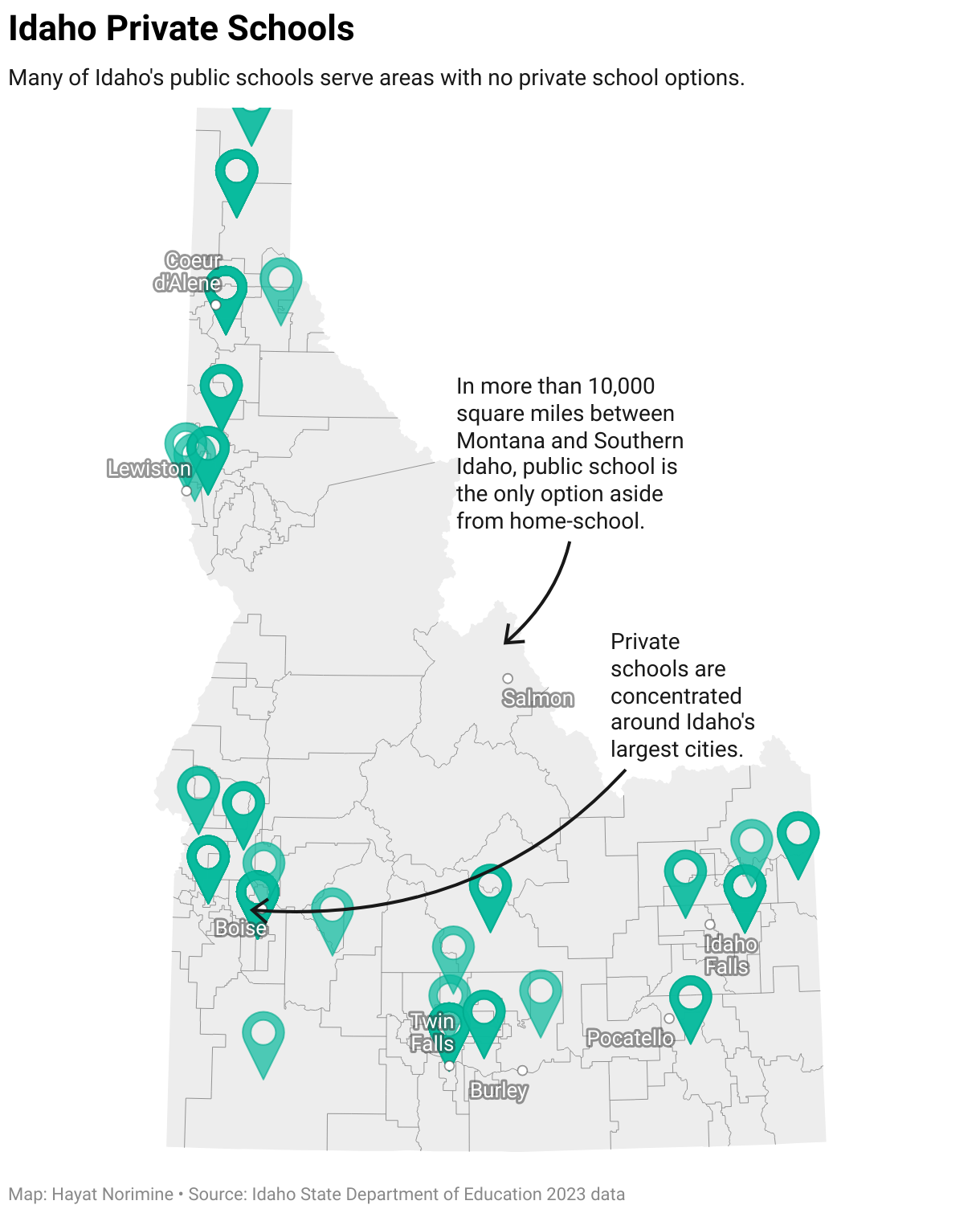
Private schools are primarily located in Idaho’s urban areas. Of the state’s roughly 120 registered private schools, a majority are in four counties: Ada, Canyon, Kootenai and Twin Falls, according to the Idaho State Department of Education. Private school tuition can cost tens of thousands of dollars. Tuition for Bishop Kelly in Boise is listed as about $10,000 a year, while Riverstone’s tuition costs up to $26,000 a year.
Idaho has about 41,000 K-12 students not enrolled in public schools, according to data from the state and the U.S. Census Bureau. Were each of those students to receive the $5,000 rebate or grant in the future, the total would amount to over $200 million a year.
School voucher programs have become more popular in conservative states in recent years, as proponents of home-schooling, private schools, religious schools or nontraditional schools look to gain access to state funds.
A school voucher program in Arizona that was initially estimated to cost $65 million ballooned to an estimated $900 million this year, according to the Arizona Mirror.
A similar proposal to implement education savings accounts for students failed to become law last year. Democratic lawmakers have adamantly opposed the proposals, which they argue will inevitably reduce funding for public schools.
“This would siphon money from public schools to line the pockets of predominantly wealthy and urban Idahoans who are the most likely to be able to take advantage of it,” House Assistant Minority Leader Lauren Necochea, D-Boise, said Tuesday.
Some Republicans on Tuesday expressed skepticism about the new proposal. Rep. Kenny Wroten, R-Nampa, asked whether there is a “new source of revenue to pay for this.”
Den Hartog said the tax rebates would reduce state revenue and that any tax refunds for the program would come out of the state’s general fund.
The bill directs the Legislature to “review and evaluate” whether the $50 million cap is “sufficient to address the needs of the program” in 2026.
Rep. Richard Cheatum, R-Pocatello, asked for a roll-call vote, in which he, Wroten, and Rep. Lauren Necochea, D-Boise, were the only “no” votes to introduce the bill.
This story was originally published January 30, 2024 at 11:12 AM.