Idaho Gov. Little quietly seeks reelection against active, hard-right challenger
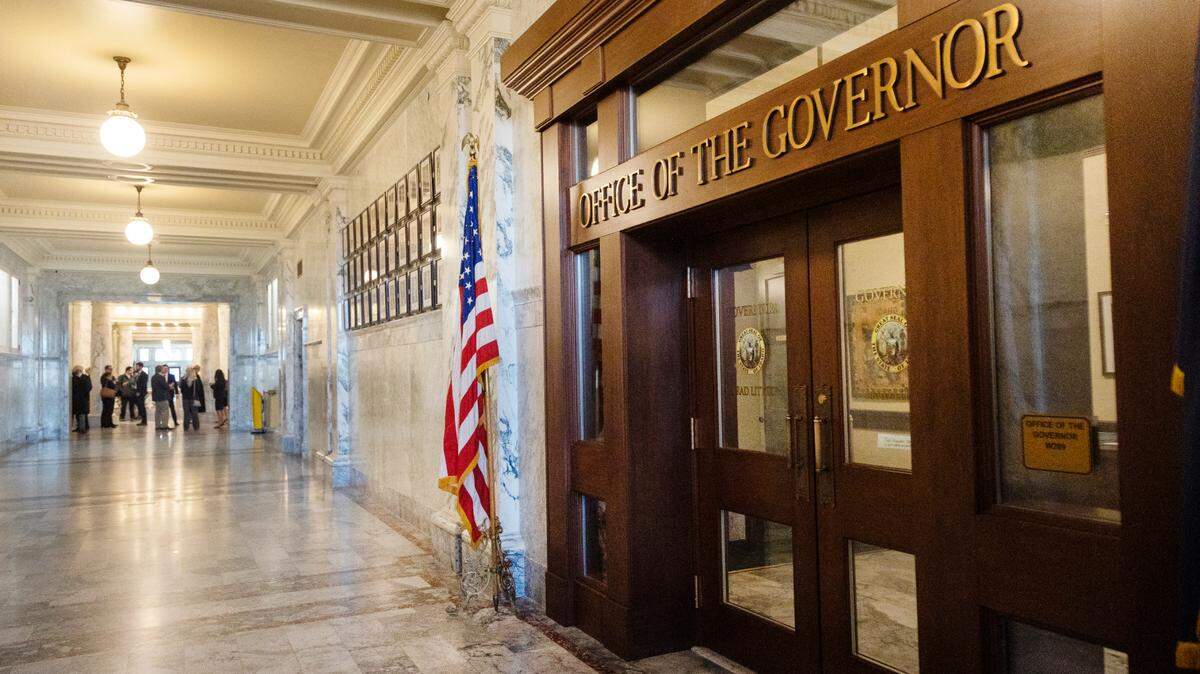
Idaho Gov. Brad Little’s reelection campaign spent nearly $1.5 million on advertising before the Republican primary election, according to campaign finance reports.
Since the May primary, when Little handily defeated Lt. Gov. Janice McGeachin for the GOP nomination, Little’s campaign has spent about $66,000 promoting the incumbent’s bid for a second term — with the general election less than two weeks away.
A lot of Little’s reelection effort seemed to come in the primary, Jaclyn Kettler, a Boise State University political science professor, told the Idaho Statesman by phone.
“It’s, in some ways, been a quiet election,” she said.
But one challenger, independent candidate Ammon Bundy, a conservative activist and militia leader, has been making noise through an active, well-funded campaign critical of Little’s first term. Meanwhile, Democrat Stephen Heidt, a retired teacher, has pushed for increased education spending and criminal justice reform.
“It seems very likely at this stage that Little will win fairly easily, but what margin Bundy or Heidt … will pick up will be interesting to see,” Kettler said.
Also running for governor are Libertarian Paul Sand and Chantyrose Davison, of the Constitution Party.
Little promises more of the same
In an interview with the Statesman, Little, 68, repeated his long-standing mantra, that his goal in a likely second term is to make Idaho a place where young people will choose “to stay and to thrive.”
“The fundamentals of a good education system, a competitive and fair tax system and a great quality of life are all components of that,” Little said by phone. “The biggest difference from four years ago is we’re in a much better financial condition. And we need to do all we can to cope with growth.”
In consecutive fiscal years, Idaho has collected mammoth tax surpluses — $900 million in fiscal year 2021 and $1.4 billion in 2022. Led by Little, Idaho Republicans directed much of the excess money to income tax cuts, education and transportation and water infrastructure.
Amid Little’s first term, Idaho reduced its income tax rates and consolidated brackets, reducing tax burdens for corporations, from 6.925%, and top individual earners, from 6.5%, to a flat 5.8% tax.
“We need to continue to be competitive in our tax situation,” Little said. “You react somewhat to how the federal tax code goes, you react to what surrounding states do, but you also want to make sure you’ve got enough ongoing revenue to pay for your commitments for public safety and education.”
Public school spending has grown 57% since fiscal year 2018, with $2.32 billion going to schools this year, according to the governor’s office. Most recently, the Idaho Legislature OK’d Little’s proposal to boost education spending by $410 million during a September special legislative session.
Ultimately, it’s up to lawmakers to allocate the money, but, if he’s reelected, Little likely will recommend additional spending on literacy programs, new teaching jobs and teacher raises as well as workforce development programs.
“My ideas shouldn’t be a big surprise to anybody,” Little said.
Heidt pushes criminal justice, abortion, tax reform
Heidt, 62, retired from teaching English language classes in the Idaho Department of Correction to run for governor. Heidt told the Statesman that he believes many inmates, including a former teaching assistant, were falsely imprisoned, or their sentences, for offenses like cannabis possession, are too harsh.
“I’m running for governor specifically because of the situations that I watched … while working in the prison system,” Heidt told the Statesman by phone.
Among Heidt’s priorities are decriminalizing cannabis and improving Idaho’s national standing in education funding. He also proposes property tax reform that shifts more tax burden back to commercial properties.
Idaho property tax policy has been very “pro-business” to the detriment of average taxpayers, Heidt said. “The middle class man and the poor are getting hammered by Idaho taxes right now,” he said.
Additionally, Heidt hopes to restore “autonomy” when it comes to abortion. “I believe that medical decisions for individuals should be exclusively between themselves and the doctor,” he said.
Abortion has been one of the most controversial of Little’s policies during his first term. The governor since 2020 has signed a series of bills targeting the procedure, after the U.S. Supreme Court eliminated federal abortion protections in June.
Idaho Democrats have seized the far-reaching restrictions as campaign fodder to attack Republicans, particularly down the ballot from Little in the lieutenant governor and attorney general races. Little said he’s always opposed abortion, and the state will “continue to work that way” under his administration.
But Kettler said she’s not sure how much abortion will factor into the Idaho governor’s race. It’s garnered more attention in other states’ gubernatorial elections, like in Pennsylvania, she said.
Meanwhile, Heidt has raised just $24,000 in campaign donations, a fraction compared to his opponents. Little has raised more than $2.6 million, the vast majority of which came before the May primary. Bundy has raised more than $600,000.
“It’s such a challenge for Democrats to compete at the statewide level,” Kettler said. “You really have to develop pretty high name recognition, you need to be persuading voters. And, often, that requires things like television advertising, a much more active campaign, organization.”
Bundy hopes to overhaul government
Bundy, 47, gained notoriety by fighting the government. Now he wants to join it, to eliminate most taxes and reclaim federal land.
As part of his “Keep Idaho Idaho” plan, Bundy proposes taking the more than 60% of land in Idaho managed by the federal government and using it to build affordable housing. He also proposes eliminating all state taxes except sales tax.
“Taxes, as a whole, are always punitive, as they take away from individuals productivity,” Bundy’s website says. “Governments should not be charging any tax other than a consumption tax — meaning you do not pay a tax until you consume something.”
A spokesperson for Bundy stopped responding to requests from the Statesman to arrange an interview for this story.
A Nevada native and Emmett resident since 2015, Bundy is best known for participating in armed standoffs with federal agents during disputes over cattle grazing fees. One occurred at his father Cliven Bundy’s southern Nevada ranch; the other, in eastern Oregon, where Bundy and his followers occupied a wildlife refuge, leading to one death.
In recent years, Bundy and his activist network, People’s Rights, which he launched amid the coronavirus pandemic, have focused on fighting COVID-19 mandates, such as business closures and mask requirements, which has led to legal issues for Bundy.
Bundy has scored high-profile, out-of-state endorsements from former Texas Congressman Ron Paul and Roger Stone, a political consultant and ally of former President Donald Trump.
“Ammon Bundy is not the wild-eyed radical that the fake news media tries to brand him as,” Stone said in a video. “But he is a Constitution-loving conservative, a family man and a Christian. And he can provide the tough new leadership that Idaho needs to protect our personal freedoms.”
In Idaho, hard-right conservative groups — which disagreed with Little’s handling of the pandemic — backed McGeachin, and some are now coalescing behind Bundy. He scored an endorsement from the Idaho Freedom PAC, the lobbying arm of the Idaho Freedom Foundation.
Little’s pandemic policies included briefly closing some businesses and encouraging, but never requiring, vaccination and mask-wearing. Some voters may still be motivated by that, Kettler said, which could improve Bundy’s performance at the polls.
“I think there are some voters who are still very focused on the pandemic and COVID, whether concerned that there wasn’t more done or angry or upset about what was done,” she said.