
Idaho congressional incumbents offer mixed Trump 2024 support after gaining his endorsement
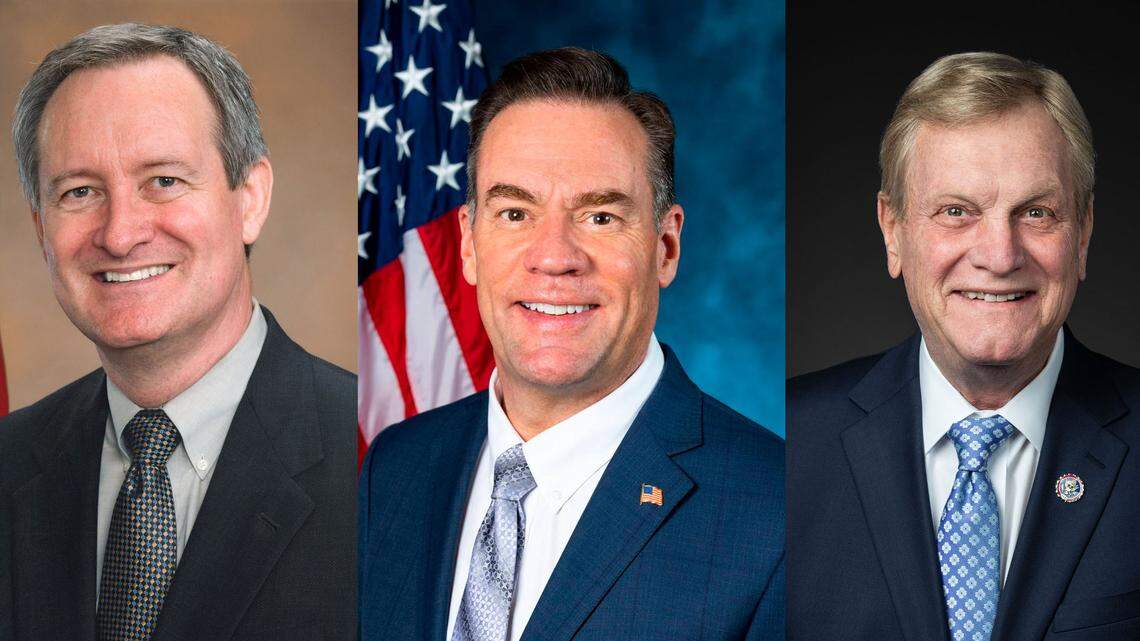
Two of Idaho’s three congressional Republicans running for reelection tout former President Donald Trump’s endorsement. The third is campaigning on having previously had it in 2020.
But two of the three — plus Idaho’s other member of U.S. Congress not up for reelection this cycle — aren’t necessarily offering a warm embrace to Trump for his possible presidential run in 2024. Of the four federal lawmakers, only U.S. Sen. Mike Crapo, who seeks his fifth term in office, is stating without caveats that he would back the 45th U.S. president in another run at the White House in two years.
“Yeah, I would support him,” Crapo told the Idaho Statesman in an interview earlier this month. He explained later that his return endorsement stems from policies during Trump’s four years in office that Crapo says spurred significant economic growth, cut federal regulations and strengthened U.S.-Mexico border security.
Reps. Russ Fulcher and Mike Simpson, Idaho’s two U.S. House members, appear less committed to ensuring that Trump regains the Republican Party’s nomination in a potential bid to retake the Oval Office. Fulcher, running in the 1st Congressional District, has Trump’s endorsement for the second time in as many elections.
“The short answer is I’m going to wind up supporting the Republican nominee, and if it’s Donald Trump, it’s Donald Trump,” Fulcher told the Statesman in an interview, noting that two years is a long time away. “A lot of people — myself included — think the world of some of the policies that President Trump had. I don’t know that any of us were crazy about some of the conflict.”
Fulcher, who seeks a third term representing the western and northern parts of the state, said he looked forward to a crowded Republican presidential primary — with or without Trump — and being engaged in helping to develop the party platform for 2024.
“I think that there is very likely to be other personalities that start gaining traction,” Fulcher said, naming Florida Gov. Ron DeSantis, former Vice President Mike Pence and former South Carolina Gov. Nikki Haley as possible candidates. “Frankly, that’s what I want to see. We’ve got to have a strong bench.”
Simpson, who is running for a 13th term to represent Idaho’s 2nd Congressional District, does not possess Trump’s explicit blessing this time around, but still includes the former president’s support two years ago as the first endorsement on his campaign website. Simpson chose not to cite Trump by name in responding to a question from the Statesman about whether he would back him for the 2024 Republican nomination.
“My entire focus for the 2022 election is taking back the House and hopefully the U.S. Senate so we can have some sideboards put on the current administration,” Simpson, who represents East Idaho and part of Boise, said in a statement through a campaign spokesperson. “However, you can count on me supporting the Republican nominee in 2024.”
Endorsement’s value unclear in deep-red Idaho
To express strong support for Trump reclaiming the presidency poses a tricky proposition for many federal candidates at the moment, said Jaclyn Kettler, political science professor at Boise State University.
Trump remains popular in Idaho, she said. The former Republican president received 63.8% of the vote in Idaho during his failed reelection bid in the 2020 election, compared to 33.1% for Democrat Joe Biden. Trump’s support in the state grew as the incumbent from the 59.2% of votes he received in the 2016 election.
But without knowing exactly who might enter the Republican presidential primary — including Trump if he commits to running, as he’s continued to give indications he will — candidates for office may try to sidestep full-throated pledges of allegiance to the former president, Kettler said.
Republicans, namely those with his endorsement in the midterms, also likely seek to avoid being on the wrong end of his public ire.
“Until you have a clear idea of what the field will look like, it can be a little risky to make firm claims one way or the other on who you might support,” Kettler told the Statesman by phone. “There are some really big questions moving forward thinking about how much control will Trump have within the Republican Party broadly moving forward, especially as we see other Republicans consider running in the 2024 presidential election.”
Also, despite Trump’s devoted base of followers, he persists as a polarizing figure in American politics — including within the Republican Party. His presidency was plagued by repeated scandals, including two impeachments.
Nonetheless, it’s unclear what, if any, impact Trump’s endorsements have in Idaho’s races for federal office.
“In terms of these types of races, it’s perhaps not one of the main factors really driving how people might vote or who they might support,” Kettler said. “That’s not to say the divisions aren’t there, but it’s just not one of the major ones, or one of the key focuses going into the general election.”
The only comparable race in the state where Trump weighed in since leaving office was May’s Republican primary for governor, in which he endorsed Lt. Gov. Janice McGeachin over incumbent Gov. Brad Little. Despite Trump’s stamp of approval, McGeachin lost to Little by more than 20% of the vote.
In contrast, the Idaho congressional incumbents endorsed by Trump — each of whom has won prior elections handily in deep-red Idaho — are up against opponents who object to the former president. The one exception is the U.S. Senate race, where independent Scott Cleveland is running to Crapo’s political right, campaigning as an “America First” candidate aligned with Trump’s platform. Yet, Crapo maintains Trump’s endorsement.
“Yeah, he endorsed me in the primary,” Crapo said of Trump, “and, contrary to what my opponent is saying, again in the general in May of this year.”
Democratic opponents question support
Trump’s perceived personal and political liabilities are obstacles that Idaho Republicans have been forced to navigate.
In 2016, Crapo and Simpson each withdrew support for the then-Republican presidential nominee after a decade-old video surfaced a month before the election of him talking flagrantly about sexually assaulting women. Crapo pulled his endorsement, while Simpson lamented that Trump “has demonstrated that he is unfit to be president.”
Trump won the 2016 election anyway, defeating Democrat Hillary Clinton. Crapo and Simpson, as well as Fulcher, each eventually promoted Trump’s later endorsements of their campaigns.
David Roth, Crapo’s Democratic challenger this year for U.S. Senate, argued that the circumstances surrounding Trump’s suitability as president have only worsened since that time. And yet, Crapo now supports him.
“Things have not gotten any better since he withdrew his endorsement of Donald Trump prior to the 2016 election,” Roth told the Statesman in an interview. “I think that is definitely indicative of someone who is putting party over people.”
Trump also issued his endorsement of Idaho Sen. Jim Risch when he ran for reelection in 2020.
During that same election, Trump lost to Biden — a result the former president still claims was fraudulent, without any substantiated proof. Trump’s repeated false claims have since been echoed by countless others, Idaho’s state GOP chair among them. No evidence of widespread voter fraud in any U.S. state has ever been produced by Trump or his national network of supporters.
Fulcher, a member of the Freedom Caucus — a contingent of some of the most conservative lawmakers in the U.S. House — appeared on Fox News to explain why he planned to join what was ultimately 146 other Republicans in contesting the election results from a handful of states.
“This is going to be a monumental day in America’s history, make no mistake about it,” Fulcher said during the interview, which aired live in the early morning of Jan. 6, 2021. The election was certified the next day, but not before a violent mob of Trump supporters stormed the U.S. Capitol and interrupted the ministerial process of making official Biden’s election victory.
Kaylee Peterson, Fulcher’s Democratic opponent, said his response to Trump’s unfounded claims of voter fraud, including in the face of rioters threatening to overthrow the nation’s time-honored democratic tradition, is what drew her to challenge the two-term incumbent.
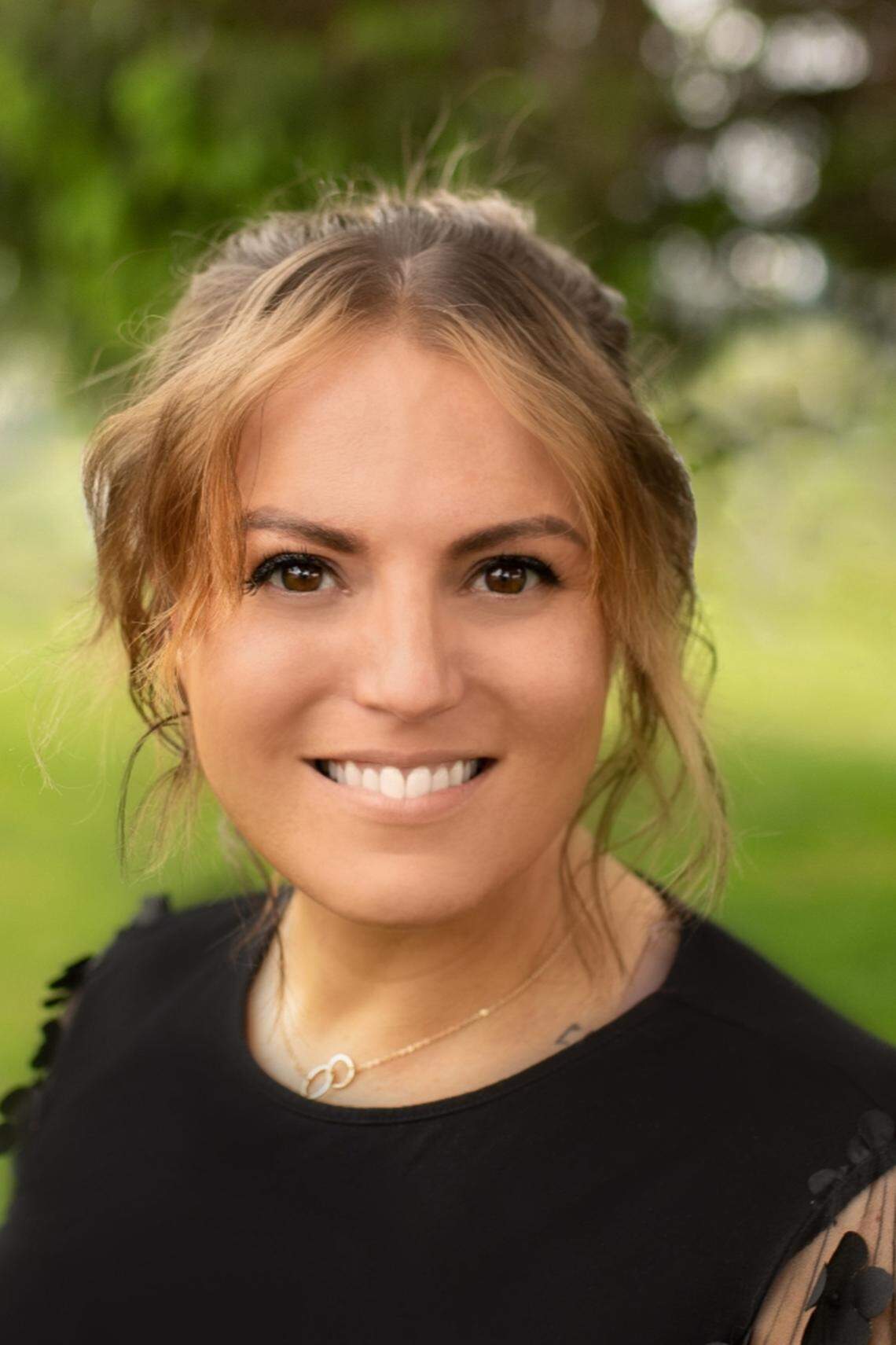
“It really frustrated me,” Peterson told the Statesman in an interview. “The hypocrisy and ignorance he showed during such a volatile moment secured for me that he wasn’t fit to serve.”
Within days, the Democratic-controlled U.S. House moved to impeach Trump on a charge of inciting the Jan. 6 attack. The majority vote that impeached Trump for a second time made him history’s only U.S. president to hold the distinction. Fulcher and Simpson each denounced the deadly riot while voting against impeachment, citing partisan objectives.
The U.S. Senate later acquitted Trump by a 57-43 vote. Seven Republicans joined in supporting a guilty verdict, but the Senate failed to reach the 67-vote threshold needed to convict.
“There’s no question — none — that President Trump is practically and morally responsible for provoking the events of the day,” Senate Minority Leader Mitch McConnell, R-Kentucky, said on the Senate floor in February 2021, after also voting to acquit. “The people who stormed this building believed they were acting on the wishes and instructions of their president.”
Crapo and Risch both voted to acquit, calling the process politically motivated and unconstitutional.
Trump teases candidacy as probes persist
Today, Trump still looms large over the Republican Party, holding frequent rallies, including in battleground states with right-wing candidates he’s endorsed. At such events, he teases his own potential return to the ballot for the Republican presidential nomination in 2024.
All the while, Trump remains at the center of separate investigations in Georgia and by a U.S. House Select Committee reviewing the Jan. 6 Capitol riot concerning his alleged efforts to overturn the 2020 election. Each probe could lead to the unprecedented move of criminal charges filed against a former U.S. president, with the House committee this month issuing a subpoena for Trump to testify.
Fulcher, confirming Trump’s endorsement for him two elections running, said he questioned the validity of the Jan. 6 House committee and its actions.
“This was the first committee that I’m aware of — certainly in my tenure — that started with a verdict and spent their time and effort writing to substantiate the verdict it already had,” he told the Statesman. “Frankly, I just discounted its legitimacy because of its refusal to look at the other side.”
Risch’s term isn’t up until 2026. He declined to comment on the Jan. 6 committee’s action but had broad concerns from the beginning about forming such an investigative body “because it would become partisan,” Marty Boughton, Risch’s spokesperson, told the Statesman by email. The nine-member panel is made up of seven Democrats and two Republicans, after some Republican choices were rejected by House Speaker Nancy Pelosi, D-California.
Risch also declined to share a public position on whether he would support Trump in 2024.
“Sen. Risch hasn’t commented on the 2024 election,” Boughton said. “The question of which candidates will be on the ballot two years from now is hypothetical at this point.”
Trump, meanwhile, has worked to leave little doubt over whether he’ll run, for more than a year telling supportive audiences that he’s already made up his mind, and “I think you’re going to be happy.”
It’s not a matter of if he’ll announce another campaign for the presidency, Trump seemed to suggest to New York Magazine in July, it’s when — before or after the midterms. So far, Trump has continued to hold off on any official decision, with the Nov. 8 election now just over a week away.
