The RNC called Jan. 6 ‘legitimate political discourse.’ How did Idaho leaders respond?
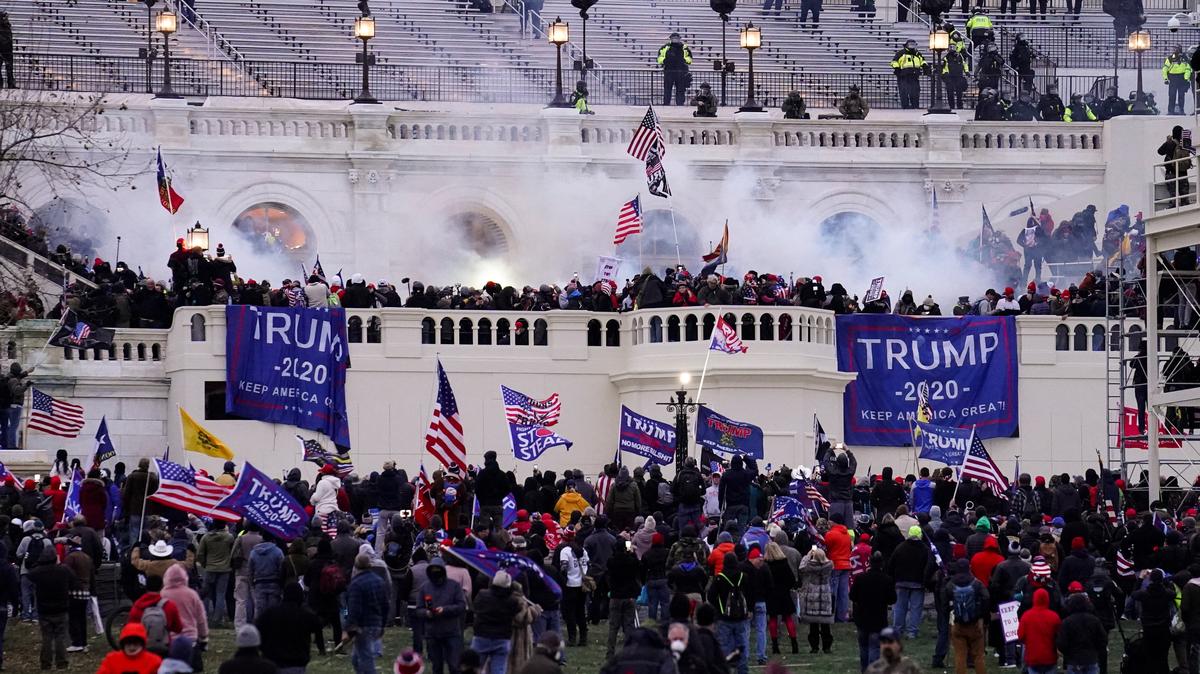
A year after a violent mob attacked the U.S. Capitol, Idaho’s congressional delegates have remained silent on the recent decision by the Republican National Committee to call those events “legitimate political discourse.”
In an unusual move, the RNC earlier this month censured and pulled support for two of its House members who were most outspoken against the insurrection on Jan. 6, 2021. And while party leaders have since tried to clarify their statement on the Jan. 6 events, top Idaho GOP officials have remained mum.
When approached by the Idaho Statesman, spokespeople for Sens. Jim Risch and Mike Crapo declined to comment. A spokesperson for Rep. Russ Fulcher said Feb. 4 that he was “traveling,” and later did not respond to another request for comment. A spokesperson for Rep. Mike Simpson did not respond to requests for comment.
A spokesperson for Tom Luna, chairman of the Idaho Republican Party, also declined to comment. There are three members of Idaho’s delegation to the National Committee: Luna, National Committeeman Damon Watkins and National Committeewoman Cindy Siddoway. It’s unclear how they voted on the resolution the RNC passed, and the state party spokesperson didn’t answer questions about how they voted.
RNC votes to censure Cheney, Kinzinger
The mob of Donald Trump supporters who charged into the Capitol was an effort to stop Congress from certifying the 2020 election victory of Democratic President Joe Biden. Rioters broke windows and furniture, stole items from the offices of members of Congress and delayed the government’s efforts to count the electoral votes that would decisively affirm Biden’s victory.
Around 140 law enforcement officers were injured, and one Capitol police officer was killed. Four civilians died. Six Idahoans have been charged in court for their roles in the day’s events.
The resolution to censure two Republicans, voted on by party leaders at a winter meeting held in Salt Lake City, stunned many political commentators and caused turmoil within the party. Following the vote, RNC leadership has backtracked on the language of the resolution, saying the party does condemn the violence that occurred that day.
Senate Minority Leader Mitch McConnell on Tuesday disagreed strongly with the RNC’s characterization and criticized its decision to single out two of its own: U.S. Reps. Liz Cheney, of Wyoming, and Adam Kinzinger, of Illinois.
In the House, Republican leaders have backed the committee’s words. U.S. Rep. Elise Stefanik, who chairs the House Republican Conference, said the RNC had “every right” to pass the resolution. In comments made to CNN, Minority Leader Kevin McCarthy defended the committee by saying its words referred to aspects of the investigation into the attacks, rather than the rioters who were present that day.
Attempts to overturn the 2020 election were spearheaded by former President Trump, and the GOP’s stance on the day’s events has shifted within the party.
Though many Republicans decried the day’s violence, Cheney and Kinzinger are the only two Republicans on the House Select Committee on the Jan. 6 attack, which is investigating the violence and criminal activity that forced members of Congress to evacuate their chambers in haste.
The vote on Feb. 4 in Salt Lake was conducted as a voice vote, meaning members expressed their votes verbally, according to NBC News. The resolution passed overwhelmingly; there was no roll call.
How Idaho’s delegation responded Jan. 6
Idaho GOP leaders’ silence on the Jan. 6 riot is a shift from the way they responded shortly after the attack — when several of Idaho’s elected leaders had sharp words about the insurrection.
“Today’s events in the United States Capitol, meant to disrupt a process at the heart of our democracy, were unpatriotic and un-American in the extreme,” Risch said in a statement that day.
Crapo said in a statement that the violence was “wholly unacceptable” and could have “devastating consequences on our nation,” while Simpson called the day a “dark and tragic moment for our nation.”
Fulcher also had pointed comments about the events. During the electoral counts, which are often considered ceremonial, Fulcher voted with many other Republicans to object to the election results in multiple states, despite no evidence of widespread fraud or irregularities.
“The attacks on our Capitol on January 6th have no place in politics, and cannot be tolerated as any sort of norm when official processes are being carried out,” Fulcher said in a Jan. 13, 2021, statement.
Crapo, Fulcher and Simpson have announced plans to run for reelection in 2022. Risch’s current term in the Senate ends in 2027.