Mothers ‘relinquish’ fear after judge affirms pregnant Idahoans’ right to a living will
Chelsea Gaona Lincoln’s first pregnancy didn’t go as expected.
The Idaho native told the Idaho Statesman by phone she was hoping to give birth to her child through a midwife center. But when the medical professionals couldn’t find Rolly’s heartbeat, she was transferred to St. Luke’s in downtown Boise.
In the midst of an already stressful moment, Gaona Lincoln was having one main conversation with her wife, “If this happens, this is what you need to fight for.”
At the time, if a pregnant person had an end-of-life directive, it likely would have been invalidated due to confusion around Idaho law. State officials interpreted the law to mean that if a pregnant person was on life support, they would be kept alive no matter their end-of-life directive
Now, after a federal court settlement early this month, the law is clear: Pregnant Idahoans have the right to be taken off life support.
Rolly was born “perfectly healthy,” but Gaona Lincoln said there were some scary moments when a health directive could have become critical.
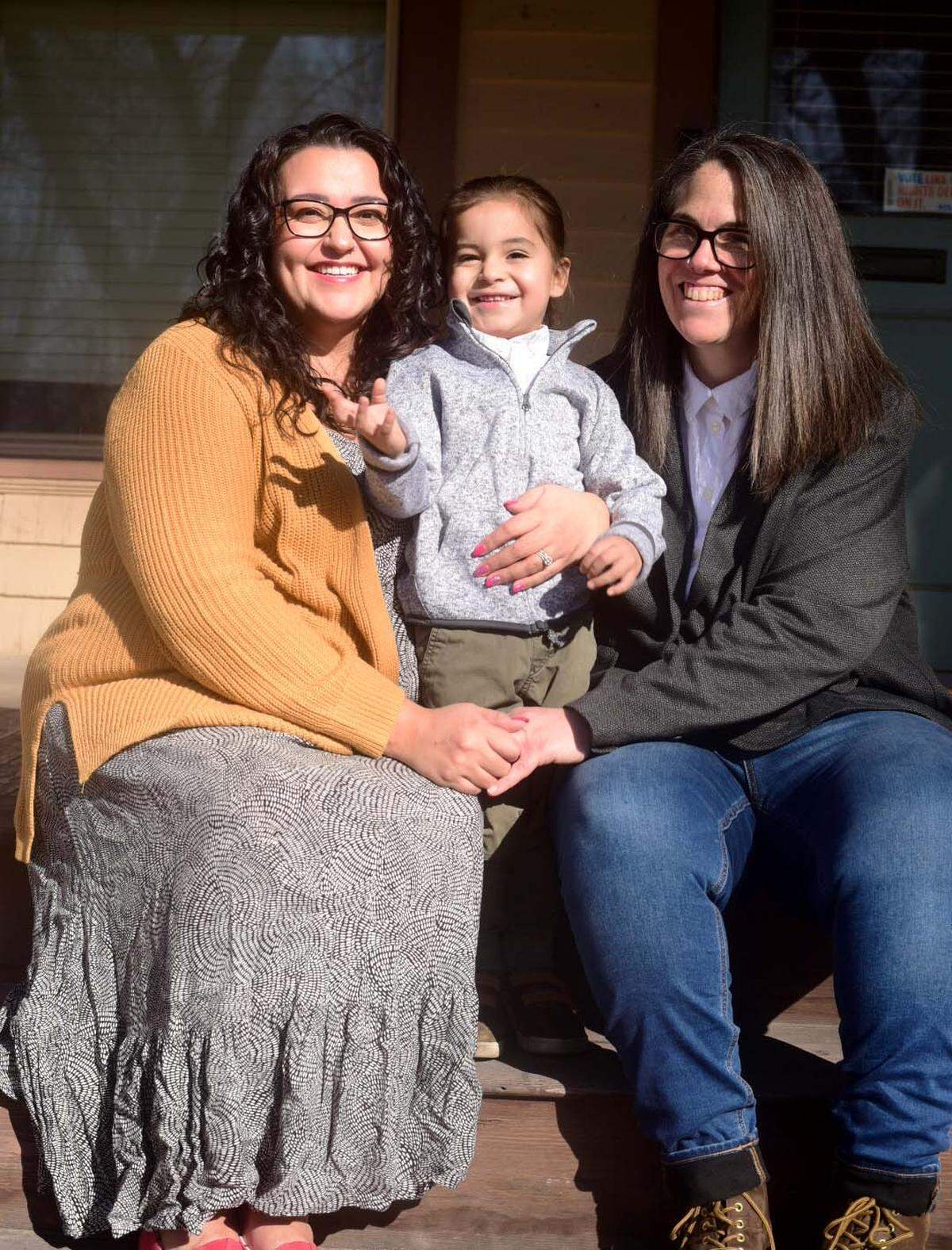
Gaona Lincoln, who is now pregnant with their second child, was one of four women who sued Idaho agencies over its policy. She said the settlement — which clarified the state must honor a pregnant person’s living will — allows her and her partner to “relinquish that fear.”
“Pregnant people and parents as it is, they have enough to think about right now,” Gaona Lincoln said. “That shouldn’t have been one of them.”
Federal judge rules pregnant women have right to living will
Gaona Lincoln and the other women — Anna Almerico, Micaela de Loyola-Carkin and Hannah Sharp — in 2018 filed a lawsuit against the state challenging Idaho’s Medical Consent and Natural Death Act. The act states that people have the right to control their medical care, including the decision to continue or end life-sustaining measures.
But the confusion stems from a “frequently asked questions” page, created by the Idaho attorney general’s office in 2005, and a directive form.
The FAQ section regarding advance directives included the question, “What if I am pregnant when I become incapacitated?” The attorney general’s office responded that “life-sustaining measures will continue regardless of any directive to the contrary until the pregnancy is complete.”
The attorney general’s office argued throughout the lawsuit that the interpretation of the act never barred a pregnant person from having their directive followed, according to court documents.
After the lawsuit was filed, the state removed the FAQ section. But the act provided a form — which can be found on the Idaho Legislature website — that still said an end-of-life directive would “have no force” during someone’s pregnancy.
An April order from U.S. District Court Judge B. Lynn Winmill “renders the act vague and ambiguous,” and concluded that the form and FAQ page made Idaho’s Medical Consent and Natural Death Act unclear. The decision was upheld this month after an appeal process. Winmill added that a pregnancy exclusion is unconstitutional.
“Ignorance is not bliss, not when it comes to things like this. This is playing with people’s ability to live thriving lives and I think that that is a huge risk,” Gaona Lincoln said.
Kim Clark, a senior attorney at Seattle-based women’s rights organization Legal Voice, told the Idaho Statesman by phone that Legal Aid argued throughout the lawsuit that medical and legal professionals alike were under the impression that a pregnant person’s living will was invalid.
“What is good about this opinion is that it made clear once and for all that all people — including pregnant people — have a Fourteenth Amendment fundamental right to enter into an advance directive,” Clark said by phone.
As a part of the settlement, state officials will be required to create a new advance directive template that no longer excludes pregnant people, according to the release. In addition, all Idaho residents with a directive — over 40,000 people — must be notified of the court’s decision. Officials have already begun to send out the notices, according to the news release by women’s rights organizations.
“Simply put, the bodies of pregnant people are not incubators to be co-opted by the state in service of gestating fetuses,” Clark said in the release.
‘Significant health risks’ involved in pregnancies
Hannah Sharp was also pregnant when she joined the lawsuit as a plaintiff in 2018. She feared losing all her autonomy, and the right to make decisions for her and her family, simply because of an unexpected health emergency, she said.
“It was really important to me to join the effort and think about, reproductive rights is more than just abortion,” Sharp told the Statesman by phone.
Sharp, who has two children — a 7-year-old daughter and a 3-year-old son — has been pregnant four times. After the birth of her daughter, Sharp had two miscarriages before having her son and a few complicated procedures including an ectopic pregnancy.
“It becomes clear very quickly, the health risk that you take on to be pregnant and to carry a child to term,” Sharp said. “It’s routine at this point, right? We do it. We see women get pregnant and give birth every day, it happens — but there’s some significant health risks associated with the pregnancy.”
About 10% to 20% of known pregnancies end in a miscarriage, according to the Mayo Clinic. John Hopkins Medicine also estimates about 8% of all pregnancies involve complications.
Idaho isn’t the only state that has or had a law like this on the books. Ten other states in the U.S. invalidate living wills throughout the duration of a pregnancy. Another 18 states have some kind of restriction against living wills during pregnancy, according to the release.
Gaona Lincoln, who ran for an Idaho House seat in 2020, criticized the policy as an example of government overreach. She said all patients should have a right to make their own decisions about their reproductive health.
“No matter what the scenario is, people should have access to that autonomy,” Gaona Lincoln said.
This story was originally published February 15, 2022 at 4:00 AM.