
As Idaho property tax reform looms and legislative group meets, counties put up defenses
Within a week, all Idaho property owners will have received their 2019 tax bills.
If past is prologue, then many Idaho city, county and state elected officials can expect a flood of phone calls, emails and letters from people who gasped upon seeing what they owe.
A group of Idaho lawmakers is taking a look at what factors are affecting property taxes and what the Legislature can do about it.
Since the property tax working group held its first meeting Oct. 21, committee co-chairman Rep. Gary Collins, R-Nampa, said he has received emails and handwritten letters from across the state. The committee is still in its information-gathering stage and plans more meetings before making recommendations to the Legislature, which convenes in January.
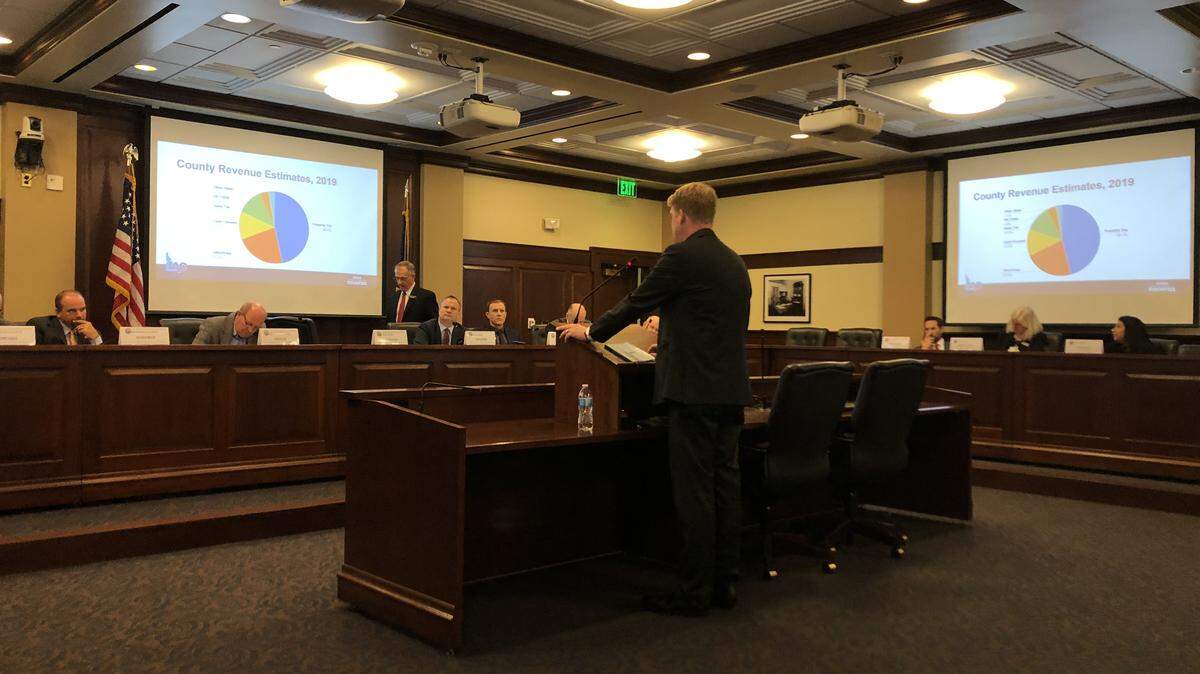
“The thoughts that were expressed and experiences these individuals were having just reinforces for me the need of this tax working group . The obvious problem that we have is ... that a lot of our citizens and constituents are being priced out of their homes because of (property) taxes,” Collins said during the group’s second meeting, held Monday at the Capitol.
“When you have individuals who have been in their home for 45 years and their property taxes have doubled or tripled in the last five or six years, and they are on Social Security and a very limited pension, something has to be done to help those people, as well as those who are in better jobs, making more money, but their monthly tax bill is more than their house payment.”
Collins says he hopes the group will come up with some recommendations that are “positive changes” and not “shifting taxes to someone else.”
Idaho has nearly 1,000 taxing districts, ranging from counties and cities to mosquito abatement districts. Cities, counties and school districts collect the bulk of property taxes. And reducing the tax burden on property owners without shifting it to someone else leaves little option but to reduce local government funding.
Idaho Association of Counties Director Seth Grigg told the group that the sharp rise in property values and property taxes is affecting residential property, not commercial or agricultural property values, which have remained fairly flat. That sharp rise is not the result of a change in tax policy and is not occurring statewide, he explained.
“It is just a factor of the market conditions,” Grigg said during his presentation. “That is what we are seeing right now.”
While home prices are booming is urban areas, the same cannot be said for Idaho’s rural areas. Additionally, much of the new construction is taking place is urban areas. Since 2002, 81% of new construction in Idaho took place in nine of Idaho’s 44 counties, Grigg explained.
Grigg and other county officials warned the committee that reducing property tax collections could harm rural counties, which are already operating on tight budgets.
Bingham County Commissioner Jessica Lewis told the group that her East Idaho county cannot afford to pay wages or offer benefits that more urban counties offer, so it has a hard time finding and keeping quality employees.
Clearwater County Sheriff Chris Goetz said his county could afford to paint only fog lines, and not center lines, on some of its roads.
And another point of contention counties have with the state is jail inmates.
When someone is sentenced to serve time in a state prison, that sentencing takes place in county court. Upon sentencing, the inmate typically returns to county jail to await transport to a state prison. But over the past decade, as the state prison reached maximum capacity, these inmates have remained in county jails until state prison beds becomes available. The state pays counties a daily rate for housing its inmates, but as more and more county jail beds go to state inmates, that leaves fewer beds for county inmates. This, along with increased population, has led to jail overcrowding in Ada, Canyon, Twin Falls, Bannock and other urban counties.
Twin Falls County Commissioner Don Hall and Bannock County Commissioner Terrel Tovey both told the committee that inmates are sleeping on the floor in their jails. They cannot turn away state inmates convicted in their respective courts, forcing them to send their own inmates out of county.
After Clearwater County Sheriff Goetz told the committee that his jail has five empty beds, both Hall and Tovey said they wanted to snap up those beds for their own inmates.
This story was originally published November 18, 2019 at 6:40 PM.