
Whoever wins, these are the issues awaiting Idaho’s leaders in 2019
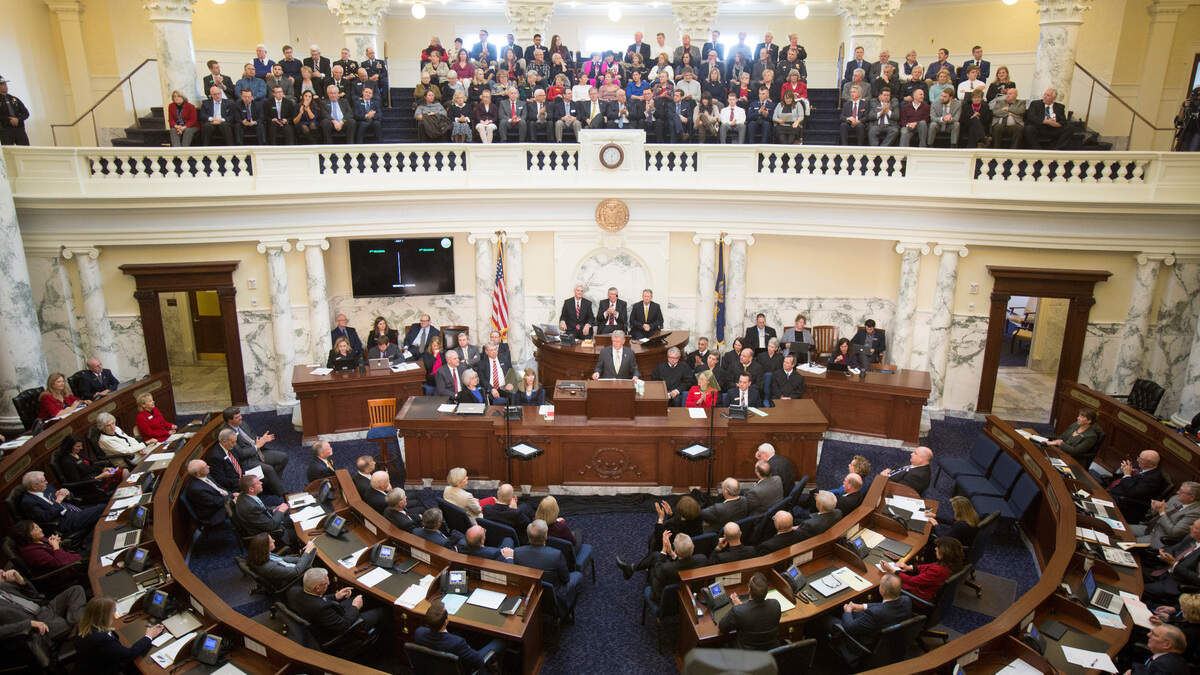
A statewide ballot initiative centered on health care. Candidates for governor and superintendent of public instruction put a spotlight on education. Lawmakers and public safety officials debated the growth of Idaho’s prison population.
Regardless of Tuesday’s final election results, the conversations that helped dominate the season are a strong indicator of the issues on Idahoans’ minds. And, they point to the decisions Idaho’s newly elected leaders will face in the year to come.
As election season draws to a close, here’s a look at some of the pressing issues likely to require action in 2019.
Health care
If Idaho voters pass Proposition 2, there is still plenty of work ahead. The Legislature will be tasked with implementing the expansion of Medicaid to an estimated 91,000 Idahoans — including up to 62,000 who currently earn too much to qualify for Medicaid but too little for subsidies on the state health insurance exchange. Through the Affordable Care Act, the federal government would cover 90 percent of the expansion’s cost, leaving the state to contribute an estimated average of $10 million a year to fund the program.
Beyond allocating those funds — or debating whether to do so at all — the Legislature could consider attaching eligibility conditions, such as requiring that enrollees work a certain number of hours or look for jobs.
“Those are the types of things that aren’t in the proposition but that the state government could, in their implementation, add,” said Jaclyn Kettler, an assistant professor of political science at Boise State University.
If Proposition 2 doesn’t pass, it’s possible Idaho legislators could make another attempt to address the coverage gap, Kettler said. And because the measure has received bipartisan support, Kettler said she would expect that to be the case for a renewed legislative effort as well.
Overall, Kettler noted a trend in recent years toward more widespread agreement that the government should have a role in some health care issues, even though opinions diverge over how exactly those issues should be resolved. That may be because individuals at the poverty line aren’t the only ones struggling with health care costs — working and middle-class individuals face challenges as well, she said, and are voicing those to their representatives. Lawmakers might also see that solutions could ultimately reduce government spending.
“In the past, it may not have been as much bipartisan support,” she said. “There was some, but I’m not sure that it was enough to really go the distance.”
Access to mental health services, especially in rural parts of the state, could also be a pressing conversation in the coming year. Katherine Himes, director of the University of Idaho’s James A. and Louise McClure Center for Public Policy Research, said lawmakers might focus on ways to attract and retain practitioners across the state.
“We even have shortages in Ada County,” she said. “And then when you start to look out at the state, it’s pretty significant.”
Support and resources to address opioid abuse might also be a salient conversation, as more Idahoans find themselves connected to people who have struggled with it, Himes said. Boise had one opioid death in 2013. By 2017, that number jumped to 96.
“I don’t know how much traction that topic will have, but I imagine in the hallways it would be a point of conversation,” Himes said.
Education
Lawmakers face a bevy of questions surrounding education going into 2019.
Teacher salaries are a big one. The Legislature will have to decide whether to fund the final year of the career ladder, Idaho’s five-year, $250 million plan to increase teacher pay. And at both the state and local levels, teacher recruitment and retention remain top concerns, especially in rural areas. These topics — and Idaho’s overall educational performance — were hotly discussed in the gubernatorial race, with Republican Brad Little and Democrat Paulette Jordan quarreling over statistics in an October debate.
This year, Education Week gave Idaho a D-plus on its state report card and ranked it 45th in the nation for education. Idaho’s high school graduation rate was 79.67 percent in 2017, a .01 percent increase from the year before. Of particular focus in the debate between Little and Jordan was Idaho’s lack of progress toward its goal that 60 percent of 25- to 34-year-olds obtain a college degree or professional certificate by 2025. The number currently sits at 42 percent.
“You can speculate that what’s on the mind of a governor probably is going to be on the minds of legislators as well,” Himes said.
The state’s recent population growth has brought added urgency to conversations about whether Idaho’s educational system is setting its students up to succeed, said Chris Birdsall, an assistant professor of public administration at BSU who focuses on education.
“If a company is relocating here, do we have people with the skills they require to work here or is it going to be a bunch of transplants taking these new, high-paying jobs?” he said.
In the realm of higher education, Birdsall has been keeping an eye on the Idaho State Board of Education’s proposal to move toward outcomes-based funding for public institutions. It would replace the current enrollment workload adjustment, which pays schools based on credit hours. The outcomes-based model would allocate funds based on the number of students who graduate, with added weights for certificates and degrees awarded to disadvantaged students; for high-impact degrees, such as those in STEM fields; and for students who graduate on time.
“This policy is just spreading,” Birdsall said. “It’s kind of become the silver bullet for problems in higher education for almost every state. In fact, when I came here, I was surprised that they didn’t have it already.”
But it’s also a policy that can introduce “perverse incentives,” Birdsall said, prompting colleges to respond by making it easier for students to graduate or attain certain degrees, or by restricting admissions in the first place.
Criminal justice
With the Idaho Department of Correction eyeing a $500 million prison expansion, criminal justice looks to be another urgent area of focus in 2019.
Lisa Bostaph, an associate professor of criminal justice at BSU, said the expansion request would prompt legislative proposals aimed at reducing Idaho’s prison population. In addition to discussions about sentence reductions for good behavior, it could signal more intense consideration of mandatory minimums, she said.
“I think it’s going to be a very interesting debate because people feel passionately on both sides, and it’s a policy change that could have significant effects down the line,” Bostaph said.
The coming year could also bring a renewed look at the state’s justice reinvestment initiative, Bostaph said. The JRI was adopted in 2014 and set new parameters for early release of probationers and parolees, in an effort to save prison space for the most violent or greatest-risk offenders. Recently, prosecutors and law enforcement officials have debated whether the JRI has resulted in the release of individuals who shouldn’t have been, and whether that’s contributed to high-profile officer-involved shootings.
The premise of the JRI was to reduce Idaho’s prison population and reinvest in support such as substance abuse and mental health treatment, cognitive and behavioral rehabilitation programs, and job training, Bostaph said. But the reinvestment in communities hasn’t happened to the extent that it is needed, she said.
“JRI, from my perspective as a researcher, was the Legislature saying it was open to creating criminal justice policy based on best practices and what research and evidence says is the way to go in reducing recidivism,” she said. “And then they stopped short — they only did half of it. The other half requires spending money.”
Bostaph said her concern is that the window for evidence-based policymaking in criminal justice is going to slowly close.
“I think (legislators) are more open now than they were 10 years ago,” she said. “But being open to it and then being willing to act on it are two different things. And that’s where the rubber is going to meet the road likely in this session, when you have a request for needed prison space at the same time that you’re going to hear people likely say you haven’t lived up to what JRI said you would do.”
Bostaph and Idaho political expert Justin Vaughn also predict the 2019 session will bring a third appearance of Marsy’s Law for Idaho, which would amend the state’s constitution to expand rights for victims of crime. Though it passed unanimously in the Senate last year, it fell five votes short of the required two-third majority in the House. If passed, it would eventually go to the ballot for Idaho voters to approve.
“With increased public conversation about the rights of victims of domestic and sexual violence, it could bring an interesting left-right coalition of support,” Vaughn said in an email.
Other things to keep an eye on in 2019
▪ The trespassing law. A 2018 overhaul changed posting requirements for landowners and increased penalties for trespassing. Gov. Butch Otter allowed the revisions to take effect without his signature earlier. But there are still concerns about the new law. Mark McBeth, a political science professor at Idaho State University, said he thinks the Legislature will have to revisit it in 2019. “It is now a criminal offense to trespass, but if there is confusion you are still at fault for trespassing,” McBeth said in an email. “This combined with the newly passed Stand Your Ground law leads to lots of potentially bad outcomes.”
▪ Local option taxes. McBeth said he thinks Idaho cities will continue to push for local sales taxes to fund various economic development, infrastructure and recreation projects. Sen. Lee Heider, R-Twin Falls, plans to introduce a bill allowing local taxing votes, while Boise Mayor David Bieter is weighing a ballot initiative, the Statesman reported last month. “There is an ever developing rural-urban divide in Idaho and I think that cities are going to continue to push for more autonomy,” McBeth said.
▪ Infrastructure. With so many urgent topics, it can be harder to turn attention to longer-term matters, Himes said. But decisions about investment in buildings and roads are necessary, even if the subject isn’t the most exciting debate, she said. “If you don’t do it, then what’s going to happen to the condition of the roads, the safety of your state?” she said. “What’s the safety risk to people if you push this to a different decision point?”