
Idaho removing 36 ‘very likely’ noncitizens as registered voters — ‘teeny, tiny fraction’
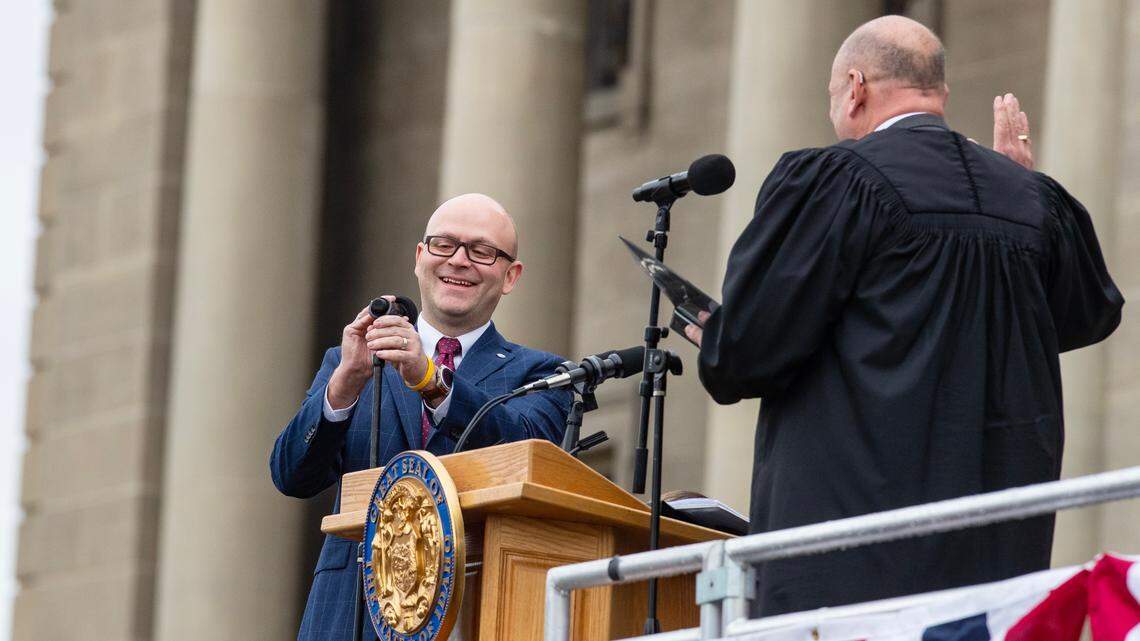
The Idaho Secretary of State’s Office is in the process of removing 36 “very likely” noncitizens from registered voter rolls in the state.
Some of those noncitizens voted in past elections in Idaho, Secretary of State Phil McGrane told the Idaho Capital Sun, but he didn’t specify how many.
No noncitizens voted in Idaho’s statewide primary election in May, he said, and state election officials are working to ensure that no noncitizens vote in the November general election.
“There are a number of them that do have some form of voting history — whether it’s in local elections or some other election,” McGrane told the Sun. “And at this point, we’re handling each of those on a case-by-case basis” with law enforcement and county clerks.
Amid years of claims about droves of noncitizens voting in federal elections, Idaho’s top election official sought to make clear that noncitizen voting in Idaho — both an Idaho and federal crime — is rare, and that election officials are working to bolster security systems to prevent such votes, under an executive order signed this summer.
“Out of the million-plus registered voters we started with, we’re down to 10 thousandths of a percent in terms of this number. … This is very rare, it’s very limited,” McGrane told the Sun about noncitizen votes in Idaho.
The Idaho Secretary of State’s Office is now working through due process to make sure that those people who were flagged actually are not citizens, he said — allowing people to prove citizenship if they can.
The state has talked with law enforcement offices, including the federal U.S. Attorney’s Office, about “any enforcement mechanisms that need to be put in place,” McGrane said.
How many noncitizens have voted in Idaho elections?
McGrane wouldn’t offer a direct number on how many of the three dozen “very likely” noncitizens actually voted at some point. He said some had, but not in May’s statewide primary, featuring state legislative, congressional and local races.
Since Jan. 10, 2020, in Ada County, 78 registered voters were removed for not being a U.S. citizen, according to a report Ada County Clerk Trent Tripple shared with the Sun, which included data as recent as Oct. 4, 2024.
One case, in 2020, was the only instance of a noncitizen voting in Ada County that Tripple knew of and that county records show, he told the Sun. That case involved a Canadian citizen and was referred to prosecutors. He said he didn’t know the case’s outcome.
“I would hope that citizens in Idaho know that — in my estimation — the will of the voter has been reflected in every single election that I know of, based off those that are legally eligible to vote,” Tripple told the Sun. “And so I push back on the notion that there’s people that are not allowed to vote that are affecting the outcomes of our elections.”
How else do Idaho election officials clean the voter rolls?
Beyond just preventing noncitizens from voting, Tripple stressed that local election officials are always “extremely active” in cleaning the voter rolls for a range of reasons, including when people die or move.
The report Tripple shared, spanning almost five years, said more than 29,000 voters in Ada County were removed for maintenance, along with over 9,800 for being deceased, nearly 3,800 for being registered more than once, and another 604 for having felonies, among other reasons.
“I think it’s a misnomer for people to think that there’s a goal out there for a perfect election, and that we’re going to achieve it at some point in the future,” Tripple told the Sun. “This is an imperfect process for us. We have rules in place if we find them, and we’re actively pursuing anybody that should not be allowed to vote on a regular basis and removing them from voter rolls.”
Every two years, Idaho election officials purge the registered voter rolls. Idaho law requires county clerks to cancel registrations for voters who didn’t vote in the past four years.
In 2023, more than 74,000 Idaho registered voters were removed “due to inactivity, change of address, or who were otherwise determined to be ineligible to vote,” according to a previous Idaho Secretary of State’s Office news release.
“We have already been doing this, and our numbers, the fact that we’re at such a teeny, tiny fraction of a percent of instances, shows that Idaho has been doing it well — well in advance of this being part of the national discourse,” ,” McGrane told the Sun.
Donald Trump repeats false claims about noncitizens voting
Former U.S. President Donald Trump, running for the third time in a row as the Republican presidential nominee, has repeatedly said noncitizens are being registered to vote, and falsely claimed that noncitizens swayed the 2016 election totals — he won the electoral vote but lost the popular vote — and the 2020 election, when he lost both, The Washington Post reported earlier this year.
This election cycle, Trump is continuing to make debunked claims.
In a fact check of the September presidential debate, National Public Radio reported that there is “no credible evidence” that noncitizens vote in federal elections, “or that there is an effort underway to illegally register undocumented immigrants to vote this election.”
In The Washington Post’s March 2024 review of the conservative Heritage Foundation’s database of election-fraud prosecutions, 85 cases in two decades — from 2002 to 2023 — involved allegations of noncitizen voting.
“Every legitimate study ever done on the question shows that voting by noncitizens in state and federal elections is vanishingly rare,” the Brennan Center for Justice reported in April.
While a few local U.S. governments have allowed noncitizens to vote in specific local elections, no states let noncitizens vote in statewide elections, the Sun previously reported.
U.S. citizenship is required to vote in federal and Idaho elections.
How Idaho bolstered noncitizen vote prevention processes
In July, McGrane and Idaho Gov. Brad Little signed an executive order that shores up processes to prevent any noncitizen voting. Idaho elections already had strong mechanisms in place to ensure that, the Sun reported.
The order — distinct from a proposed constitutional amendment that would ban noncitizen voting in Idaho elections, where citizenship is already required — was aimed at bolstering confidence, McGrane previously told the Sun.
Already, the Secretary of State’s Office works with the Idaho Department of Transportation to check voter records. But the executive order called for additional security by partnering with Idaho State Police and the U.S. Department of Homeland Security to check immigration records, among other provisions.
One of the big changes for the Idaho Secretary of State’s Office stemming from the executive order was securing an agreement to verify citizenship data with the Homeland Security database, McGrane said.
In July, the Secretary of State’s Office pulled the entire list of Idaho’s more than 1 million registered voters, and had the Idaho Department of Transportation do a full comparison.
The initial review flagged 700 potential noncitizens on voter rolls, McGrane told the Sun. But the number fell significantly once officials validated the citizenship of well over 600 of those people, down to the 36 “very likely” noncitizens, he said.
“Maybe they were a noncitizen at one point. But … by the time they were registering to vote, they were actually citizens. It just hadn’t been updated on their driver’s license records,” McGrane told the Sun.
Tripple urged caution interpreting noncitizen vote estimates. That list from the Idaho Department of Transportation flags people as potential noncitizens for many reasons, such as registering for a driver’s license years ago — before the federal STAR Card Act asked for birth certificates.
That’s why the “overwhelming majority” of the initial 700 proved to be “false positives” once further investigated, he said.
“Spending that time to go through that is — it’s time consuming. But we do it because we know that people want to have trust in the elections process,” Tripple said.