‘Loyalty is a big component,’ Fulcher says of paying daughter to run reelection campaign
U.S. Rep. Russ Fulcher, while campaigning and serving two terms in Idaho’s 1st Congressional District seat, has spent nearly $305,000 in supporter contributions over the past five years to fund his daughter’s salary as his campaign manager, federal election records showed.
During the Republican incumbent’s current bid for a third term representing western and North Idaho in the U.S. House, Meghan Fulcher, 31, has received $133,500 in pay dating to November 2020. Her earnings the past two years represent more than a third of Rep. Fulcher’s total campaign expenditures over that time, based on an Idaho Statesman analysis of filings required by the Federal Election Commission.
Fulcher, 60, told the Statesman in an interview that designating his daughter the leader of his campaign grants him an advantage as he pursues reelection. He went unchallenged in the Republican primaries held in May.
“She knows me, and she can often speak for me like no one else, for example, just because she knows me so well,” he said Monday. “Loyalty is a big component with any job whatsoever. … I mean, I’m a dad, and it’s been nice to meet with my daughter.”
Federal law restricts members of Congress from employing or managing relatives, out of concerns of possible favoritism showed to family members, as laid out in the nepotism section of the Congressional Accountability Act of 1995. The regulation does not apply to political campaigns for federal office.
The Federal Election Commission, which monitors the use and reporting of campaign funds in federal races, allows the spending of such donor contributions to make salary payments to a candidate’s family members, as long as the recipients are “providing a bona fide service to the campaign.” Their compensation must not exceed the fair market value for those services or be considered a personal use by the candidate, which is a campaign violation.
“There are ways to hire family members and do it perfectly legally,” Kedric Payne, vice president of the Campaign Legal Center, told the Statesman by phone. The CLC is a Washington, D.C.-based nonprofit that advocates for transparency in elections. “The concern comes up if essentially the person is doing a ghost job and they’re being paid more than you would typically pay for that position.”
Among regular campaign staffers across Idaho’s three congressional delegates running for reelection this year, Meghan Fulcher is the highest paid.
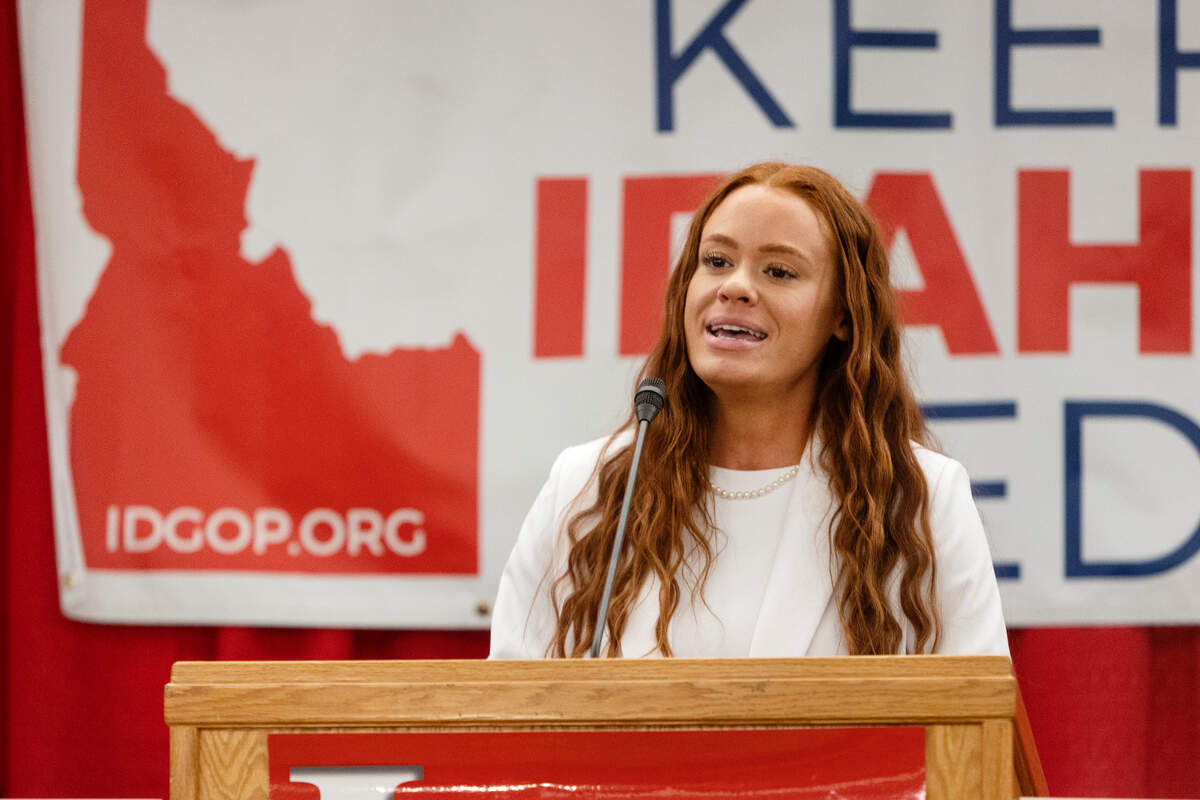
“I do anything and everything I have to do to get my job done,” Meghan Fulcher told the Statesman in a phone interview. “Whenever anybody tries to pull the nepotism card — ‘Oh, hey, he just has her because she’s his daughter’ — you have no idea. Trust me, we’re Fulchers and we know how to work.”
Idaho delegation’s history paying family
Fulcher isn’t Idaho’s first congressional delegate to pay a family member with campaign funds. But the congressman’s total payments to his daughter in the past five years are more than double the compensation of any other congressional delegate’s relative over a comparable period of time.
Since 2018, U.S. Sen. Mike Crapo, R-Idaho, also has paid his wife, Susan Crapo, $19,262 from a separate political action committee account for “gift bag preparation” at eight campaign events, a Statesman review of federal campaign filings showed. A campaign spokesperson said Susan Crapo spends “a great deal of time” putting together items, including homemade jams and cinnamon rolls, as well as blankets and semi-precious stone jewelry, for guests at various campaign events.
“The Crapo campaign values the cost of her items similar to those found in other craft stores or on websites like Etsy.com,” Melanie Lawson, Crapo’s spokesperson and a campaign volunteer, told the Statesman by email. “She is paid fair market value for the items she creates.”
Susan Crapo was previously paid for campaign work from her husband’s PAC account that supports his reelection. From 2000 to 2006, Susan Crapo received $78,514 for campaign activities, which included driving her husband to events and organizing others, The Spokesman-Review reported.
Former Republican Congressman Raúl Labrador, who preceded Fulcher in his seat, began paying his wife, Rebecca Johnson Labrador, a $2,000 monthly salary in May 2011, The Spokesman-Review also reported. She was brought on to manage the books for his reelection campaign, and was its only paid staffer.
“There’s a lot of congressmen that do that, and actually they pay their spouses even more,” Labrador told The Spokesman-Review at the time, arguing it was a cost-saver for the campaign.
Labrador discontinued the practice by 2017 and didn’t run for reelection in 2018. In his current bid for Idaho attorney general, Labrador’s wife is not on his campaign payroll, according to Idaho secretary of state records.
An effort to prohibit political candidates’ spouses from receiving compensation from campaign funds passed the U.S. House in 2007. Congressman Adam Schiff, D-California, sponsored the bill, calling the use of donor contributions to compensate a candidate’s spouse a “potentially corrupt practice.”
“When it’s the spouse who gets campaign money, it goes directly into the officeholder’s pocket and that’s a grievous conflict of interest,” Schiff told the LA Times after the bill’s House passage.
The bill came about after an FBI investigation into another California congressman for paying his wife more than $105,000 in campaign contributions as fundraising commissions. Schiff’s bill failed to pass in the U.S. Senate, allowing members of Congress to continue compensating spouses for campaign work, within limits.
“When members of the public donate their money to support candidates, they don’t expect that their money is going to be used the wrong way,” said Payne, with the CLC. “You don’t want someone to use campaign funds to enrich themselves or others, and there are laws in place to make sure that’s the case.”
‘The good, the bad, the ugly’
Rep. Fulcher told the Statesman he doesn’t think his daughter’s compensation as a full-time independent contractor working for his campaign is outsized. Meghan Fulcher’s average annual salary over the past five years is about $60,000.
“For somebody who is working as a 1099 employee, I don’t think $60K is outrageous,” he said. “Campaigns are not fun. It’s not a fun job.”
Meghan Fulcher told the Statesman that she never works fewer than 40 hours per week — and plenty more during the thick of the election season. Depending on the week, she said, her duties range from fundraising, coordinating events and attending others in Washington, D.C., with her father, to distributing campaign signs to supporters and outreach to unaffiliated voters.
Republican Rep. Mike Simpson, this year seeking his 13th term representing the 2nd Congressional District, raised more than $1.5 million during the current two-year election cycle — about $1 million more than Fulcher, the latest campaign finance records showed. Simpson defeated opponent Bryan Smith in May’s Republican primary.
Simpson, 71, has paid a member of his congressional staff based in Boise a monthly salary of $1,050 for campaign work. U.S. House Ethics rules allow congressional employees to work for pay or volunteer on candidate campaigns, as long as it takes place outside of official duties and does not use official resources.
Simpson also paid $5,400 a month to a national fundraising firm, the campaign records showed. In addition, he paid between $4,000 and $5,000 for campaign management to a national public affairs contractor with clients that have included Sen. Marco Rubio, R-Florida, the Republican National Committee and the California Republican Party.
Meanwhile, Meghan Fulcher’s credentials prior to working for her father include earning a degree in international business in 2013 from Boise State University, according to her LinkedIn page. She also previously served as an assistant to former Idaho Senate Majority Leader Bart Davis, en route to being chosen as one of four Idahoans the year she graduated from college for a three-month summer internship with Republican Sen. Jim Risch’s office in Washington, D.C.
Meghan Fulcher eventually worked in 2016 as a staffer for her dad’s gubernatorial campaign, before accepting her current role with his congressional campaign. She was not paid during her father’s push to become Idaho governor, Idaho secretary of state records showed. Fulcher dropped out by June 2017 to run for Congress instead.
“First of all, I was affordable, and second, I was his teammate,” Megan Fulcher said. “I learned how to do it, put in the effort. I want to support a man that has loved me my whole life and I believe in.”
After initially being paid $2,000 and then $3,000 per month in salary most of her first year on the job, she has received an average salary of almost $5,000 per month since that time, campaign filings showed.
By comparison, in statewide races, Labrador pays a campaign manager about $4,160 per month and Republican Gov. Brad Little pays his campaign manager about $3,900 per month, Idaho secretary of state records showed. Republican House Speaker Scott Bedke has paid a public relations firm $2,000 per month in his race for lieutenant governor.
Crapo, also running for reelection this year, pays a monthly salary of about $2,900 to a former congressional intern who is working as his campaign manager, election filings showed. Over 12 months, that equates to about $35,000 in annual compensation.
In addition, Crapo pays $5,000 per month for a general campaign consultant, the records showed.
“He runs every six years, I run every two,” Rep. Fulcher said, of virtually continuous campaigning, “and you can’t stop. You can never, ever stop. So it’s just different.”
During Rep. Fulcher’s first campaign for Congress in 2018, he soundly defeated former Idaho attorney general and Lt. Gov. David Leroy in the Republican primary, and went on to easily win the general election with 63% of the vote. In 2020, Fulcher again coasted to victory in his reelection effort.
During those races, he also paid monthly salaries ranging from $400 to $5,500 to congressional staffers for work in their off-time and several others hired for campaign-related duties. Meghan Fulcher was paid top scale, or more, for her role as campaign manager. She also received a $3,000 payment as a “win bonus” in February 2019, the records showed.
No other person employed on Rep. Fulcher’s campaign received the extra compensation.
Fulcher said his daughter’s paid position on his campaign has been beneficial to him personally, and may also pave the way for her own political career down the road.
“It’s been, I think, a good relationship that, frankly, has been good for us as well,” Fulcher said Monday. “I don’t know if she ever has any ideas of doing this some day, but if so, she’ll know at least the good, the bad, the ugly.”
This story was originally published October 20, 2022 at 10:40 AM.