Reproductive rights take center stage at Idaho’s ninth annual women’s march
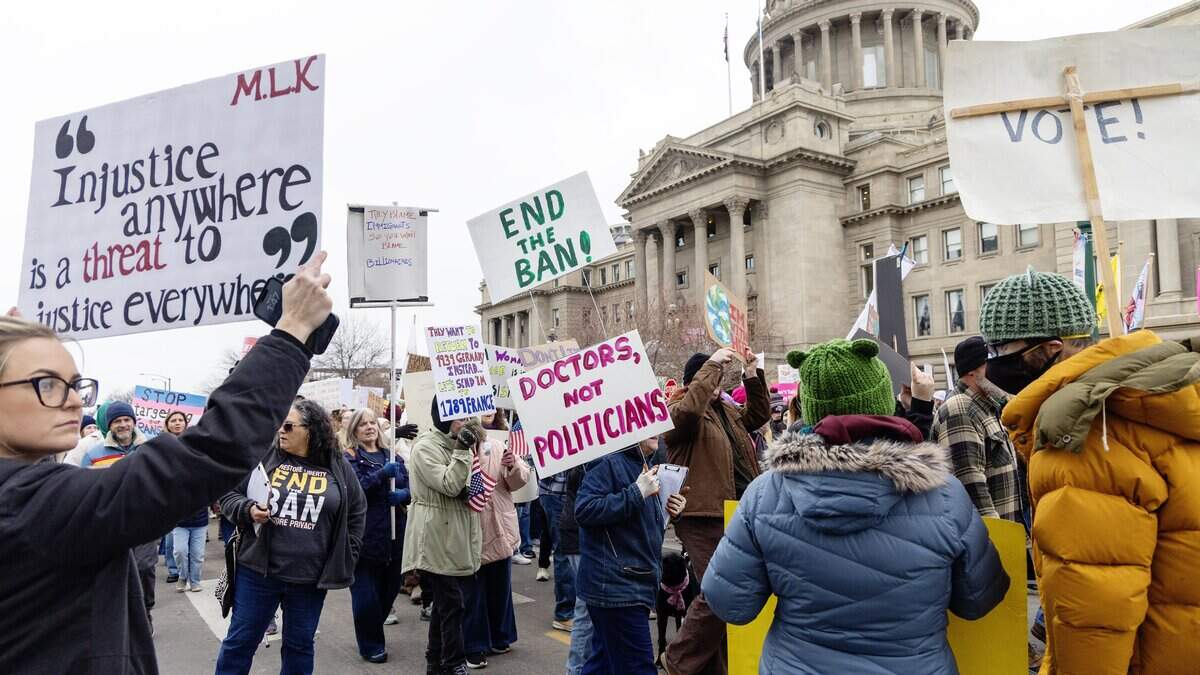
The annual Idaho women’s march took over the state Capitol steps Saturday afternoon for its ninth year, and many showed up to call for action on reproductive rights and women’s health care in Idaho.
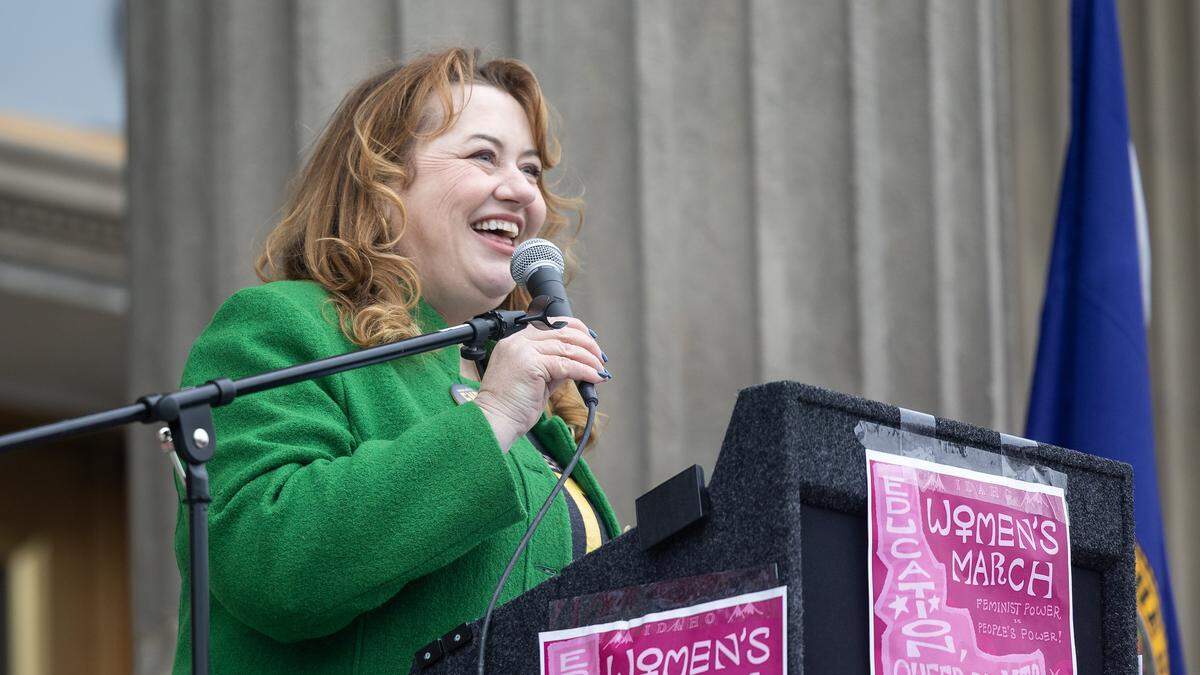
Hosted by Women of Idaho, a large crowd gathered in front of the building. This year’s march theme was “Feminist Power is People Power,” said Amy Price, an Idaho educator and speaker at the march.
Her message was to protect educational spaces, which she said are “one of the clearest places people power takes shape.”
“Education shapes more than careers. It shapes participation, it shapes confidence, and it shapes whether people believe their voices matter,” Price said.
Price said using the word “feminism” to her means equal opportunities for education and for participation in civic life.
“(Feminism) asks us to notice who is heard, who is missing, and how participation can be expanded,” Price told the crowd. “Feminist power isn’t about replacing one group’s voice with another’s. It’s about broadening participation, broadening who gets to speak, who gets to lead and who gets to be taken seriously.”
The first women’s march, which was a nationwide event, was held on Jan. 21, 2017, after President Donald Trump’s first inauguration. Since then, the event regularly returns to cities across the country. The issue at the forefront this year was advocating to repeal the abortion ban that went into effect three years ago in the state.
When the United States Supreme Court made the decision to overturn Roe v. Wade, the case that solidified the right to abortions in the U.S., it triggered an Idaho law that makes it a felony for any health care provider to perform or attempt to perform an abortion.
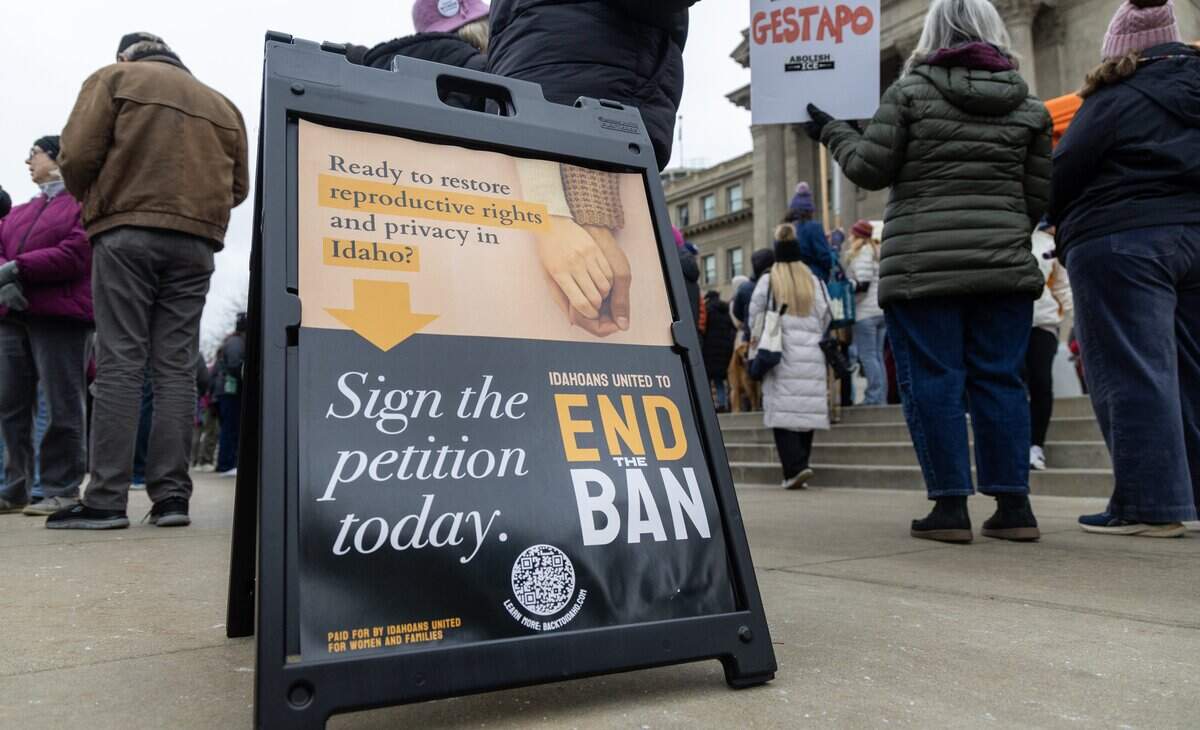
This year, one organization is pushing to get a citizen-led initiative on the 2026 ballot to reinstate protections for abortions and providing abortions, Idahoans United for Women and Families executive director Melanie Folwell told the crowd.
Folwell said the Idaho abortion ban left the state with “unintended consequences,” including a significant decline in practicing OB-GYNs. Idaho had a net loss of 35%, or 94, of its 268 practicing OB-GYNs between when the ban took effect in August 2022 and December 2024, according to a study published in the Journal of the American Medical Association.
“I’m going to tell you, it doesn’t matter how beautiful our mountains are, how good the camping and the skiing is, how big and beautiful our big sky sunsets and sunrises are,” Folwell said. “If you can’t see a doctor when you need a doctor, that is no quality of life at all.”
The initiative, called the Reproductive Freedom & Privacy Act, would need 70,700 voters to sign on in 18 of Idaho’s 35 legislative districts by April 30 to qualify this year. Follwell said their goal is to gather 100,000 signatures, and as of today, they have gathered 63,000 signatures.
“No one is coming to save us,” Folwell said. “There will not be a federal election that fixes Idaho’s abortion ban. There is not going to be an Idaho state election that fixes this problem. There will not be a Supreme Court reversal in most of our lifetimes that fixes this problem. But by God, here in Idaho, we have the power to save ourselves.”
This story was originally published January 17, 2026 at 6:33 PM.