Idaho Supreme Court issues ‘significant’ ruling for those who can’t afford court fees
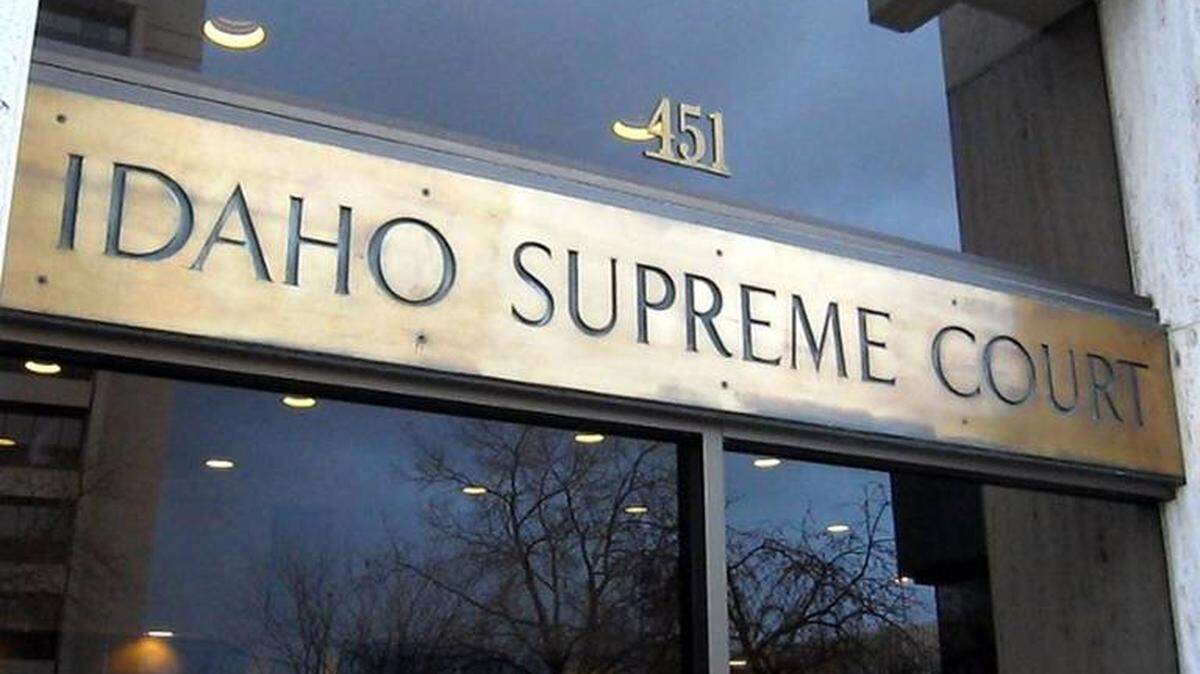
The Idaho Supreme Court ruled in a case last week that some say could have national implications for people who cannot afford to pay fees mandated by courts.
The court ruled against the Elmore County Magistrate Court, finding that it acted outside its jurisdiction when it issued a warrant for and eventually jailed a woman who could not afford to pay court fines and fees.
In an opinion released Thursday, Idaho Supreme Court justices unanimously ruled that the actions against Roxana Beck in 2020 were unconstitutional, a violation of the 14th Amendment. The case drew widespread attention and will affect how courts treat indigent defendants.
“The Idaho Supreme Court confirmed what we all want to believe: that the Constitution is there to protect us, most especially the most vulnerable among us,” Pete Wood, Beck’s attorney, said in a news release. “This is a significant victory for Ms. Beck and many other indigent Idahoans who have been jailed solely for their inability to pay court debt.”
Beck pleaded guilty to a misdemeanor charge in February 2020, and during sentencing she asked the court to make any fines and fees associated with the charge as low as possible. Beck’s hours at her job at Burger King had been reduced, limiting her paycheck, according to the opinion.
The court assigned her no jail time but ordered her to pay more than $630 in total court fees. Her plea agreement also contained a clause saying that if she did not pay, a warrant could be issued for her arrest and the entire sum would be due to the court. Beck was told to pay $25 per month starting April 1, 2020.
Last July, three months after her first payment was due, a deputy clerk in Elmore County issued a motion to hold Beck in contempt for failing to pay. An Elmore County magistrate judge issued a warrant for Beck’s arrest the same day, with the warrant indicating there were “reasonable grounds to believe the Defendant [would] disregard a written Notice to Appear.” The warrant indicated that Beck could either pay the entire fee, post a $6,400 bond, or stay in jail and appear in court.
On Oct. 29, 2020, Beck was arrested in Canyon County on the warrant. She was taken back to Elmore County and arraigned on Nov. 3. Beck entered an Alford plea — a type of guilty plea in which a defendant admits that the evidence likely would sway a judge or jury — and she was sentenced to five days in jail.
Beck was held in jail for two days beyond the statutory maximum for the charge, so she was given $70 in credit toward her fees. However, she was still ordered to pay what was remaining.
The ordeal prompted Beck to file a writ of prohibition to the Idaho Supreme Court, which is an appeal to a higher court to prevent a lower court from acting. After the writ was filed, members of the University of California-Berkeley School of Law Policy Advocacy Clinic took note of the case and began to spread the word, according to Lisa Foster, a co-director for the New York-based Fines and Fees Justice Center.
Several organizations filed an amicus brief — a legal filing in which a person or organization outside of the case voices their support for a possible outcome — in April to support Beck’s petition, arguing that the Idaho Supreme Court should prohibit state courts from issuing arrest warrants for nonpayment without first evaluating someone’s ability to pay. Organizations such as the ACLU, the CATO Institute, Fines and Fees Justice Center and the Institute for Justice signed on to the amicus brief.
Beck’s case was argued before the Idaho Supreme Court on May 7. Justice Roger Burdick authored the opinion last week, and the other four justices concurred.
Burdick pointed out several court shortcomings in the case. One was that the warrant for Beck’s arrest was issued without determining whether she could pay the fines in the first place.
Most notably, Burdick invoked a famous quote from former U.S. Supreme Court Justice Hugo Black, who wrote in the the 1956 case Griffin v. Illinois: “There can be no equal justice where the kind of trial a man gets depends on the amount of money he has.”
Jeff Selbin, director for the Berkeley Law Policy Advocacy Clinic, said in a news release that the unanimous ruling sends a clear message that courts should not be in the business of making money off the poor.
“Policymakers in Idaho and elsewhere should take heed and end these extractive, regressive, and racially discriminatory practices,” Selbin said in a news release.
The ruling in Beck’s case could have implications for those in other states, according to Foster. She said the court’s ruling was made on the basis of the U.S. Constitution rather than a specific state law, making the ruling potentially valuable across the United States.
Foster praised the court’s decision during a phone interview with the Idaho Statesman. She said the unanimous ruling was particularly emphatic, as the court recognized the practice at hand was unconstitutional.
“It’s truly an important decision for not only Beck and others in Idaho, but for people around the country,” Foster said.