Son, grandsons of Idaho pastor fight city over ‘Soviet Moscow’ sticker charges
On one night in October 2020, the grandsons of a well-known evangelical pastor in North Idaho took to the streets of Moscow and, wearing hijabs, posted stickers on light poles and street signs in defiance of the town’s COVID pandemic-era public health orders.
The 3-by-8-inch circular red decals featured a yellow hammer and sickle with the words “Soviet Moscow ... enforced because we care,” mocking the city’s own slogan, which it used to promote compliance with a temporary social-distancing and face-covering mandate.
But someone spotted the teenagers downtown and tipped off the police. Three officers arrived.
They handcuffed Rory Wilson, then 18 years old, and placed Seamus Wilson, then 14, on the hood of a squad car. The officers called their father, Nathan Wilson, who had helped create the stickers, and after some questioning, they were released.
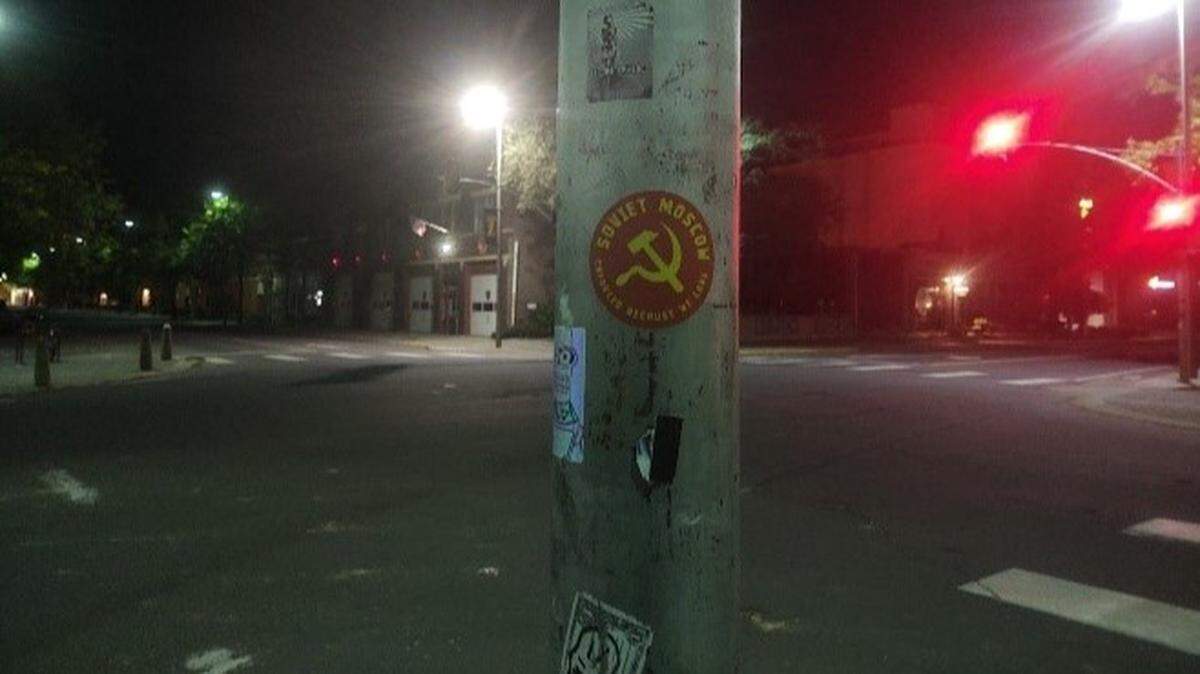
The incident led to years of criminal and civil proceedings over a local law that the Wilsons’ attorney says had never before been enforced. Now, a federal judge in Boise is considering allegations that the city of Moscow and its police department discriminated against the family for their political and religious views.
The Wilsons are members of Christ Church, a congregation in Moscow known for its controversial vision to transform the city into a theocracy through its educational system and associated businesses. The church was founded by Nathan Wilson’s father, head pastor Doug Wilson, who has gained a reputation for his fringe remarks, such as when he said there was mutual affection between slaves and their masters, that homosexuality should be a crime, and that he supports repealing the 19th Amendment granting women the right to vote.
Doug Wilson is notorious in Moscow, where some residents boycott businesses affiliated with Christ Church and shun its members. But he’s become a prominent figure among the Christian right. When his church opened a new location just blocks from the U.S. Capitol this summer, Defense Secretary Pete Hegseth attended its first Sunday service.
Church protest goes viral
Tension had been building between the family and the city for months before the night Rory and Seamus Wilson were confronted by the police.
In September 2020, Doug Wilson had organized a so-called Psalm sing in protest of Moscow’s social-distancing ordinance. Over 150 people attended the event in the City Hall parking lot, and three members of Christ Church were arrested.
President Donald Trump, nearing the end of his first term, shared a video from the protest on social media, saying it was “one of the most heartbreaking things” he’d ever seen.

Days after the city sent workers to remove the “Soviet Moscow” stickers, a police officer delivered citations to the Wilson home, telling Nathan Wilson that both his sons were charged with 13 misdemeanors and that he was charged as an accessory.
The city charged the family with violating a local law that prohibits posting messages on public property without government approval. The city maintains that it had probable cause to pursue the charges.
Family fights charges
Rory Wilson sought to dismiss his case on constitutional grounds, arguing that the ordinance violated the First Amendment and that he was being selectively prosecuted for his religious and political views. Other stickers, including ones with liberal political messages, had been posted with no issue, he argued.
His case went to trial in May 2022, and he was found guilty of one count of violating city code. The judge granted a withheld judgment, which allows the court to set aside a defendant’s conviction in some circumstances.
The charges against his younger brother, Seamus, were dropped after he agreed to write a paper about civil disobedience. The charges against Nathan Wilson were also dropped, according to court documents.
After his trial, Rory Wilson tried unsuccessfully to appeal his conviction to the Latah County District Court and the Idaho Court of Appeals. The Idaho Supreme Court and U.S. Supreme Court declined to review the case.
He took advantage of the withheld judgment and asked the appellate court to set aside the finding of his guilt and dismiss the case. In September, it did.
In the meantime, the family sued the city, arguing that the charges constituted prior restraint on speech, viewpoint discrimination, selective enforcement and excessive force, in violation of the Constitution. The Wilsons also said officers questioned Rory and Seamus Wilson without providing them with Miranda warnings. Miranda warnings stem from a landmark case that established rules to safeguard against self-incrimination.
‘Never been enforced before’
Robert Muise, cofounder and senior counsel of the nonprofit American Freedom Law Center, a conservative law firm, told the Idaho Statesman by phone that the case should concern anyone who wants to engage in free speech or expression. Muise is representing the Wilson family in its lawsuit against the city.
“All the work we do is pro bono, and the cases that we typically handle are First Amendment and religious liberty cases, and we kind of have a combination of the two here,” Muise said. “From our perspective, the evidence shows quite strongly that there was an animosity in the city of Moscow against Christ Church and members of Christ Church ever since the arrest at the Psalm sing.”
Muise said that Moscow, home to the University of Idaho, is like other college towns and cities around the nation, where lights posts and street signs are targets for all kinds of political messaging (or nonpolitical messaging, such as fliers for yard sales, concerts or missing pets).
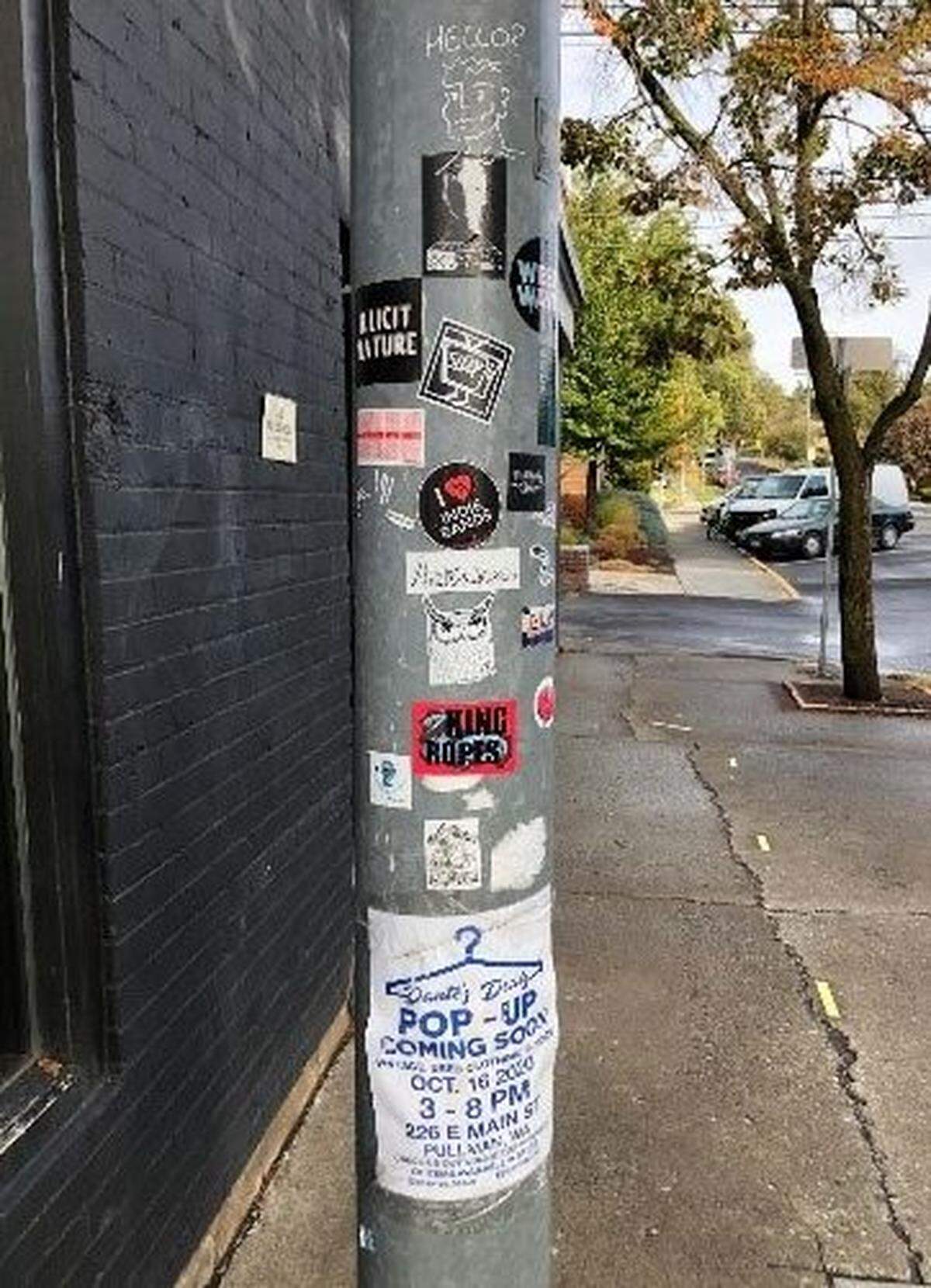
He also said there are no guidelines to seek permission ahead of time to engage in that kind of speech.
“We’ll prove in discovery that this ordinance has never been enforced before,” Muise said. “But they’re just all of a sudden enforcing it against the Wilsons? That’s a problem.”
What happens next?
The city asked U.S. District Judge Lynn Winmill in Boise to dismiss the Wilsons’ case. Winmill declined.
While he dismissed some claims, the crux of the case is moving forward. He ruled that the retaliation, selective enforcement and viewpoint discrimination claims could proceed, as well as Nathan and Seamus Wilson’s prior-restraint claims. He dismissed Rory Wilson’s prior-restraint claim because it was already decided in state court.
Winmill also dismissed the excessive-force claims, writing that police officers are protected by qualified immunity.
“Perhaps, as the state trial court concluded, the Wilsons were just unlucky enough to get caught in the act, meaning they are not similarly situated to the many individuals who more surreptitiously engaged in the same conduct,” Winmill wrote.
The next court hearing is Jan. 21 to set a scheduling order. The family is now developing a litigation and discovery plan, Muise said.
He noted that the Wilsons are fighting the case on principle. He said Nathan Wilson lost job opportunities because of the criminal charges that were later dropped.
“They feel they’ve been wronged by the city,” Muise said. “There could potentially be some damages coming out of this as well. But this is really seeking to vindicate the fundamental principle of the right to free speech and the right to not be subject to the selective enforcement of a law because city officials don’t like you or the religious community you belong to.”
This story was originally published December 15, 2025 at 4:00 AM.